Luigi Mangione admits to killing UnitedHealthcare CEO, pleads guilty to two federal charges
The defendant admitted in a Manhattan court that he followed Brian Thompson, tracked down the company's annual conference by posing as an investor and shot him with a 3D-printed gun. His defense team has now requested that the state murder charges be dropped, citing double jeopardy.
Luigi Mangione pleads guilty to killing UnitedHealthcare CEO

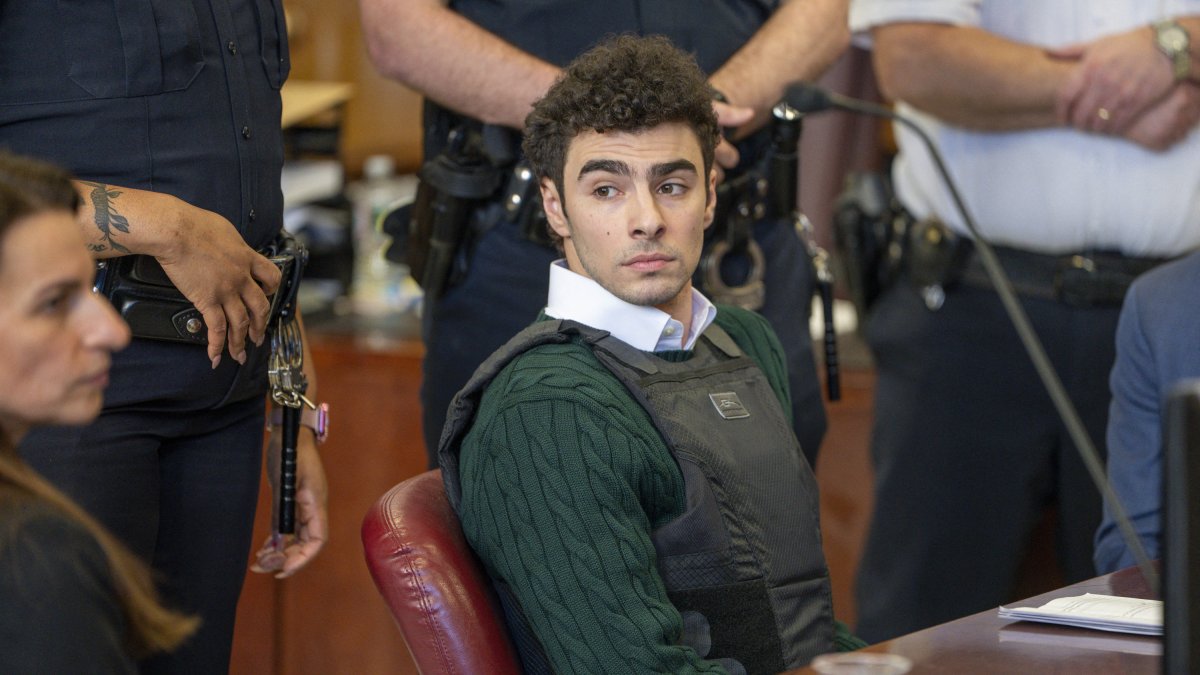
Luigi Mangione pleaded guilty this Friday to two federal charges of harassment related to the death of Brian Thompson, CEO of UnitedHealthcare, and admitted for the first time in court that he was the one who shot the businessman in Manhattan in December 2024.
The plea marks a decisive turning point in one of the country's most high-profile criminal cases. Although Mangione did not plead guilty to a federal murder charge—that charge had previously been dropped from the federal indictment—he acknowledged the acts that led to Thompson's death.
"On the morning of Dec. 4, 2024, I shot Mr. Thompson in Manhattan, and he died," Mangione stated during the hearing, according to Associated Press. He also acknowledged that he knew his conduct was illegal.
Federal Judge Margaret M. Garnett accepted the plea agreement and set the sentencing date for Dec. 18, 2026. Mangione, 28, could face life in prison.
Mangione explains how he tracked down Thompson
During his statement to the court, Mangione provided details about the planning of the attack.
The defendant said he had spent years suffering from severe pain related to a back injury and facing difficulties with the U.S. healthcare system. According to his account, that experience led to his decision to follow Thompson. Mangione was never a customer of UnitedHealthcare, according to police and the company itself.
Mangione explained that he identified the annual investor conference the executive would attend and that he contacted the company posing as an investor from a multibillion-dollar firm in order to obtain information about the event.
He also admitted that he used a 3D-printed gun in the attack. Following his arrest, investigators recovered such a weapon, which authorities say matched the one used to kill Thompson.
Thompson, 50, was attacked on Dec. 4, 2024, as he was on his way to the annual investor conference of UnitedHealth Group in Manhattan. Surveillance footage showed a masked man shooting him in the back.
Mangione was arrested five days later at a McDonald's in Altoona, Pa., following a police manhunt that spanned several states.
Guilty plea to two counts of harassment resulting in death
The federal case against Mangione has changed significantly since it was initially filed.
On Friday, he pleaded guilty to interstate harassment resulting in death and harassment through the use of interstate commerce resulting in death. Both crimes are punishable by up to life in prison.
The Department of Justice had initially charged Mangione with additional federal crimes, and then-Attorney General Pam Bondi announced in April 2025 that the government would seek the death penalty, characterizing the murder as premeditated.
However, in January 2026, Judge Garnett dismissed the federal charges of murder and weapons offenses that could have supported a death sentence. Since then, the federal prosecution has been limited essentially to the two harassment charges to which Mangione pleaded guilty this Friday.
Defense now attempting to halt murder trial in New York
The federal plea immediately sparked a new legal battle.
Mangione's attorneys requested on Friday that the pending state charges in New York be dropped, arguing that subjecting him to another trial for the same acts would violate protections against double jeopardy.
"Mr. Mangione has accepted full responsibility for the death of Brian Thompson," his attorney Karen Friedman Agnifilo stated outside the courthouse, according to the AP. The defense maintains that her client should not face two trials stemming from a single incident.
The argument is particularly relevant due to New York's rules. Although the U.S. "dual sovereignty doctrine" generally allows the federal and state governments to prosecute certain conduct separately, New York law provides additional protections against successive prosecutions for the same acts. These protections may be invoked when a prior proceeding concludes with a guilty plea.
That does not mean the state charges have been automatically dismissed. It will be up to the New York court to rule on the defense's motion, and the Manhattan District Attorney's Office had already expressed its opposition to a potential federal plea preventing the state case from proceeding.
State trial was scheduled for September
State Judge Gregory Carro had previously dismissed the terrorism-related murder charges but upheld the standard second-degree murder charge.
Jury selection for that trial was scheduled to begin on Sept. 8, 2026, less than a month after the federal plea. Now, the future of that trial will depend largely on how the state court rules on the new motion filed by Mangione's attorneys.
With Friday's admission, the federal case is on track for sentencing on Dec. 18, while the main question now shifts to New York: whether Mangione will also have to face a jury on murder charges or whether his federal guilty plea will halt that second trial.
LATEST