A study warns of unprecedented stress levels along the San Andreas Fault in California
Researchers say that the tectonic stress accumulated in the San Andreas and San Jacinto fault systems has reached the highest levels recorded in the last 1,000 years
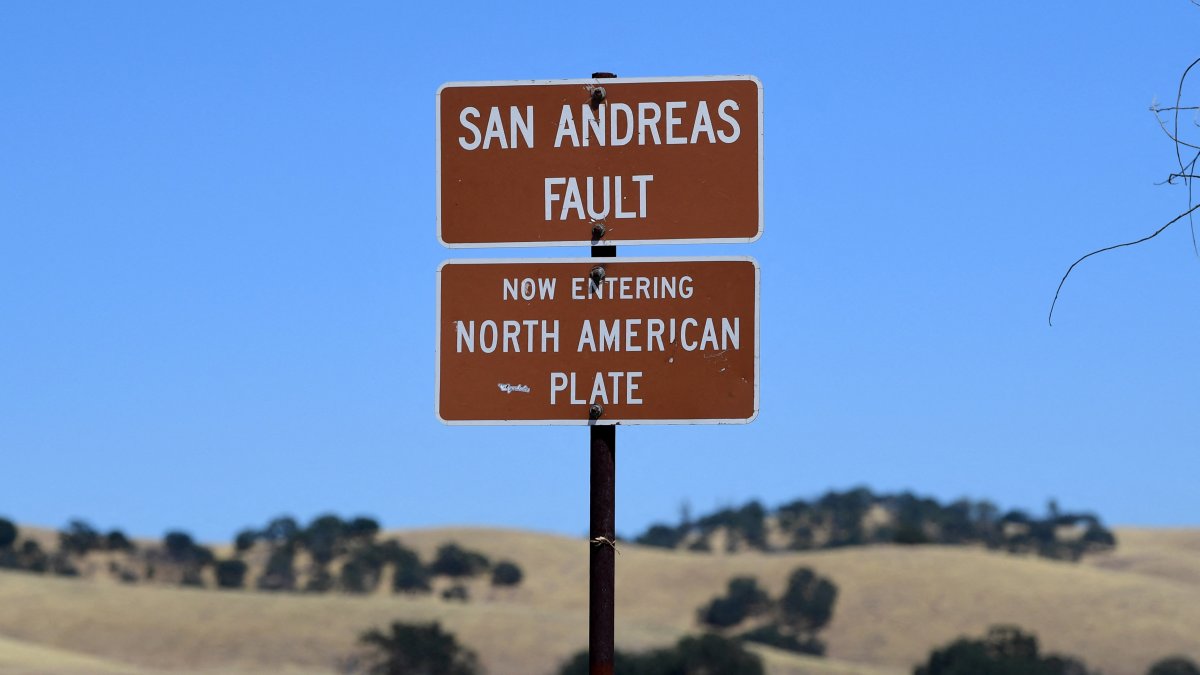
Reference image of the San Andreas Fault

The tectonic stress accumulated along the San Andreas and San Jacinto fault systems in Southern California has reached and, in some areas, even exceeded the highest levels observed in the last millennium, according to research led by scientists at the University of Hawaii at Mānoa.
The study, published in the scientific journal Journal of Geophysical Research: Solid Earth, concludes that the region is in a state of critical stress and outlines scenarios that could have implications for seismic risk assessment in one of the most densely populated areas of the United States.

Society
Texas under flood alert: Storms and extreme heat add pressure to the 2026 World Cup
Diane Hernández
The researchers developed a physical computer model to simulate how stress accumulates and is released in Southern California’s fault systems, including the Cajon Pass area, a key point where the San Andreas and San Jacinto faults converge.
To do so, they used a 1,000-year record of seismic activity reconstructed from geological evidence, such as radiocarbon dating of displaced sediments and records obtained from tree-ring growth.
"Our results show that stress levels on multiple fault segments are now at or above the highest values seen in the past millennium and that the region may be capable of of experiencing a major continuous rupture involving both fault systems," noted Liliane Burkhard, lead author of the study and a researcher affiliated with the Institute of Geophysics and Planetology at the University of Hawaii and a scientist at the University of Bern in Switzerland.
The research also identifies Cajon Pass as a potential "seismic gate" capable of blocking or facilitating the propagation of large ruptures between the two fault systems.
According to Burkhard, the conditions that determine whether that "gate" remains closed or opens appear to depend on the alignment of stress levels between the two faults at the time of a rupture.
"Right now, with stress at historically high levels across the region and more than 160 years elapsed since the last major rupture, the system is in a critically loaded state," she stated.
The results suggest that the stress that would normally be released through major earthquakes has continued to accumulate and is currently at unprecedented levels within the analyzed period.
The study also suggests that Cajon Pass could facilitate a simultaneous rupture of the San Andreas and San Jacinto faults, a scenario that, according to the researchers, could be significantly more destructive than an event associated with a single fault.
Potentially affected areas include some of Southern California’s most populated regions, such as Los Angeles, San Bernardino, Riverside, and the Coachella Valley.
The research is not a prediction
“This is not a prediction of when an earthquake will happen,” Burkhard said. “However, studies like this are important contributions to national and global earthquake hazard research in that we are using rigorous, quantitative science to better understand the risk facing millions of people. What we can say is that the system is critically stressed, and that physics-based models like this one give us a clearer picture of the range of scenarios we should be prepared for. That information matters for hazard assessments, infrastructure planning, and emergency preparedness.”
The researchers believe that these types of models can help improve seismic risk assessments, infrastructure planning, emergency preparedness, and the development of building codes.
Specialists from Northern Arizona University, the University of Bern, the U.S. Geological Survey (USGS), and the University of California, San Diego, also participated in the study.
LATEST