Public health shield: CDC and DHS implement immediate restrictions to slow the spread of Ebola
Along with DHS and other agencies, the CDC is "taking proactive measures to protect the health and safety of the American public" from the Ebola outbreak.
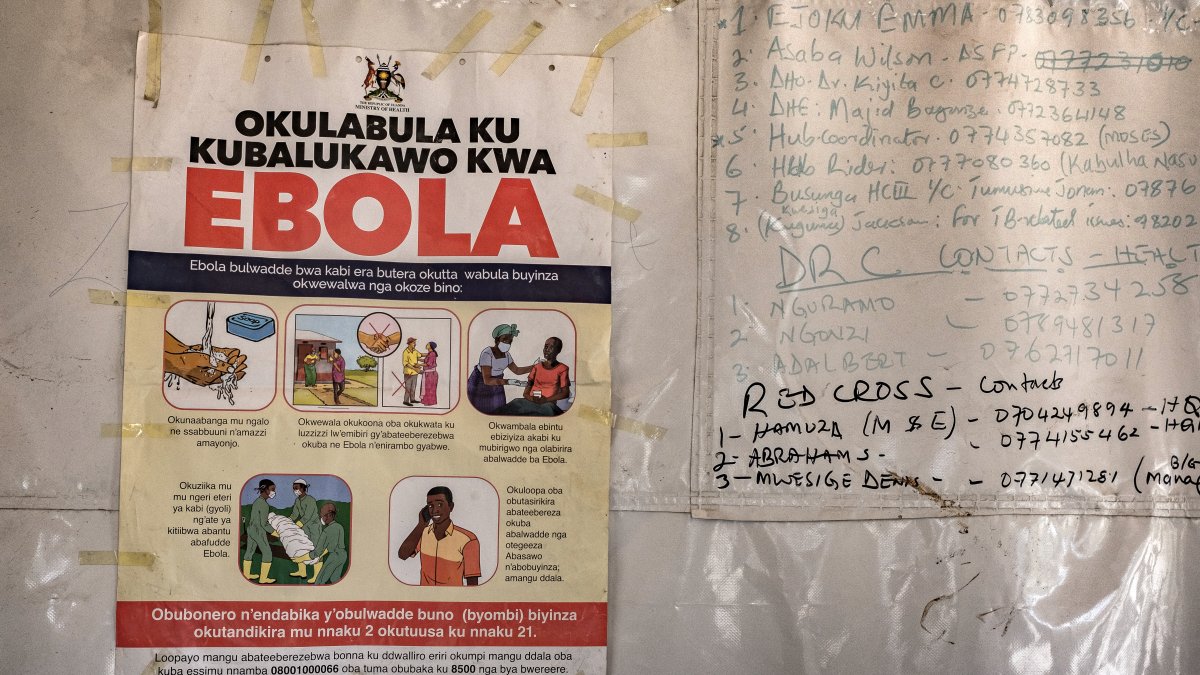
Poster on how to prevent Ebola in Uganda. File image

The Centers for Disease Control and Prevention (CDC) and the Department of Homeland Security (DHS) are taking steps to prevent the entry of people infected with Ebola following the outbreak in the Democratic Republic of the Congo and Uganda, among other countries in Africa.
Still, the agencies took care not to alarm and considered the risk to the country to be "low."
"The Centers for Disease Control and Prevention (CDC), and the Department of Homeland Security (DHS), and other appropriate federal agencies, are taking proactive measures to protect the health and safety of the American public in response to ongoing Ebola Virus Disease (EVD) outbreaks," they reported through a statement.
The measures taken by the CDC and DHS, which will be done so "immediately," are as follows:
- "Enhance public health screening and traveler monitoring for individuals arriving from areas affected by Ebola outbreaks in the region."
- "Entry restrictions on non-U.S. passport holders if they have been in Uganda, DRC, or South Sudan in the previous 21 days."
- "Coordinate with airlines, international partners, and port-of-entry officials to identify and manage travelers who may have been exposed to Ebola virus."
- "Enhance port health protection response activities, contact tracing, laboratory testing capacity, and hospital readiness nationwide."
- "Continue deployment of CDC personnel to support outbreak containment efforts in affected regions."
As of press time, there were 10 confirmed cases and 336 suspected cases, including 88 deaths reported in the Democratic Republic of Congo and two cases, including one death, confirmed in Uganda, the CDC detailed.
On Sunday, the World Health Organization (WHO) declared an international emergency.
What is Ebola and what are its symptoms?
Ebola is a disease "Ebola disease is caused by a group of viruses, known as orthoebolaviruses," according to the CDC's definition. A person who contracts the disease may begin to show symptoms as early as the second day after contact with an ortoebolavirus, although it is usually eight to nine days later. Transmission occurs through the body fluids of those already infected.
The symptoms are:
- Fever
- Fatigue
- Joint and muscle pain
- Diarrhea
- Vomiting
- Unexplained bleeding
LATEST