Rex Heuermann: Serial killer pleads guilty to Gilgo Beach murders
At a news conference, District Attorney Raymond Tierney painted a chilling picture of a serial killer posing as a "harmless father." "This defendant walked among us, pretending to be a normal suburban family man, when in fact, all the while, he was obsessed with murdering innocent women," he said.
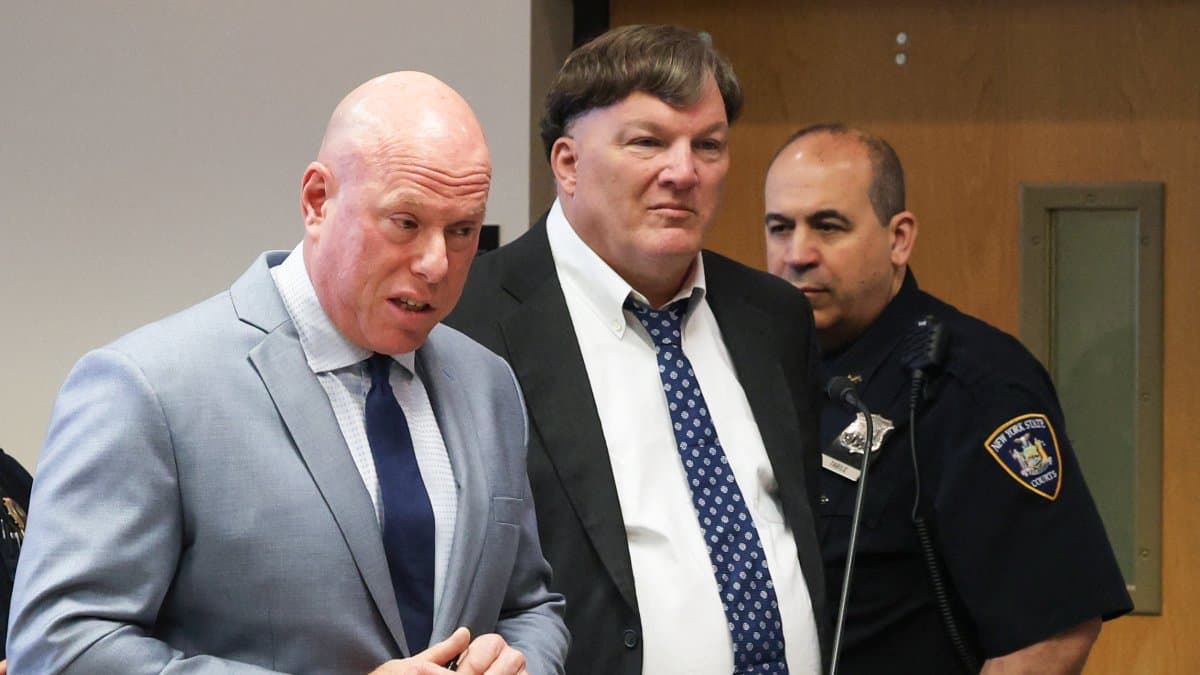

The man accused of strangling and dismembering women and scattering their remains around an elite coastal community in the country admitted to eight murders on Wednesday, solving a decades-long mystery about the so-called Gilgo Beach murders.
Rex Heuermann, 62, pleaded guilty to seven murders, plus an eighth for which he had not yet been charged, in a disturbing crime spree that stretched from 1993 to 2010 around Long Island, near New York City.
Heuermann, an architect who was arrested in July 2023 outside his Manhattan office, had initially pleaded not guilty, raising the prospect of a lengthy trial.
He pleaded guilty on Wednesday in Suffolk County Court in Riverhead and faces life in prison without the possibility of parole when sentencing is set for June.
Gloria Allred, an attorney representing several family members of the victims, praised them for their tireless pursuit of justice in this notorious unsolved case.
"What he (Heuermann) had thought was his perfect blueprint for serial murder did not take into account the courage and the persistence of the murder victims' family members," she told reporters.
Most of the women's remains were found in 2010 and 2011 near Gilgo Beach, an Atlantic Ocean barrier beach on Long Island's south shore. The body of one of the victims was discovered about 110 miles away in 1993.
The Gilgo Beach case had baffled investigators for years without any suspects being identified, and some critics alleged it would have moved more quickly if the women had not been sex workers.
DNA testing
But in 2022, detectives turned their attention to Heuermann after discovering he was the registered owner of a vehicle in which one of the victims had been seen.
Since then, the case against Heuermann, a married father of two at the time of the murders, has relied on DNA evidence obtained from a discarded pizza box and cell phone data linking him to the victims.
Some of that evidence was found at his family's home in Massapequa Park, a suburban town.
Heuermann also conducted hundreds of internet searches on the investigation into the murders, asking questions such as "Why hasn't the Long Island serial killer been caught?"
"This defendant walked among us"
"This defendant walked among us, play-acting as a normal suburban dad, when in reality, all along, he was obsessively targeting innocent women for death," he said.
Suffolk County Sheriff Errol Toulon, in whose jail Heuermann was held while awaiting trial, made a similar assessment.
"What has been the most alarming is how ordinary Heuermann has been. It's a chilling reminder that those capable of horrific acts can often go unnoticed," said Toulon.
🛠 Do you think there is an error in this article?
Recommendations






LATEST