Hawaii: Highly active Kilauea volcano about to begin its 36th episode (Live)
The Hawaii Volcano Observatory announced Friday that persistent chimney glow, lava spattering and overflows indicate that the onset of a new episode is near.
Kilauea volcano

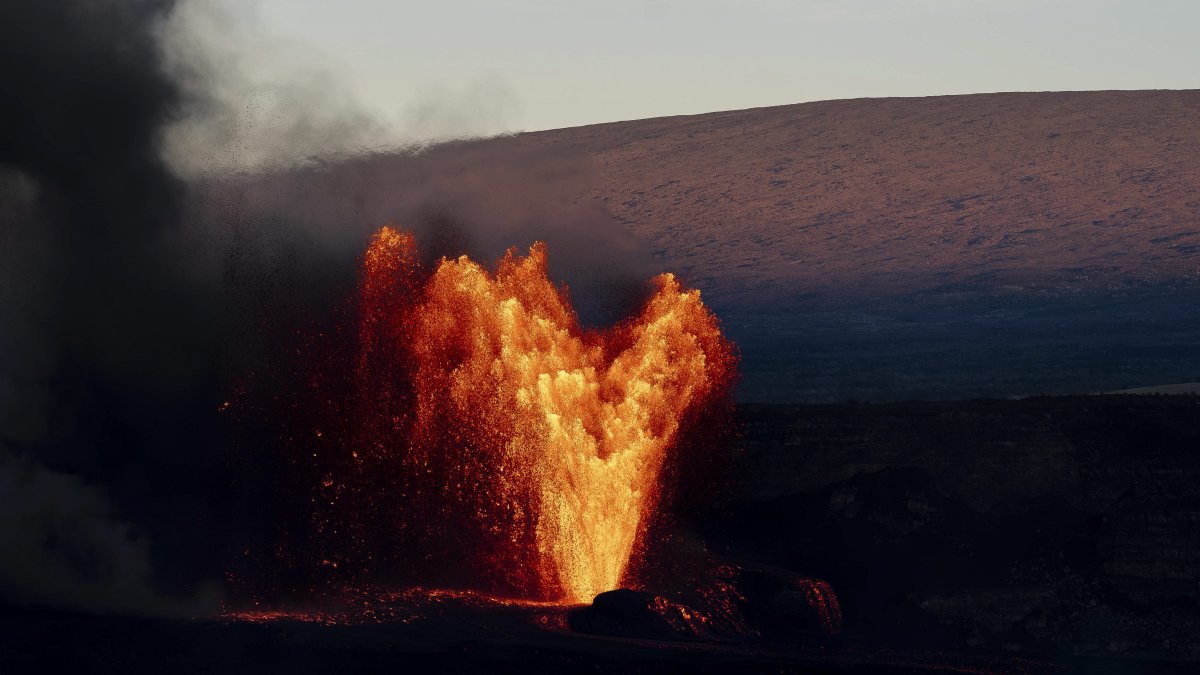
Kilauea volcano in Hawaii is one of the most active volcanoes in the world and is currently going through a phase of high activity with spectacular lava fountains and flows visible from its crater. The lava from this volcano offers impressive images, especially at sunset, when the incandescent flows contrast with the dark sky.
The United States Geological Survey (USGS) maintains live cameras that show the activity in real time.
The USGS Hawaii Volcano Observatory announced Friday that a phase of significant activity is ahead at Kilauea, based on observed conditions at the summit. The persistent brightness of the chimney, lava spattering and overflows indicate that the onset of volcanic episode 36 is near.
"Periods of strong glow overnight in the north and south conduits, and the resumption of overflows fromthe north conduit early this morning indicate that the onset of episode 36 may be near. Models suggest a likely forecast timeframe November 7-11 for episode 36," the observatory reported.
Earlier this week overflows of degassed lava began flowing from the southern conduit, but stopped early Thursday morning. However, specialists say the repeated overflows from the north and south conduits indicate that the start of episode 36 is imminent.
Episode 35 lava fountains up to 1,500 feet
Volcanic episode 35 began on the night of Oct. 17 and ended early the next morning. During that episode, lava fountains from the southern conduit reached 1,500 feet in height, while eruptions from the northern conduit reached heights of 1,100 feet, according to the USGS.
"The current eruption has been characterized by episodic lava fountains that have not been seen in any eruption since the episodic fountains of 1983-1986 at the start of the Puʻuʻōʻō (A volcanic cone located in the eastern fault zone of the volcano) eruption," the observatory said.
More than 30 episodes since December
Lava jets over 1,000 feet, magma flows: spectacular images of Hawaii's Kilauea volcano, erupting since late December, were released in May by the U.S. Geological Survey.
The volcano, one of the most active in the world, has experienced more than thirty episodes since late December, when it erupted again. "Most episodes of lava jets since December 23 have lasted a day or less, with breaks between episodes of at least several days," the USGS said.
"Since the start of the current eruption on December 23, 2024, lava fountaining episodes have occurred about once a week."
Key facts about Kilauea
- Location: Hawaii Island, within Volcanoes National Park.
- Type: Shield volcano, formed by fluid eruptions of lava that create gentle slopes.
- Height: 4,091 feet above sea level.
- Scientific: It is a natural laboratory for studying hot-spot volcanoes and magmatic dynamics.
- Cultural: In Hawaiian tradition, Kllauea is linked to Pele, the goddess of fire and volcanoes.
Scientific and cultural importance
LATEST