Holmes County, epicenter of obesity crisis in the U.S.
Holmes, despite its fertile soil and agricultural economy, is a "food desert." Supermarkets are scarce, and the few that are available often have empty shelves of fresh fruits and vegetables.

An obese person eating a hamburger.

In Holmes County, Mississississippi the obesity rate has reached an alarming 53.2 %, the highest in the United States, according to the 2023 Health Census of the CDC.
This rural county, located in the fertile Mississippi Delta, is a microcosm of the challenges facing the Trump Administration as it battles an obesity crisis affecting national health.
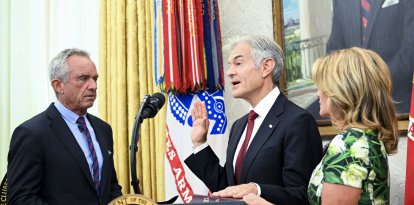
As Robert F. Kennedy Jr, appointed Health Secretary by President Donald Trump, declares a war on ultra-processed foods and the fast-food industry, Holmes residents face structural barriers to accessing healthy eating.
Clyde Anderson, 54, is a reflection of this reality. After a heart attack in 2020 that required a quadruple bypass, he gave up fast food and lost weight, according to reports from The Telegraph.
However, not everyone at Holmes is equally lucky. “I have classmates who died from diabetes and heart attacks in their 30s,” says Roneda Lowe, 42.
Obesity, defined by a body mass index (BMI) of 30 or more, affects two in five adults in the U.S., with Holmes at the forefront of this crisis.
A food desert
The county, despite its fertile soil and agricultural economy, is a "food desert." Supermarkets are scarce, and the few available, such as Dollar General in Tchula, often have empty shelves of fresh fruits and vegetables.
The nearest supermarket is 19 km away, in Lexington, and the fresh food available is often expensive or of poor quality. “You take a bite of an apple, and it tastes like beeswax,” says Tom Collins, of the Farmers' Cooperative Association of Mileston.
Lack of public transportation and exercise infrastructure compounds the problem in a region where the median household income is just $29,434, the lowest among counties with more than 10,000 residents, according to reports from the media.
Kennedy and Trump's crusade against ultra-processed foods
Robert F. Kennedy Jr. has put the spotlight on ultra-processed foods (UPF), which account for nearly 70% of calories consumed by American children.
In his Make America Healthy Again (MAHA) report, Kennedy calls UPFs "detrimental" and links them to the rise in obesity and mental disorders. “The problem is, [the] industry is making money on keeping us sick,” he said in April.

His plan includes reforming the Supplemental Nutrition Assistance Program (SNAP) to exclude unhealthy foods, such as sugary drinks, which account for 9.3% of recipients' spending. It also proposes eliminating synthetic dyes and closing loopholes that allow companies to use additives without strict oversight by the FDA.
Politics
USDA employee and five others arrested in $66 million food stamp fraud scheme
Agustina Blanco

Health
The Trump Administration is pushing for a ban on artificial food dyes thanks to RFK Jr.
Agustina Blanco
Donald Trump has endorsed this offensive. At the launch of the MAHA report, he stated, “We will not be silenced or intimidated by the corporate lobbyists or special interests. It won’t be nice and won’t be pretty, but we have to do it.”
.@POTUS reads out the "alarming findings" of the MAHA Commission Report on childhood health:
— Rapid Response 47 (@RapidResponse47) May 22, 2025
- More than 40% of American children have at least one chronic health condition.
- Since the 1970s, rates of childhood cancer have soared by nearly 50%.
- In the 1960s, less than 5% of… pic.twitter.com/U5SvbRkbQh
Kennedy, for his part, insists not on banning foods such as hamburgers or soft drinks, but on better informing consumers about their impacts.
Local challenges and hope in regenerative agriculture
At Holmes, the disconnect with healthy food is evident. "I grew up on Pop-Tarts," unlike his mother, who had home gardens, Lowe says. Fast food and UPFs, cheap and convenient, dominate local diets. Dennis Horton, a restaurant owner in Goodman, tried offering vegetable meals, but demand for cheaper options, such as burgers, forced him to change his menu. "People like to eat cheap," he explains.
Still, there are local efforts to change this reality.
Calvin Head, 63, leads a hydroponic farm in an abandoned school, with plans to grow microgreens and strawberries. His cooperative seeks to educate young people and promote regenerative agriculture, but is dependent on funds to move forward. “We live in a community where you have fields of traditional crops like cotton, corn, and soybeans, but that’s not going to actually put food in your belly,” Collins says.
Robert F. Kennedy Jr.'s crusade and Donald Trump's endorsement to combat the obesity crisis mark a bold step in the right direction.
By challenging the ultra-processed food industry and promoting policies that prioritize nutrition, such as SNAP reform and additive regulation, they are addressing the roots of a problem that affects communities like Holmes County.
Although they still face obstacles, their commitment to informing and helping Americans make healthier choices offers hope for a future where health improves.
MAHA report and a call to action:
The commission, which includes leaders such as Lee Zeldin (EPA), Brooke Rollins (USDA) and Doug Collins (Department of Veterans Affairs), proposes a shift toward a proactive health system that prioritizes prevention and wellness.
“After a century of costly and ineffective approaches, the federal government will lead a coordinated transformation of our food, health, and scientific systems,” the report concludes, highlighting the urgency of addressing these trends to ensure a healthier future for America's children and Homeland Security.
LATEST