Trump's dilemma: The retreat of the global policeman and the dangers of a power vacuum
America's legacy is not isolationist, transactional or identitarian. It is a beacon for all free nations.
Published
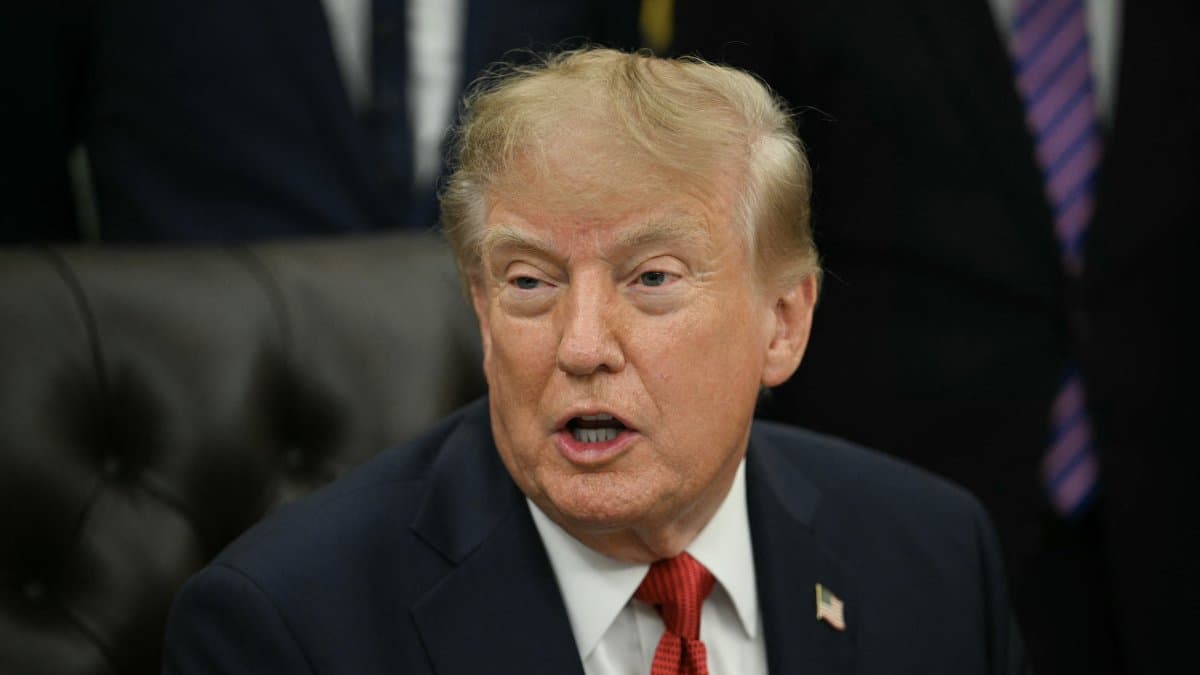
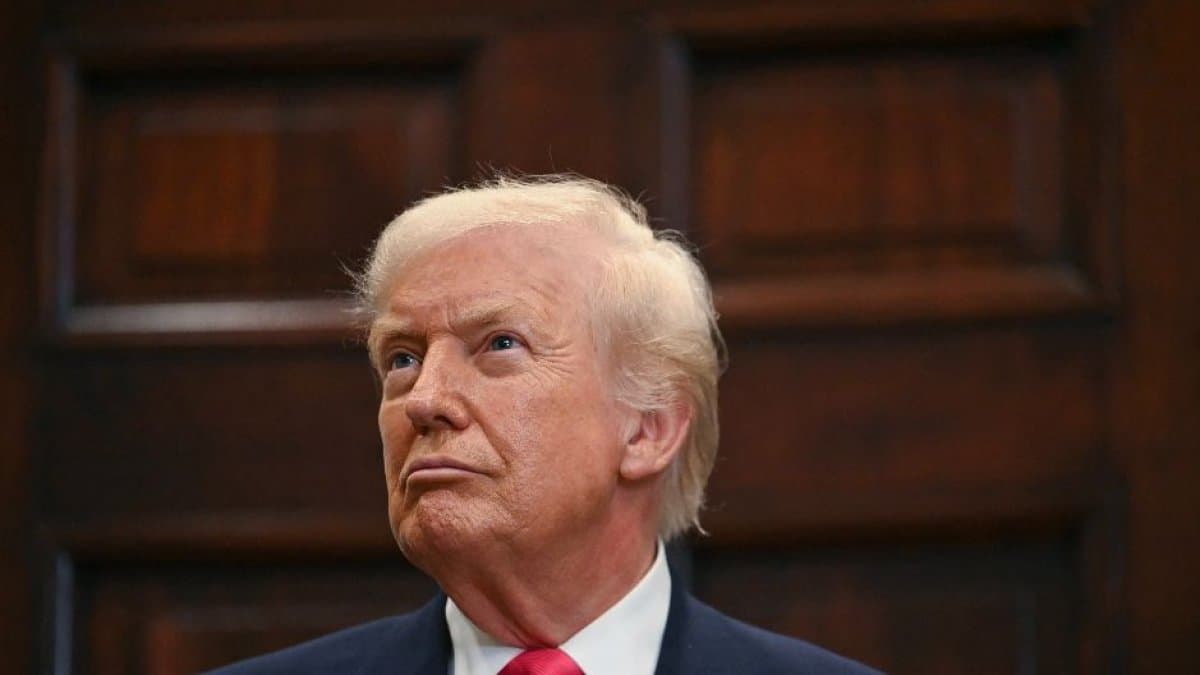
Last Wednesday, Donald Trump gave the nation a revealing, surprisingly brief, unusually stiff speech. It was not the classic, expansive, defiant Trump who dominates stages, but a man hamstrung by circumstance. Trump is very transparent about his feelings, and in this appearance he seemed frustrated.
Like any politician caught in the trap of his own promises, Trump fell back on the familiar "I inherited a mess." It is the most predictable rhetorical resource in any presidential arsenal, although in Trump's mouth, it sounded genuine: it is true that Biden had a lousy management, which allowed inflation to get out of control, energy prices to soar and a long etcetera of very serious blunders.
But the accurate diagnosis was not followed by a deployment of free market principles that could counteract these disasters, but by the appropriation of the constructivist Democrat worldview. The word that dominated the speech was "affordability," a buzzword in the global social democratic narrative, and much used in recent Democratic party election campaigns in particular. His speech seemed to want to wrest that message from opponents, he promised several drastic price reductions for example in drugs or energy and committed to aggressive housing reform plans.
<cite class="c-detail__cite__title">"Power hates a vacuum, something that those who promote the U.S. retreating to within its own borders should understand."</cite>
These promises lay bare that his administration is reacting to the opposing agenda, losing the edge on the initiative from just a year ago. Trump appears to be lagging behind the Democratic trend on economic policy, when in fact the economic news is not bad. Inflation has cooled, the stock market seems to be recovering from the instability caused by tariffs that were adjusted, rolled back, re-imposed and rescinded in a tumultuous period that shook foundations. And the economy is showing growth. But certain indicators such as unemployment can be used against him, especially if the president continues to react intemperately to bad news.
It was notable that the U.S. president did not boast about the actions of the defunct Department of Government Efficiency (DOGE) that Elon Musk briefly led and that dismantled significant parts of the federal bureaucracy. The initiative shown by DOGE exposed how taxpayers were being ripped off and how state resources were used for radical leftist political agendas across the globe. On Wednesday, Trump was not in control of the national narrative, but adopting the language and priorities of his political adversaries.
Hours before the speech, the White House was shocked by a scandal stemming from a Vanity Fair interview where Susie Wiles, Trump's chief of staff and right-hand woman, made explosive comments against top administration officials, starting with J.D. Vance. The interview revealed a White House importuned by its internecine wars. But Trump's response to this turbulence was to update the so-called Presidential Walk of Fame that in September had given rise to talk because he replaced the portrait of Joe Biden with the image of the autopen and which this week had an unhappy addition: the installation of a new set of explanatory plaques that, according to the White House spokeswoman, were written directly by the president himself. It was an unnecessary settling of scores but consistent with the behavior pattern of the president who, in the face of adverse climates, takes refuge in provocation.
Pointing out the mistakes
Those who sympathize with Trump's political project often feel they must defend each of these actions. This is extremely dangerous at this stage of the administration, because it takes away the possibility of the president registering these mistakes and redirecting his policies. Thoughtless defenses, in a polarized country, tend to repel voters in the middle ground. The strength of the American republic has resided in the willingness of its citizens to question power, not idolize it.
Trump correctly diagnoses many of the ills afflicting the nation. But diagnosing well is not necessarily planning well, and his frustration with the judicial siege and other constraints on presidential power in this first stretch of the second administration often leads the president to contradict his own stated objectives from just under a year ago.
For example, the geopolitical diagnosis articulated in the National Security Strategy 2025 (NSS 25) is in many ways accurate. The Trumpian vision of European decline is stark but real. However, President Trump's approaches to the problem are perhaps part of it. What is most troubling about NSS 25 is what it keeps quiet. The document contains almost no criticism of Russia. When it comes to China, previously the main target of President Trump's denunciations, it is treated with curious caution in the new strategy. The importance of an independent Taiwan is downplayed, and as for the Middle East, the document states that it is emerging as a place of collaboration, friendship and investment.
Realpolitik is a constant that should not be ignored, but without guidelines that at least uphold certain values particular to countries, there is a risk of equating the governments and actions of all nations. And they are not all the same. Trump has been compromising with certain autocrats, and on many occasions this puts his allies in unstable positions, even endangering their survival. Consider the reorientation toward Qatar, to the point of compromising American defense with the security of the political project of the emir who is a partner and guardian of the world's most dangerous terrorists.
The decision to elevate Qatar as an ally responds to a vision of the world that privileges multipolarity, a concept that deprives the United States of hegemony and elevates Russia and China, allowing each to have an area of influence. This transactional logic replaces that of moral principles and enduring strategic alliances. For the country's most powerful rival, China, there were only cautious references. For example, in the security strategy, Africa received a few lines, also with a transactional vision. It is curious, being a continent that is the origin of much of the immigration that Trump places at the top of the causes of civilizational decline, and that is also a Chinese geopolitical playground.
The American Tradition: Custodian of freedom, moral bulwark
In Wednesday's speech, Trump was selective in his foreign policy analysis, focusing on what he considers his successes in the Middle East. "I have restored American strength, settled eight wars in 10 months, destroyed the Iran nuclear threat, and ended the war in Gaza, bringing for the first time in 3,000 years peace to the Middle East, and secured the release of the hostages, both living and dead," he boasted. The hyperbole is telling, because it disguises the little progress in the Ukraine-Russia conflict, for example.
Trump has undoubtedly saved the United States from the dismal drift to which it was being led by the Democratic Party long captured by its radical left wing. But certain internal currents, very functional, almost parallel to that radical left, that promote a utopian isolationism, are attacking his legacy. Many voices within the Republican Party question the need for the country's commitment to its allies and even point to classical liberal democracy as the problem, revealing an incomprehensible admiration for certain autocracies, while Russian neo-imperialism revives hand in hand with its partnership with the Chinese Communist Party and arming for confrontation.
One can stop being the world's policeman, but one cannot at the same time remain the world's leader. Power hates a vacuum, something that those who promote the U.S. retreating to within its own borders should understand, as this would embolden enemies and detach the country from the moral purpose that justifies its leadership. If the United States owes allegiance only to itself, then its entire history would be a mistake. And that is not real.
Politics
From supporting Democrats to praising Trump: Nicki Minaj surprises at AmericaFest
Sabrina Martin
America's legacy is not isolationist, transactional or identitarian. It is a beacon to all free nations. If America forgets the strength of its values, it plunges into its own irrelevance, exactly the same thing that Trump, rightly, diagnoses is happening to Europe.
Trump is a fine analyst who correctly assesses many of the ills afflicting the West. But with prescriptions such as isolationism, friendship with dictators or the appeasement of allies, these ailments will not be cured. Because what made the United States the most powerful country in the world was its purpose. The White House knows what is wrong but internally has conflicting versions about the course to correct it. Still, there are three years left in office, time enough for Trump to discipline his troops and remember that accurate diagnosis is only worthwhile if followed by coherent policies. The West needs him to do so.
If the United States forgets this, the battle between those who believe that freedom is a universal value to be defended and those who see it as a stumbling block to be jumped will have been settled in favor of the latter. Ronald Reagan warned that freedom is such a fragile thing that it is never more than a generation away from extinction. Trump should remember: what made America great was precisely its willingness to be the world's policeman, custodian of freedom and moral bulwark. Allied defense was never charity, it was geopolitical strategy linked to principle as a way of life. Realpolitik can also be ethical.
🛠 Do you think there is an error in this article?
Recommendations
LATEST