Supreme Court deals major blow to Trump, upholds birthright citizenship
The ruling reaffirms that birthright citizenship remains in effect under the protection of the Fourteenth Amendment, upholding a constitutional interpretation supported by more than a century of case law, including the landmark 1898 precedent on this right.
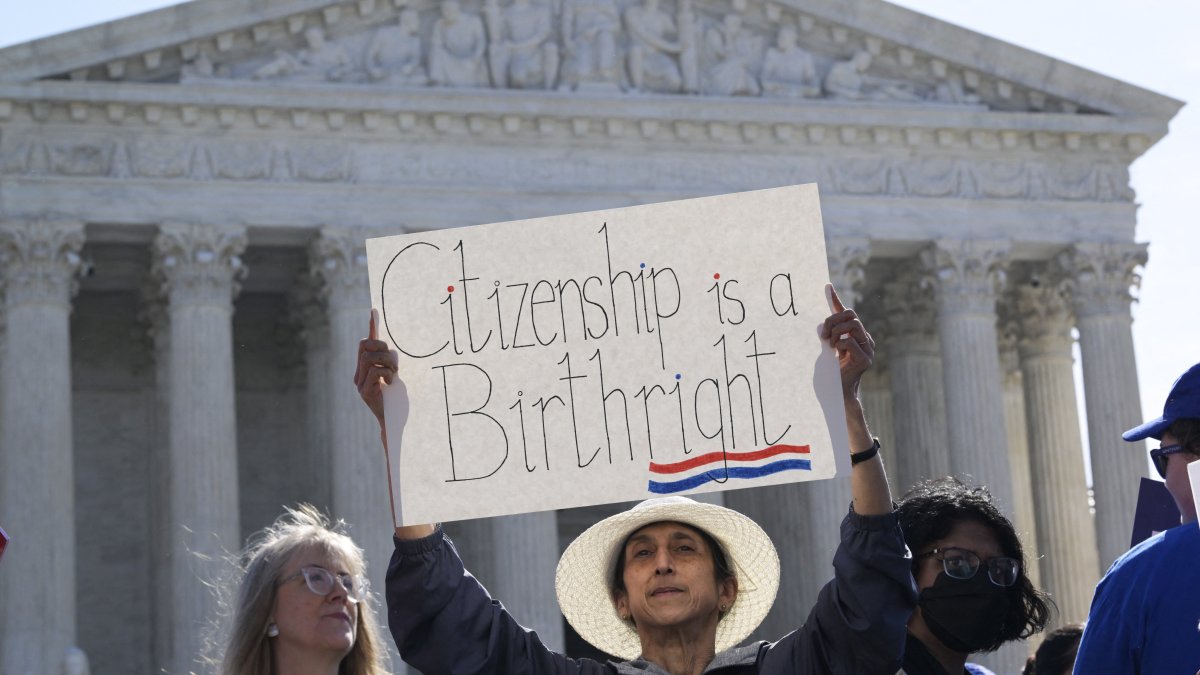
Protest outside the Supreme Court for the right to birthright citizenship (File photo)

On Tuesday, the Supreme Court dealt one of the most significant legal defeats of Donald Trump's presidency by rejecting, by a vote of 6 to 3, his attempt to restrict birthright citizenship, a principle protected by the 14th Amendment to the U.S. Constitution.
The Supreme Court upheld a lower court’s decision that had blocked the executive order signed by Trump on his first day back in the White House. That order instructed federal agencies to not recognize children born on American soil as U.S. citizens when neither parent was a citizen or a legal permanent resident.
Politics
Trump warns it would be a 'disgrace' if SCOTUS upholds birthright citizenship
Carlos Dominguez
The ruling reaffirms that citizenship by birth remains in effect under the protection of the 14th Amendment, upholding a constitutional interpretation supported by more than a century of case law, including the landmark 1898 precedent on this right.
The decision represents a significant blow to Trump’s immigration agenda, as he had made the elimination of automatic citizenship for children of undocumented immigrants or those with temporary status one of the main promises of his second term. According to estimates cited during the proceedings, the ruling preserves the right to citizenship for hundreds of thousands of children born in the country each year.

This is the second major legal setback the Trump administration has suffered this year in the Supreme Court, after the court also blocked its strategy to impose broad global tariffs in February.
LATEST