New clash between the Trump administration and the media over missile stockpiles and an alleged tension between the president and Pete Hegseth
Trump reportedly questioned Hegseth for failing to inform him that the alleged shortage of critical weapons remained unresolved.
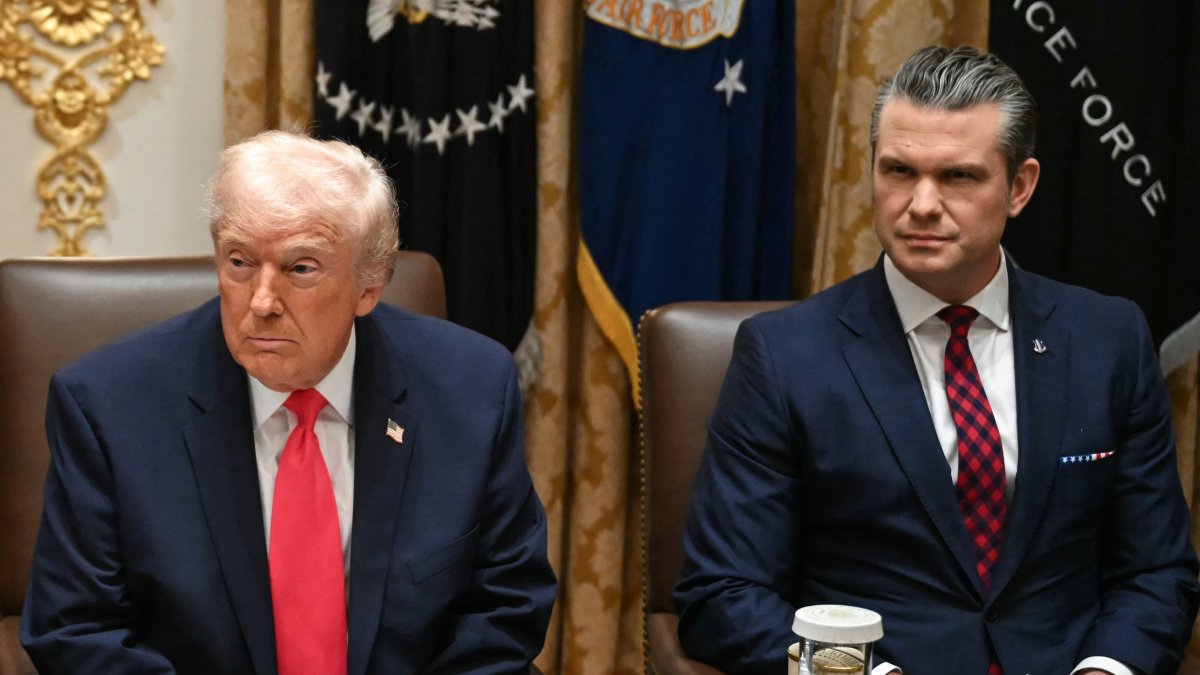
Trump and Hegseth at the White House / Andrew Caballero-Reynolds
The mainstream media and the administration of President Donald Trump clashed again on Wednesday over the issue of the U.S. arsenal, after The Washington Post published an article in which it claimed that the Republican president confronted Defense Secretary Pete Hegseth during last week's cabinet meeting at Camp David, after he allegedly learned that military stockpiles of key ammunition were much lower than he had believed.
According to the newspaper's report, two people familiar with the incident explained that the exchange reportedly took place on the sidelines of Friday's meeting, when Trump questioned Hegseth for failing to inform him that the alleged shortage of critical weaponry remained unresolved. The two sources, whose identities were not disclosed, told the Post that Trump expressed his frustration and said he thought the problem "had been fixed." These two people also stated that Hegseth defended his handling of the matter and maintained that Undersecretary of Defense Stephen Feinberg was responsible for the situation, including the failure to ensure that Trump was fully informed about the status of the Pentagon's ammunition reserves.
The Pentagon categorically denied the newspaper's report through its chief spokesperson, Sean Parnell, who said, "Secretary Hegseth did not mislead anyone about our munitions posture, and he did not blame Deputy Secretary Feinberg. These claims about depleted stockpiles, internal disagreements, the Secretary’s position on Iran … are equally fictional."
Politics
Reports warn of a missile shortage, but the Pentagon is signing contracts worth more than US$3 billion to expand production
Luis Francisco Orozco
For her part, White House Press Secretary Karoline Leavitt posted a tweet stating, "I was at Camp David with President Trump and Secretary Hegseth. This literally never happened, and we told the Washington Post that repeatedly. This B.S. story was shopped to many outlets by someone clearly out to disparage the Secretary, for whatever reason. Unfortunately for them, the President loves the Secretary and thinks he’s doing a tremendous job. FAKE NEWS!"
Agreements to increase missile production and reports of shortages
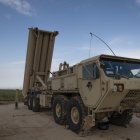
The Post's article was published shortly after the Department of War (DoW) announced the signing of two major contracts worth over $3 billion with defense contractors Northrop Grumman and Lockheed Martin as part of an effort to expand production of critical components for missile defense. According to the department, Northrop Grumman will accelerate the manufacture of solid-fuel motors and other components used in the Patriot Advanced Capability-3 Missile Segment Enhancement (PAC-3 MSE) program, while also increasing production of essential parts for the Terminal High Altitude Area Defense (THAAD) system.
Following the announcement of the agreements, the Reuters news agency recently reported that the supply of several long-range missiles and interceptor systems had come under serious strain after more than five months of military operations. CNN also reported, citing two people familiar with the matter, that the U.S. military had reportedly used up nearly 80% of its inventory of THAAD interceptors and approximately half of its Patriot interceptors since the start of the conflict with Iran.

Hegseth rejected that assessment and harshly criticized the way CNN presented the information after the network ran a ticker stating that U.S. weapons supplies were "dangerously low" and had been used "by nearly 80%." In response, the secretary wrote: "That banner is NOT TRUE, @CNN. Shame on you. We don't hate the Fake News media enough."
Before the war with Iran began, the United States had just over 450 THAAD interceptors. A recent estimate by the Center for Strategic and International Studies (CSIS) concluded that, by the end of July, the inventory had been reduced to between 234 and 278 units.
LATEST