ANALYSIS
Kevin Warsh reaffirms Fed’s commitment to fighting inflation, defends its independence at ECB’s annual central banking forum
The Federal Reserve Chair, who presided over his first Federal Open Market Committee (FOMC) meeting last month, insisted that the central bank will fulfill its mandate to bring inflation back to the 2% target.
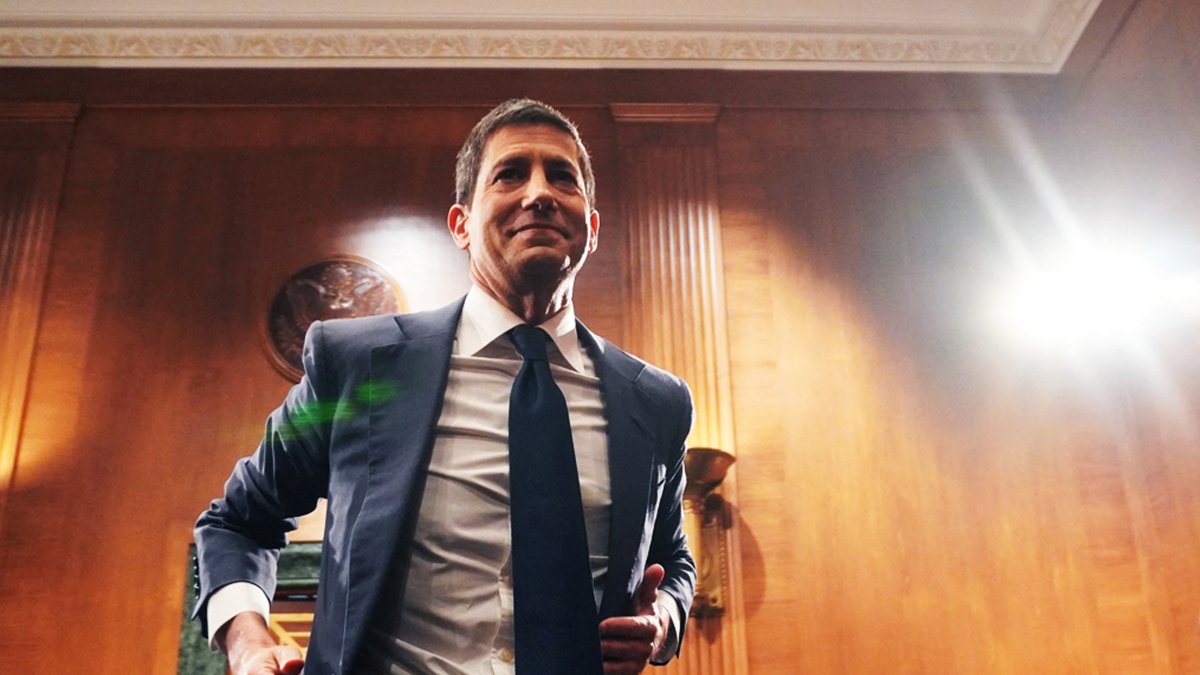
Kevin Warsh in the Senate / Kojiro Sekine

Federal Reserve Chairman Kevin Warsh reaffirmed on Wednesday that the institution is firmly committed to combating inflation, which he considers “too high,” during the Annual Central Banking Forum of the European Central Bank (ECB) in Sintra, Portugal, where he shared a panel with the heads of the ECB, the Bank of England and the Bank of Canada.
"We've all looked around and we've seen that prices are too high, and I don't think I'm the only one on this stage that's recommitted to deliver price stability," Warsh said during the meeting.

Inflation in the U.S., which had declined after peaking at nearly 9% during Joe Biden’s term in 2021, began to accelerate again following the outbreak of the war against the Iranian regime in late February, driven primarily by the sharp rise in oil prices. In May, the Fed’s preferred inflation measure reached a three-year high of 4.1%.
Warsh, who chaired his first Federal Open Market Committee (FOMC) meeting last month, insisted that the central bank will fulfill its mandate to bring inflation back to the 2% target. "If there were people in households or the business sector, in the financial markets, who thought that this central bank was going to be comfortable with an inflation objective above two percent, well, I guess they'd be disappointed," he warned.
Defending independence
According to AFP, Warsh also took the opportunity to reaffirm the Federal Reserve’s independence. This week, the Supreme Court (SCOTUS) blocked President Trump’s attempt to fire Fed Governor Lisa Cook, primarily based on allegations of mortgage fraud committed in 2021 before her appointment to the Fed by Joe Biden.
"So before the Supreme Court [decision], the Fed acted independently and followed its remit. After the Supreme Court ruling, the Fed will continue to do so," he stated.

Opportunities and challenges of artificial intelligence
The Fed chair believes the United States is well-positioned to be a “big winner” of this technological revolution, in part because it “is not afraid of productivity-led economic growth.” According to Warsh, A.I. will create more jobs and greater prosperity.
LATEST