U.S. aid effort in Venezuela becomes the largest natural disaster response the United States has mounted this century
Following the devastating earthquakes that struck Venezuela, the Trump Administration launched a robust response effort to deliver life-saving U.S. assistance to the Venezuelan people. The operation, described as the largest U.S. response to a natural disaster this century, is the result of close coordination between the Department of State and the Department of War.
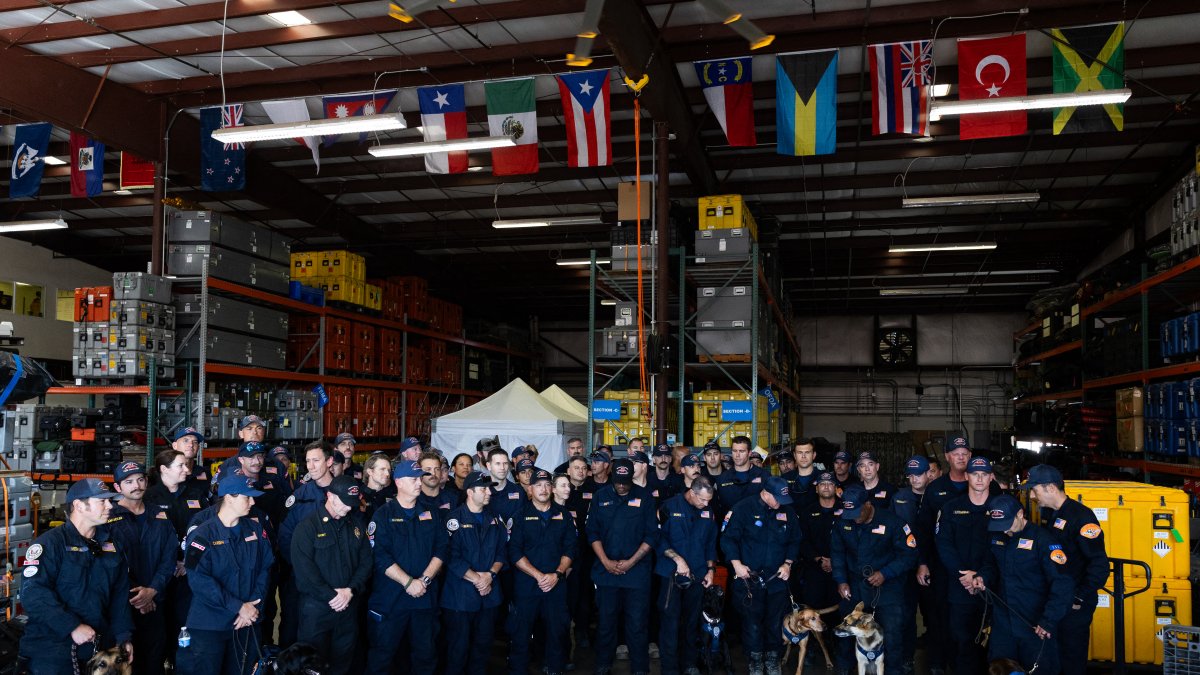
Members of the County of Los Angeles Fire Departmen. (Photo by Blake Fagan / AFP)
The assistance that the United States has deployed to Venezuela following the devastating earthquakes that struck on June 24 is of extraordinary scale. According to a senior Administration official, this is the largest international relief operation the United States has mounted this century. “In terms of personnel deployed on the ground, funds committed, and speed of response, this is truly a large-scale effort led by Secretary Rubio on behalf of President Trump,” the official said.
To date, the United States has committed $300 million to this response effort. The close collaboration and joint efforts between the Department of State and the Department of War have enabled a rapid response of extraordinary scale. The logistical capabilities of the U.S. military are unmatched, and no other military or civilian organization in the world possesses a comparable capacity.
Such cooperation allowed, for example, the rapid deployment of a specialized team from March Air Reserve Base in California to rehabilitate Simón Bolívar International Airport within hours. The operation, which was completed in a matter of hours, was critical to establishing the logistics network for the response, bringing additional teams into the field, transporting supplies, and moving all the heavy equipment required.
A senior Administration official emphasized that logistics is one of the most important and challenging aspects of responding to a natural disaster of this magnitude. In this regard, the cooperation between the two departments has been key to ensuring a rapid and effective response.
Before the repair work carried out by the U.S. military and American experts, the only airfield available to accommodate larger aircraft was Libertador Military Air Base. However, it presented several challenges, including its location, as it is located a couple of hours away from the hardest-hit area, La Guaira.
According to a senior Administration official, after days of intensive work and the successful reopening of Simón Bolívar International Airport, four U.S.-funded mobile hospitals are now operational and providing critical medical services while much of the local hospital infrastructure remains affected. The official said additional U.S.-funded mobile hospitals are expected to become operational in Venezuela within the next 24 to 48 hours.
In addition, the United States has the capability to evacuate severely injured patients using helicopters and other aircraft to the USS Fort Lauderdale, where they can receive advanced medical treatment if necessary.
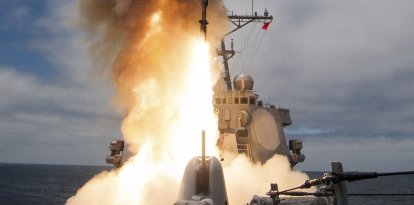
It is also important to highlight the coordination with U.S. Southern Command (SOUTHCOM), which is supporting relief operations on the ground by deploying its air, naval, and logistical capabilities to strengthen the response effort. As part of the operation, SOUTHCOM deployed the USS Fort Lauderdale off the coast of La Guaira to deliver supplies to the hardest-hit areas.
In coordination with the Department of State’s Disaster Assistance Response Team (DART), SOUTHCOM also mobilized C-17 Globemaster III, C-130H Hercules, MV-22 Osprey, CH-47 Chinook, UH-1Y Venom, and UH/MH-60 Black Hawk aircraft to conduct search-and-rescue operations, assess damage, transport personnel, and deliver humanitarian assistance. It is important to note that all U.S. military operations are completely self-sufficient and do not rely on local resources.
Currently, the priority remains rescuing survivors and saving lives, but at the same time, the United States is already moving toward the reconstruction phase. The official said that U.S. assistance to Venezuela will remain strong for as long as necessary and noted that Venezuela has always been an important country in the region. He added that this extensive relief deployment once again demonstrates the importance of the Western Hemisphere to the Trump Administration.
LATEST