ANALYSIS
Trump calls Supreme Court’s ruling on birthright citizenship 'very bad' for the US and pressures Congress to take action
In a highly anticipated decision issued on the last day of its session, the Supreme Court ruled 6-3 in favor of upholding the right to U.S. citizenship for nearly all people born on U.S. soil.
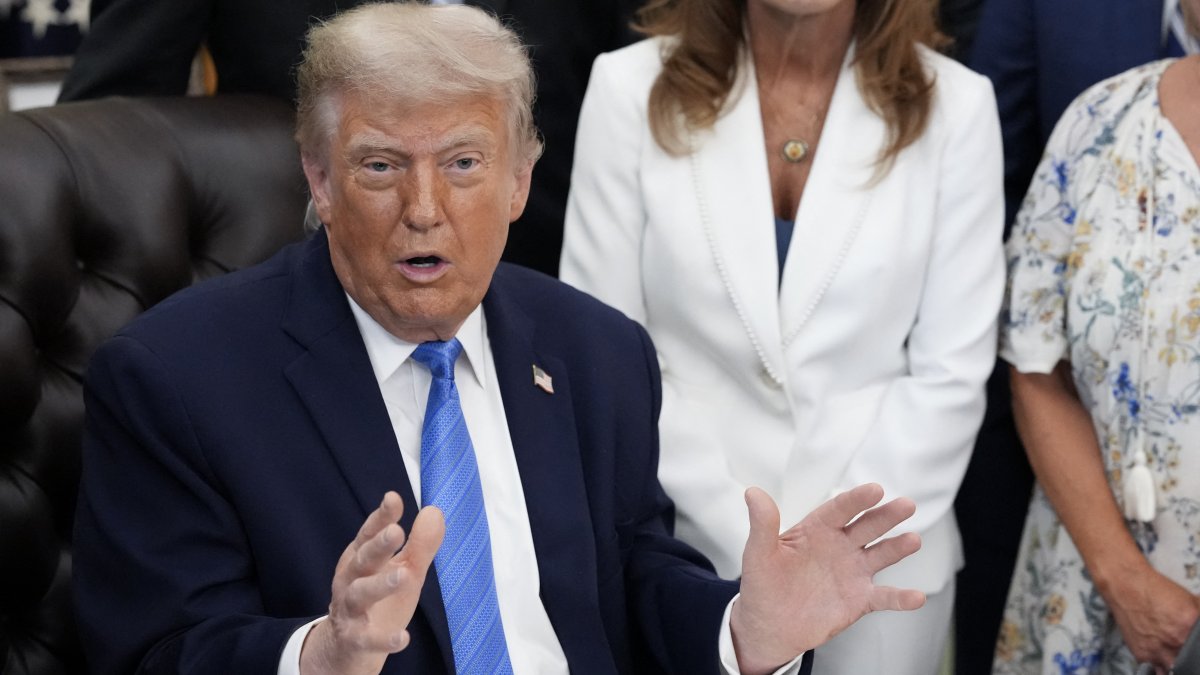
Donald Trump in the Oval Office / Ken Cedeno

President Donald Trump on Tuesday condemned a Supreme Court (SCOTUS) ruling that rejected his attempt to restrict birthright citizenship, and called on the Republican-controlled Congress to act on one of his key anti-immigration initiatives.
Through his Truth Social network, Trump described the ruling as "too bad for our country" and noted that, although the Supreme Court upheld birthright citizenship, this can be easily resolved through legislation in Congress, without the need for a constitutional amendment.
"We can easily make it up in Congress through Legislation, with the support of the President," he wrote. In addition, he urged lawmakers to begin “today” working to end what he considered a “expensive and unfair” policy for the United States, and assured them they would have his “complete and total support!”
SCOTUS upholds birthright citizenship under the 14th Amendment
The Supreme Court on Tuesday rejected President Trump’s initiative to restrict birthright citizenship, dealing a severe blow to one of his main anti-immigration initiatives.
In a highly anticipated decision, issued on the last day of its session, the court ruled by a 6-to-3 vote in favor of maintaining the right to U.S. citizenship for nearly all people born on U.S. soil.
In a majority opinion drafted by Chief Justice John Roberts—a conservative judge—and supported by two other conservative judges and all three liberal judges, the court reaffirmed the scope of the 14th Amendment.
“Children born in the United States to parents unlawfully or temporarily present are 'subject to the jurisdiction' of the United States and are citizens at birth under the Fourteenth Amendment's Citizenship Clause,” Roberts wrote.
Courts block Trump’s executive order on citizenship
Last year, on the first day of his second term in the White House, Trump signed an executive order decreeing that children born in the United States to parents who are in the country illegally or on temporary visas would not automatically obtain U.S. citizenship.
However, lower courts blocked the Republican president’s measure, arguing that under the Citizenship Clause of the 14th Amendment to the Constitution, almost all individuals born on U.S. soil are U.S. citizens.
LATEST