Congress sends Trump the largest affordable housing bill in decades: Here's what changes for homebuyers and Wall Street
For the average homebuyer, the bulk of the bill aims to lower costs and speed up housing construction by easing the bureaucratic requirements that so heavily burden U.S. builders.
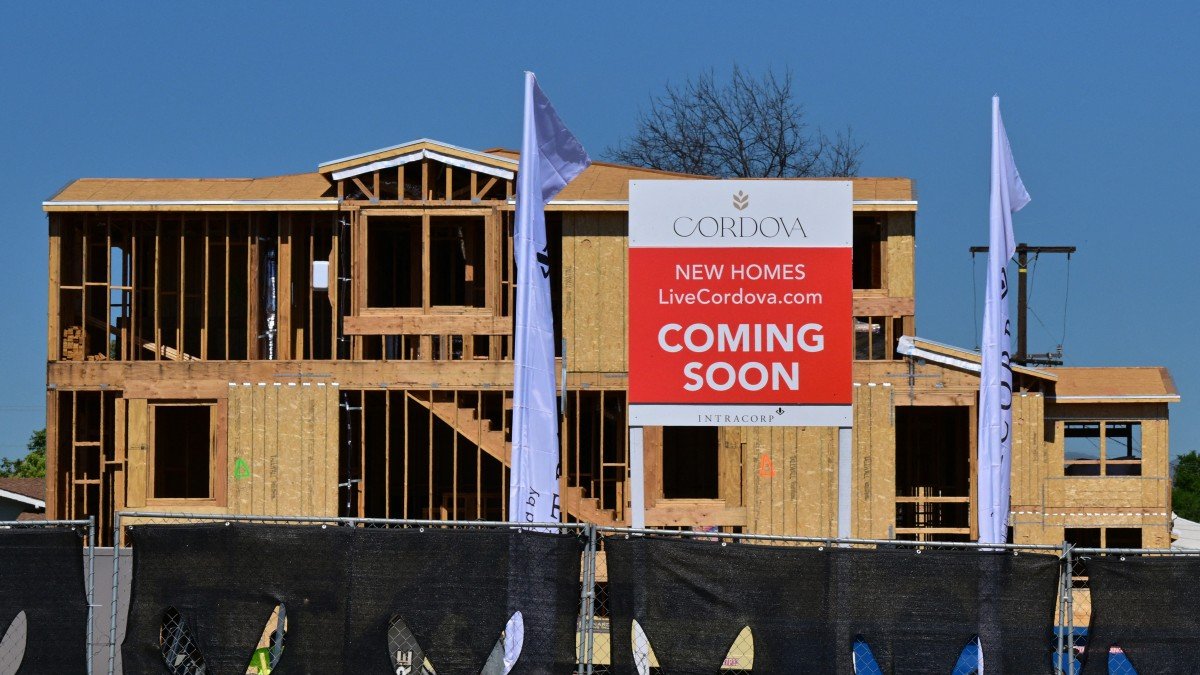
In Alhambra, California, on March 19, 2026, a new house under construction can be seen

Congress, in an overwhelming bipartisan vote, sent the largest affordable housing bill to President Donald Trump's desk, who will sign it into law this Wednesday. The House of Representatives approved it by a vote of 358 to 32, one day after the Senate did the same by a vote of 85 to 5, in a clear breath of fresh air for an increasingly polarized legislature.
Known as The 21st Century ROAD to Housing Act, the legislation includes more than 45 provisions and, according to various reports, represents the most ambitious housing package proposed by the White House and approved by Congress in decades. Its primary goal is to expand the housing supply and, furthermore, curb Wall Street's massive purchases of single-family homes. Republican Senator Tim Scott, one of the legislation's strongest advocates, described the effort as "the result of years of work to lower costs, expand housing supply, cut red tape, protect taxpayers, and help more Americans achieve the dream of homeownership."
For the average homebuyer, the bulk of the bill aims to lower costs and speed up housing construction by easing the bureaucratic requirements that so heavily burden U.S. builders.
The legislation, according to its supporters, would streamline federal environmental reviews, relax the rules for prefabricated homes, broaden their legal definition and incentivize local governments to reform their zoning regulations by tying federal grants to each community’s construction rate. The plan would also provide loans and subsidies to renovate older homes and convert abandoned properties into livable homes.
Beyond the law’s promises, Trump’s signing of the bill will come at a truly pivotal moment, as the national average home price hovers around $400,000, and an annual income of nearly $116,780 is required to afford an average home.

Economy
Existing-home sales rose more than expected in May, driven by lower mortgage rates
Carlos Dominguez

A blow to Wall Street?
The most debated provision of the law directly affects large investors. The text prohibits firms that own 350 or more single-family homes—mostly private equity funds and real estate investment trusts—from continuing to purchase existing homes. However, it leaves two loopholes intact: companies that already exceed that threshold will not be required to sell their holdings, and an exception remains for those who build homes specifically for rent.
However, whether this restriction will be enough to lower housing costs remains a matter of debate. Economists and think tanks point out that large investors own less than 1% of the country's housing stock and about 3% of single-family rental homes, so the real problem is the supply shortage that has built up since the last crisis. "A lot of people think that if we get rid of private equity, there will be all these houses available for sale for first-time homebuyers," Daryl Fairweather, chief economist at the real estate firm Redfin, explained to CBS News. "But that's not going to happen."
Nevertheless, the president’s signing of the bill would mark the first major federal effort in a generation to tackle the cost of housing. This issue is shaping up to be decisive ahead of the midterms in November. Despite bipartisan cooperation, Democrats and Republicans will vie to take credit for the legislation at a time when the war in Iran and the economy remain the hot-button issues.
LATEST