Vance Heads to Switzerland for Initial Nuclear Talks with Iran: The Fragile Ceasefire in Lebanon Threatens to Complicate the Negotiations
“I think we're going to hopefully make progress on the nuclear issue, make progress on the Lebanon ceasefire issue. Those are the two big things that I think we're to be focused on,” Vance told reporters on Saturday before leaving Washington.
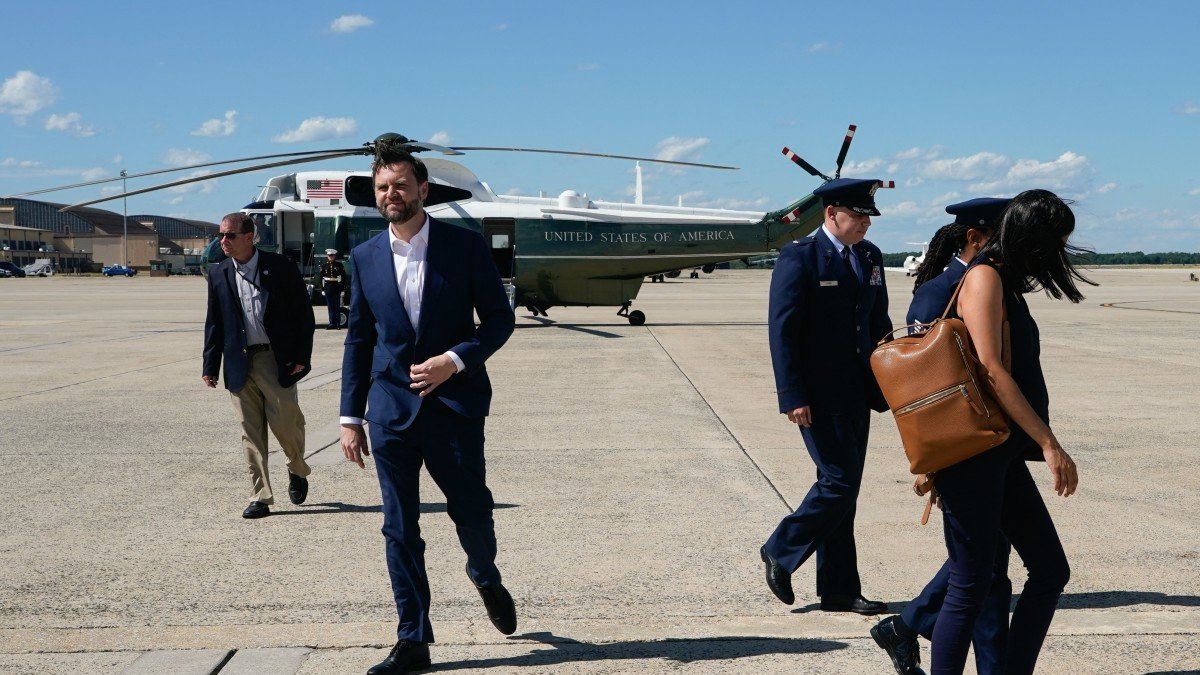
JD Vance walks toward reporters after disembarking from Marine Two at Joint Base Andrews

Vice President JD Vance departed Saturday for Switzerland ahead of a first round of negotiations with Iran scheduled for Sunday at the Bürgenstock ski resort.
This will be the first round of direct talks between the United States and Iran since the Islamabad summit last April, according to Axios, and is expected to kick off 60 days of nuclear negotiations.
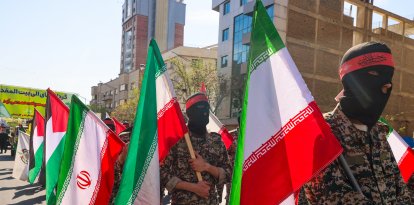
The talks are expected to proceed despite Iran’s statement on Saturday that it would close the Strait of Hormuz in response to Israeli violations of the ceasefire in Lebanon. In this context, the negotiations could be affected at any moment, especially if the crossfire between Israel and the terrorist group Hezbollah, an ally of the Iranian regime, continues to escalate.
"I think we're going to hopefully make progress on the nuclear issue, make progress on the Lebanon ceasefire issue. Those are the two big things that I think we're to be focused on," Vance told reporters this Saturday before leaving Washington.

White House envoys Steve Witkoff and Jared Kushner arrived in Switzerland on Saturday morning. Later that same day, an Iranian delegation led by Parliament Speaker Mohammad Bagher Ghalibaf and Foreign Minister Abbas Araqchi arrived in the country, according to various reports.
The prime ministers of Pakistan and Qatar, along with Pakistan’s top military commander, are in Switzerland to act as mediators. The director of the International Atomic Energy Agency (IAEA) will also participate.
Vance said on Saturday that the negotiations will last “a couple of days” and that he will remain there “a day or two”. The vice president noted that the first round aims to “getting the actual structure and negotiation in place.” He also indicated that there will be working-level talks among technical experts, which could continue in Switzerland once the first round of high-level talks concludes.
The United States would like the first round to culminate in an Iranian invitation for inspectors from the UN to visit its nuclear facilities, which were bombed by the United States and Israel, according to two regional sources with direct knowledge. The last such visit reportedly took place before the previous war, in June 2025. In exchange, the United States would be willing to grant Iran access to part of its frozen funds, starting with a $6 billion account in Qatar. According to the sources, the Iranians could use those funds to purchase humanitarian goods.
This Saturday, ahead of the talks, Israel and Hezbollah announced that they were reaffirming their commitment to the ceasefire. Similar announcements have tended to be short-lived: a similar agreement collapsed within hours on Friday.
Vance acknowledged that Lebanon could derail the negotiations, but said that Secretary of State Marco Rubio is leading the de-escalation efforts.
"Despite the headlines, things are actually getting better there, and things are slowing down a little bit. It's going to be something we're just going to have to continuously manage to ensure that Israel and Lebanon are both safe and secure," Vance said.
LATEST