Supreme Court rejects appeal of 98-year-old judge who was suspended by her colleagues for refusing to undergo desired medical examinations
The judge, appointed in 1984 by President Ronald Reagan as the first female judge on the U.S. Court of Appeals for the Federal Circuit, has categorically rejected the notion that she is unfit to serve.

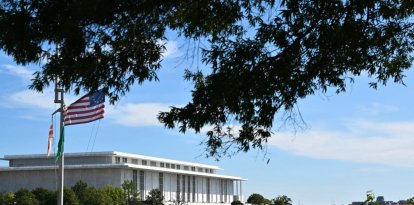
U.S. Supreme Court Building

The Supreme Court (SCOTUS) decided on Monday not to intervene in one of the most high-profile cases involving judicial independence and aging in the federal judiciary.
The case involves an appeal filed by Pauline Newman, who, at 98 years old, remains the nation’s longest-serving active federal judge and has been indefinitely barred from hearing new cases for refusing to undergo medical evaluations ordered by her colleagues.
Newman defends her mental fitness
The judge, appointed in 1984 by President Ronald Reagan as the first female judge on the U.S. Court of Appeals for the Federal Circuit, has categorically rejected the notion that she is unfit to serve. However, Newman points to three psychological evaluations conducted by three doctors, which, she claims, demonstrate her mental fitness.
Her attorneys argued before the Supreme Court that the suspension violates fundamental constitutional principles, such as judicial independence and the lifetime tenure provided for in the Constitution for federal judges.
“This petition presents questions concerning crucial constitutional and statutory aspects of lifetime tenure and judicial independence, especially the availability of judicial review for intra-branch infringements on judicial service,” Newman’s representatives wrote in the documents filed with the court, according to The Hill.
Allegations of erratic behavior
In 2023, Chief Judge Kimberly Moore unsuccessfully attempted to persuade Newman to step down. Faced with her refusal to undergo mental fitness testing, her colleagues initiated disciplinary proceedings and suspended her from hearing new cases.
Court documents reviewed by The Hill show that unidentified employees described Newman’s behavior as “paranoid,” “agitated” and “bizarre” during investigative interviews.
Newman is known in legal circles as the "Great Dissenter" for her frequent dissenting opinions on patent matters.
Separation of powers and the Supreme Court’s rejection
Newman’s colleagues, represented by the Department of Justice (DOJ), defended the lower court’s decision to dismiss the lawsuit. They argued that federal district judges have no authority to review judicial council decisions regarding misconduct or incapacity, as this would respect the separation of powers and prevent the courts from being overwhelmed with such internal disputes.
The Supreme Court’s refusal to take the case upholds the suspension and closes, at least for now, the federal avenue for Newman to resume her full duties.
LATEST