Setback for Johnson: 20 Republicans cross the aisle to pass a pro-union bill with Democrats
The Faster Labor Contracts Act was passed by a vote of 230 to 193. The legislation aims to reduce the time between the vote in which workers decide to unionize and the signing of their first collective bargaining agreement.


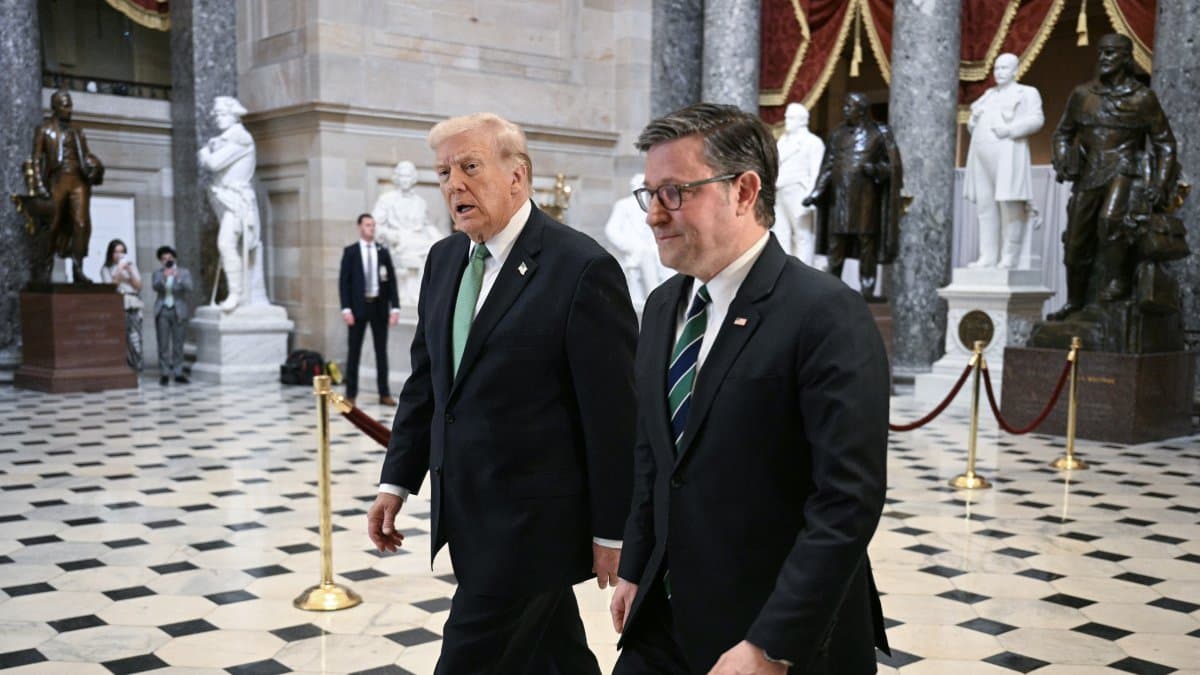
Twenty Republican lawmakers rebelled on Tuesday against House Speaker Mike Johnson, and voted alongside Democrats to pass a bill that makes it easier to form unions, in an episode that exposed a new rift within the Republican Party in the Lower House.
The Faster Labor Contracts Act was passed by a vote of 230 to 193. The legislation aims to reduce the time between the vote in which workers decide to unionize and the signing of their first collective bargaining agreement, a process that currently takes, on average, about 465 days, according to a 2021 Bloomberg Law study.
The bill reached the floor through an unusual route. According to POLITICO, Democrats turned to a "discharge petition," a procedural tool that forces a vote without going through House leadership, provided they gather 218 signatures. Spearheaded by Democratic Rep. Donald Norcross of New Jersey, the maneuver won the backing of a group of Republicans willing to break with their party, most notably Don Bacon (Nebraska), Brian Fitzpatrick (Pennsylvania) and Nick LaLota (New York).
Politics
Congress approves a historic $70 billion package and secures funding for Donald Trump's border funding
Andrés Ignacio Henríquez
Just the News
Congressional report slams Minnesota's Walz, Ellison for turning ‘blind eye’ to mass welfare fraud
John Solomon
"It's passing," Fitzpatrick simply said before the vote, when asked about attempts by Johnson to pressure his colleagues to reject it.
Republican leadership tried to put up a fight. The chairman of the Education and Labor Committee, Tim Walberg (R-Mich.), warned the full House that the measure would "threaten jobs, kill growth and in some cases, shut business down entirely." Under the new rule, if employers and workers fail to reach an agreement within 90 days, the case would go to federal mediation and, if that fails, to an arbitration panel empowered to impose the terms of the contract.
The outcome is the latest in a series of labor bills in which a pro-union bloc of Republicans has challenged their leadership in recent months. The initiative, however, faces a more complex landscape in the Senate, which has a Republican majority, where it has the backing of figures such as Senator Josh Hawley (R-Mo.), one of the sponsors of a companion bill.
🛠 Do you think there is an error in this article?
Recommendations



LATEST