Minnesota: Former investigator alleges attempted fraud cover-up, points fingers at Tim Walz
Jay Swanson claims he was pressured to hide findings about irregularities in day care programs; lawmakers accuse state government of weakening controls.
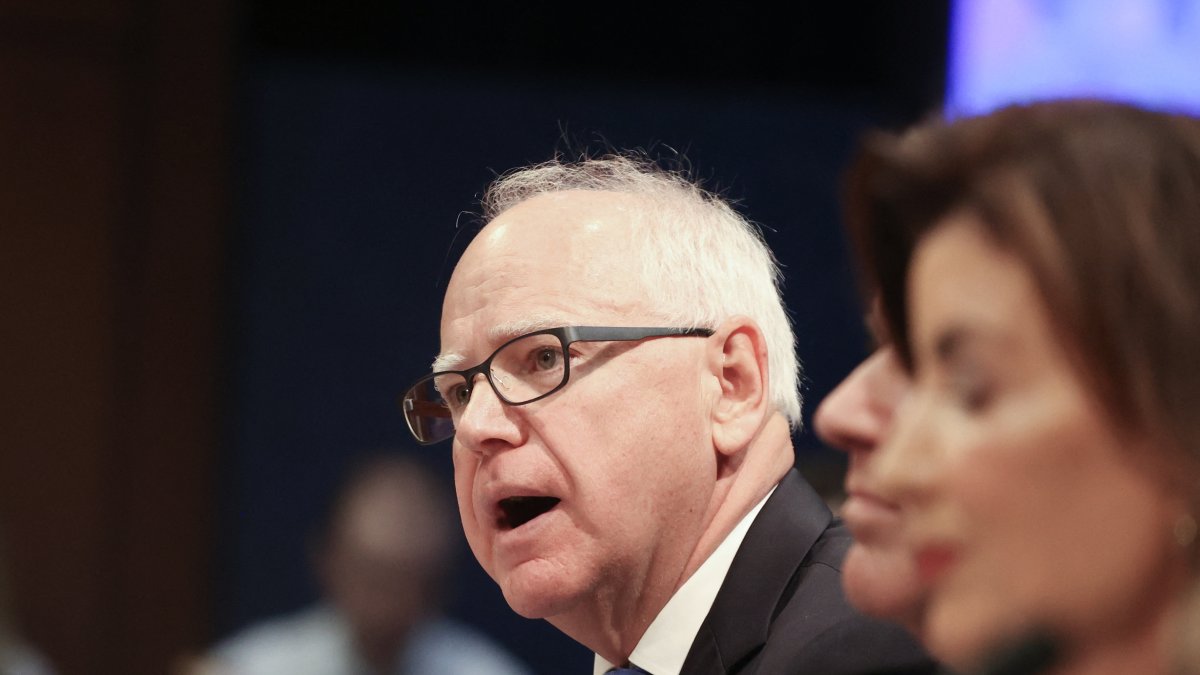
Tim Walz in Senate/ Alex Wroblewski

A former Minnesota state investigator alleged to lawmakers that public officials tried to hide evidence of fraud in child care assistance programs, in a case that has intensified political pressure on Gov. Tim Walz.
Jay Swanson, a former Department of Homeland Security agent, testified this week at a Minnesota House Oversight Committee hearing. According to his statement cited by the New York Post, his superiors at the state Department of Human Services (state DHS) attempted to intimidate him into modifying or eliminating key findings about irregularities detected in the child-care subsidy system.
Politics
Trump freezes federal daycare funds in Minnesota after finding massive fraud under Tim Walz's tenure
Emmanuel Alejandro Rondón
Allegations of pressure and intimidation
Swanson claimed that, during a legislative investigation in 2018, an official ordered him to remove some of the information he had compiled on fraud.
"I believed what they were asking me to do was illegal," the former investigator testified during the hearing.
He further asserted that he and other members of his unit were subsequently subjected to harassment and internal pressure to discredit their findings. According to his testimony, the department itself reportedly spent some $90,000 to hire an outside consulting firm with no experience in fraud investigations to challenge the validity of its findings.
Known fraud and organized networks
Among the most controversial aspects of his testimony, Swanson contended that it was "common knowledge" in Somali refugee communities in East Africa that Minnesota was a favorable place to commit fraud in child care programs.
As he explained, some suspects believed that it was easier in the state to execute these scams and obtain greater financial benefits compared to other U.S. territories.
Investigations and background
One of the cases Swanson mentioned dates back to 2017, when irregularities were detected at a Minneapolis children's center. Its owner was subsequently indicted, pleaded guilty in 2018 and was sentenced to two years in prison, in addition to paying $1.4 million in restitution.
Since 2022, the Justice Department has brought charges against 98 people linked to similar schemes, of which 64 have been convicted.

Just The News
Somali Suitcase Stash: Feds says $130 million moved from Ohio airport to Minnesota on way overseas
John Solomon
Political criticism and closure of investigative unit
Republican lawmakers contend that the situation worsened after Walz took office in 2019. The state administration had allegedly reduced or eliminated key investigative capabilities, they charged.
State Rep. Kristin Robbins claimed that an office with authority to investigate fraud and issue warrants was dismantled, limiting agents' ability to act.
"They were told they could no longer conduct criminal investigations or freely collaborate with other agencies," she said during the hearing.

Walz's response
Gov. Walz recently defended his administration's actions, asserting that the state has actively collaborated in fraud detection.
"If you commit fraud in Minnesota, you will get caught," he declared on the social networking site X, highlighting the cooperation between state and federal agencies.
However, his statements were challenged by FBI director Kash Patel, who attributed recent operations to the work of federal agencies. Also DHS Secretary Markwayne Mullin criticized the governor's credibility in this matter.
A scandal of great magnitude
The scandal has also had a political impact: Walz withdrew his bid for re-election as governor in early 2026 amid the growing controversy.
LATEST