ANALYSIS
Unanimous SCOTUS rebukes New Jersey for intimidating pro-life groups, ignoring precedents
Gorsuch-written opinion mocks former attorney general for arguing a "non-self-executing" subpoena for donor information is not a legal injury, comparing it to sword of Damocles. Ideologically disparate groups cheer ruling.
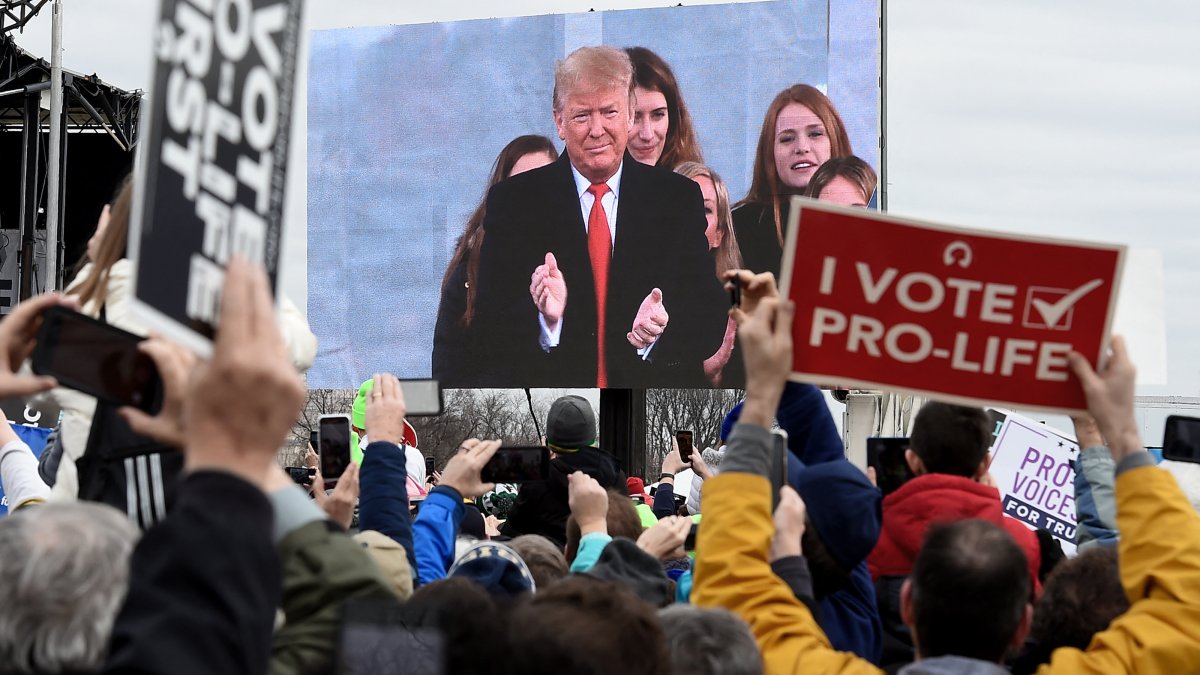
Manifestantes provida-Imagen de Archivo

The issue was simple for New Jersey: We can't protect consumers from deception about abortion services without requiring pro-life pregnancy centers to identify donors.
The response from the Supreme Court on Wednesday was just as simple: Have you read our precedents?
Chief Justice John Roberts further cemented his reputation as "Mr. First Amendment" by wrangling the high court's perceived conservative ideologues and institutionalists as well as the liberals into a unanimous ruling for both donor privacy and access to federal courts, with Justice Neil Gorsuch writing the opinion and no one muddling the message with a concurrence.
New Jersey Attorney General Jennifer Davenport, who was only confirmed two months ago, lost on every argument predecessor Matthew Platkin made to deny First Choice Women's Resource Centers legal standing in federal court so it could challenge Platkin's demands for information on donors on First Amendment grounds.
"Since the 1950s, this Court has confronted one official demand after another like the Attorney General’s," Gorsuch concluded for the court. "Over and again, we have held those demands burden the exercise of First Amendment rights," and while the AG offered old and new arguments "seeking ways around them [...] none succeeds."
The high court reversed the ruling by the 3rd U.S. Circuit Court of Appeals, whose panel initially looked sympathetic to the Christian pro-life ministry but concluded 2-1, in a barebones ruling, its federal claims weren't "ripe" and it hadn't yet suffered enough "injury" from Platkin in state court, which was reviewing the AG's "non-self-enforcing investigatory subpoena."
Appeals Judge Stephanos Bibas had dissented on the grounds that the case was "indistinguishable" from California's compelled disclosure of Americans for Prosperity Foundation's donors, which SCOTUS struck down in 2020.
Gorsuch wrote, citing the AFP ruling: "Against this backdrop, the question before us all but answers itself."
The high court remanded the case for further proceedings "consistent with this opinion," which strongly implies Platkin's demands are unconstitutional even while sticking to the procedural issue of legal standing and injury.
The opinion recites decades of precedents protecting freedom of association, rejecting Alabama's demand for NAACP member lists as an assault on the "vital relationship” between "privacy in one’s associations" and the "freedom to associate" and New Jersey compelling the Boy Scouts to accept gay leaders as a violation of its "expressive association."
"Strip away the ability of individuals to work together free from governmental oversight and intrusion, and the freedom to associate may become no freedom at all—individuals deterred, groups diminished, and their protected advocacy suppressed," Gorsuch wrote.
Donor privacy confirmed as 'foundational First Amendment right'
People United for Privacy Foundation, which lobbies states to pass its model Personal Privacy Protection Act to stop "politically motivated disclosure demands from government officials," noted Wednesday it predicted "New Jersey was headed for trouble" after oral argument.
Foundation CEO Heather Lauer called the ruling a "milestone victory for donor privacy in the courts," with a unanimous court finding "the privacy of donors is a foundational First Amendment right."
First Choice received nearly unheard-of support across the ideological spectrum in SCOTUS briefs, uniting animal- and gun-rights groups and the ACLU, which cheered Wednesday's ruling for confirming that advocacy groups, "wherever they fall on the political spectrum," have a "legal path to fight retaliatory conduct by government officials."
"Even the Court’s left-leaning justices recognized the far-reaching chill AG Platkin’s weaponization of government would have on all Americans’ cherished freedoms," said Susan B. Anthony Pro-Life America President Marjorie Dannenfelser.
"Democrats across the country have pursued a political vendetta" against pro-life organizations that pour "hundreds of millions’ worth of vital services a year for women, children and families," trying to shutter them because they "don't profit from violence and harm" like abortion providers.
Platkin "has gone to great lengths to frustrate" First Choice's work, which makes "a tangible, life-saving difference for tens of thousands of New Jersey women and their children," Executive Director Aimee Huber said through her lawyers at Alliance Defending Freedom.
"This is a triumph for every faith-based ministry in America," senior counsel William Haun at religious liberty law firm Becket said, citing a recent poll it commissioned finding 4 in 5 Americans oppose government interference in private organizations operating consistent with their religious beliefs.
Ohio's Buckeye Institute argued a similar case before the 6th Circuit Wednesday, to stop the Internal Revenue Service from obtaining its donors' identities in an audit that closely followed the center-right think tank's lobbying of state leaders to reject President Obama's Medicaid expansion in 2013.
While the First Choice and Buckeye Institute cases "don't overlap much in terms of substance," the former's ruling "will make it harder for the government to sidestep First Amendment analysis through standing, ripeness, or abstention arguments," the Institute for Free Speech, which represents Buckeye and also filed in First Choice, told Just the News.
'28 categories of documents' with up to '29 subcategories'
Platkin's interest in unmasking First Choice's donors followed SCOTUS overturning federal abortion rights in Dobbs. His newly created "Reproductive Rights Strike Force" issued a "consumer alert" in December 2022 asking the public to file complaints against pro-life pregnancy centers for "provid[ing] false or misleading information about abortion."
Despite no complaints being filed, Platkin subpoenaed First Choice the following year, twice warning that failure to comply "may render you liable for contempt of Court and such other penalties as are provided by law," Gorsuch wrote.
He emphasized Platkin demanded "28 categories of documents" that "themselves included as many as 29 subcategories," including names, phone numbers, addresses and places of employment of all who donated, except through "one specific website," since 2021. The subpoena didn't say what Platkin's concern was.
The AG later said he wanted to learn whether donors had "been misled" by First Choice about its “mission and operations," because its solicitations – including "a donation webpage featuring pictures of parents holding infants and young children" – could make donors think it provides abortions, Gorsuch said.
Platkin sued in state court after First Choice sued in federal court, and the latter determined the former hadn't yet compelled First Choice to comply with the subpoena, so it hadn't suffered enough injury for federal legal standing, which the split 3rd Circuit affirmed.
Gorsuch emphasized the high court was not deciding "the merits of First Choice’s federal lawsuit," but his elaboration of SCOTUS precedent against infringements on freedom of association, especially how "associational rights carry special significance for political, social, religious, and other minorities," gave an unmistakable signal to lower courts.
Since protecting NAACP member rolls from Alabama, SCOTUS has always "subjected those demands [in other cases] to heightened First Amendment scrutiny," recognizing that demanding donor information has a "deterrent effect" on First Amendment exercise, he wrote.
It was irrelevant that California Attorney General Rob Bonta promised to keep AFP's donor information to himself, since the demand itself caused the chill, and Platkin's language was just as chilling, threatening legal penalties and publicly branding pro-life groups as "extremists" who might be charged, Gorsuch wrote.
He noted New Jersey has never contested First Choice's declarations by several donors – made anonymously, to avoid Platkin's wrath – vowing they "would have been less likely to donate" if they had known their information might be given to Platkin, or that Huber's said Platkin's demands threatened its ability to "recruit new donors."
"All this is more than enough to establish injury in fact under our precedents," Gorsuch wrote, noting the many friend-of-the-court briefs from ideologically disparate groups that argue even an unenforced subpoena will encourage donors to "abandon the cause."
The sword of Damocles 'hangs,' and that's why it works
Platkin "does not dispute much of this" and "for good reason" won't even defend the basis of the district and appellate courts' rulings against First Choice, that "federalism" requires state litigation to "ripen" constitutional claims, Gorsuch wrote.
Congress enacted Civil Rights Act Section 1983, under which First Choice sued, more than 150 years ago "with the express goal of ensuring a federal forum to citizens who claim that state actors have violated their constitutional rights," and no one argues "any of this Court’s abstention doctrines apply to this case," the opinion said.
"Requiring plaintiffs to exhaust state court remedies before they may avail themselves of §1983’s promise" would gut the law and threaten litigants with a "preclusion trap" preventing a federal lawsuit if they lose in state court, he said, referring to Judge Bibas's argument.
Gorsuch seemed to mock Platkin's "most ambitious" argument, that "non-self-executing" subpoenas cause no injury without a court order. "[T]he value of a sword of Damocles is that it hangs—not that it drops," he wrote, quoting a 1974 precedent against threatening civil service employees "with dismissal for any speech that might impair the 'efficiency of the service.'"
LATEST