Virginia voters approve new electoral map with ten Democratic seats and only one Republican seat
With tight margins in Congress, these types of modifications could determine which party controls the House of Representatives after November.
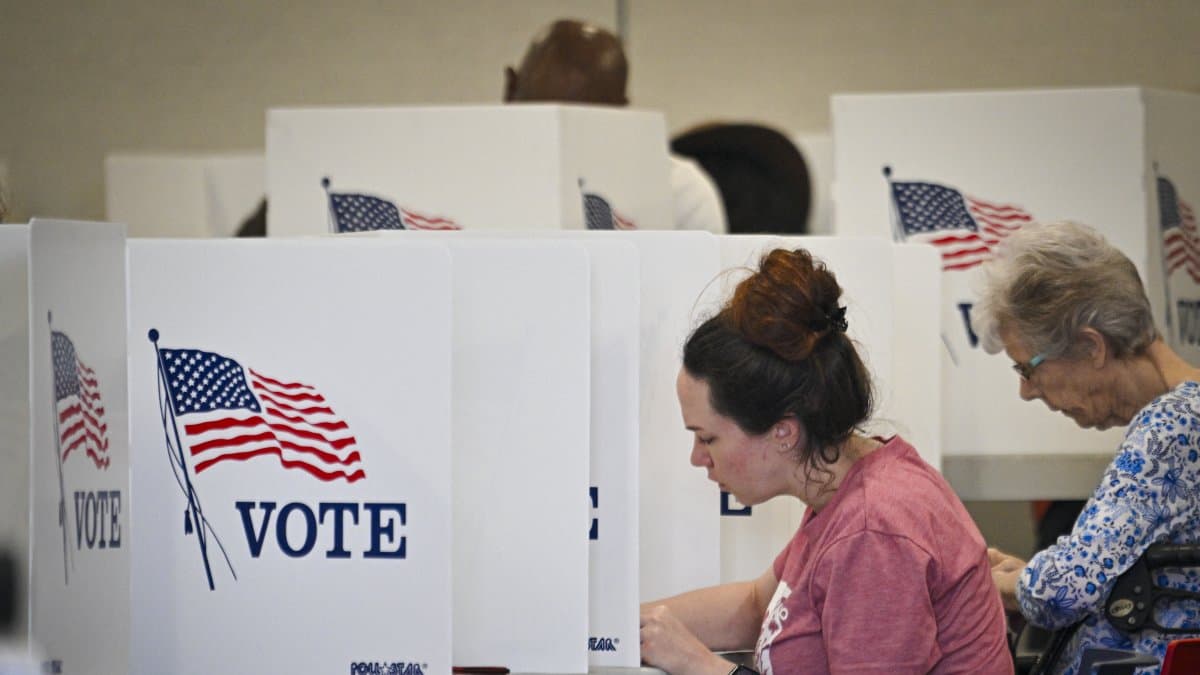

Voters in Virginia approved a new map for the midterm elections. The new one is largely favorable to the Democratic Party, which will now have ten favorable districts out of eleven in the House of Representatives. On the current map, drawn by an independent agency, Democrats have six congressmen and Republicans have five, of which only districts 2, 7 and 11 are competitive.
On Tuesday, Virginia voters could choose between two options: "yes" to approve the new Democratic-majority map or "no" to reject the changes and keep the current map. With more than 97% of the votes counted, the "yes" option garnered 51.5% of the vote, while the rejection option received 48.5%. In November, this result could translate into as many as four new Democratic seats in the House of Representatives.
The result was considerably closer than in the 2025 gubernatorial election, when Democrats won by 16 percentage points. The result was even closer than in 2024, when Kamala Harris beat Trump by 5.78 points.

Politics
'We got to win the midterms': Trump visits Las Vegas on last-minute trip to celebrate tip tax elimination
Emmanuel Alejandro Rondón

Top Virginia Republicans, including former Governor Glenn Youngkin, former Attorney General Jason Miyares and Congresswoman Jen Kiggans, actively campaigned in favor of rejecting the map. "Thank you to all the voters who turned out to vote against this egregious power grab. The race was much closer than the left expected because Virginians know a 10-1 map is not Virginia. I urge the Virginia Supreme Court to rule against this unconstitutional process that will disenfranchise millions of Virginians," Youngkin said on X after the results were announced.
Currently, of the eleven seats to be apportioned, six are represented by Democrats and five by Republicans. This map has been in use since the 2022 election, and the design was drawn by the Virginia Redistricting Commission, a body designed to prevent the maps from being too favorable to a particular party. The commission is made up of Democratic and Republican legislators, as well as citizens appointed by both parties. This system differs from other states, where state legislatures draw election maps.
The special election in Virginia was the latest episode in the battle over redistricting that has spread across the country. While electoral map changes occur at the end of every decade and after the census, in 2025, President Donald Trump pushed through an atypical map change in Texas, adding five Republican-leaning seats to the House of Representatives, with the intention of helping retain the majority in the November election. Subsequently, other Democratic and Republican states have pushed for changes to their respective maps, including California, Ohio, Missouri and North Carolina.
With a Congress of tight margins, these types of modifications could determine which party controls the House after November.
Regardless of the outcome, local courts are expected to rule on the legality of the changes. Indeed, two legal challenges to redistricting have already been filed, both before the Tazewell Circuit Court, which went all the way to the Virginia Supreme Court. The justices anticipated ruling after the vote.
🛠 Do you think there is an error in this article?
Recommendations






LATEST