ANALYSIS
Five keys to understanding Trump's two-week ceasefire with the Iranian regime
The agreement, conditional on the opening of the Strait of Hormuz, comes after the president justified the decision by arguing that the U.S. had already "met and exceeded all Military objectives" and was "very far along" in their objective toward a lasting Middle East peace agreement.
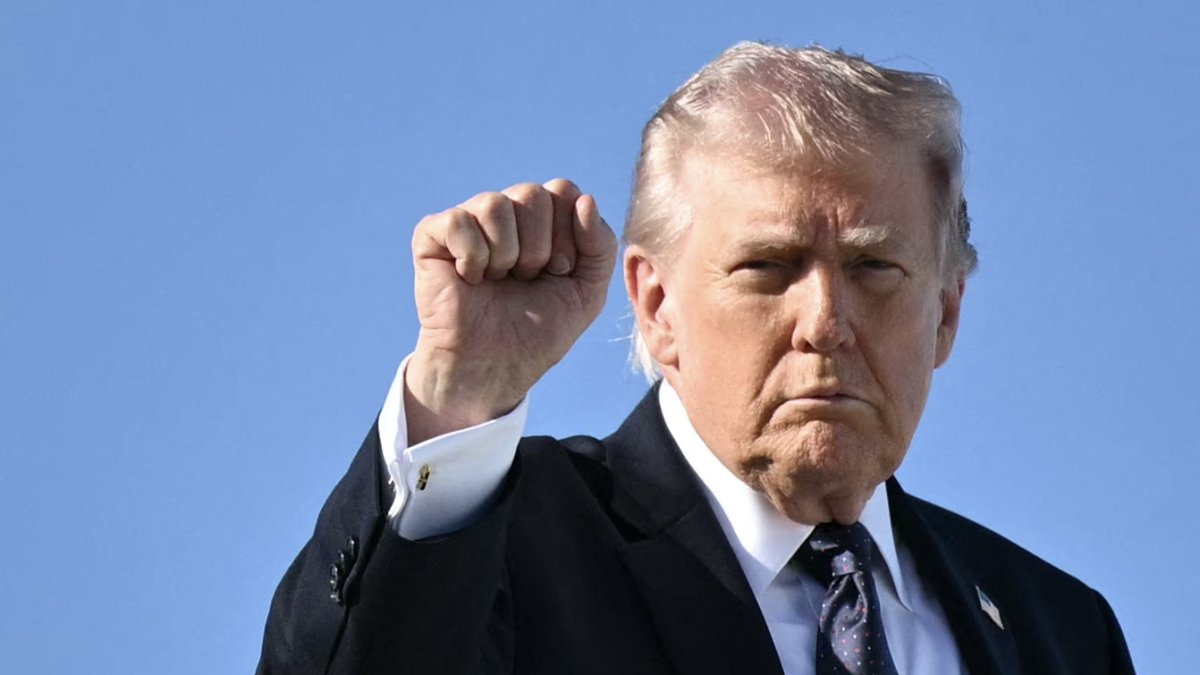
Donald Trump, on Air Force One

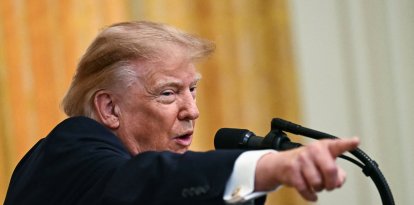
This Thursday, President Trump announced, via his account on Truth Social, a two-week bilateral ceasefire with Iran, just hours before the expiration of its ultimatum, in which it had vowed to wipe out "a whole civilization" if the ayatollahs' regime did not open the Strait of Hormuz, a critical route through which a significant part of the world's oil flows.
The agreement, conditional on the opening of the Strait of Hormuz, comes after the president justified the decision by arguing that the U.S. had already "met and exceeded all Military objectives" and was "very far along" in their objective toward a lasting Middle East peace agreement.
Here are five key fundamentals to understand Trump's announcement in depth.
1. Temporary duration of two weeks to de-escalate and negotiate
The ceasefire is strictly temporary and lasts exactly 14 days from the president's announcement. During this period, the U.S. immediately suspends all offensive operations against Iran, while the Iranian regime halts its counterattacks.

The main objective is to create a space for de-escalation that allows finalizing and consummating a definitive peace agreement.
Formal negotiations between delegations from both countries will begin this Friday in Islamabad, Pakistan, and Trump has noted that "almost all of the various points of past contention have been agreed," so the two weeks will serve to close outstanding details and avoid further escalation.
2. "Complete, immediate and safe" reopening of the Strait of Hormuz
This is the central, non-negotiable condition imposed byWashington. Iran commits to allow safe and immediate passage of all oil and gas tankers through the strait, which carries about 20% of the world's oil.
The reopening must be "complete, immediate and safe" under Iranian military supervision, although Trump has assured that the US will help manage the backlog of shipping traffic.

World
From impeachment demands to ceasefire: Trump's Iran critics spoke too soon
Emmanuel Alejandro Rondón
Iran will be able to charge passage fees of up to $2 million per vessel in some cases, with some of that revenue going toward rebuilding damaged infrastructure in the strait area.
If the talks fail at the end of the two weeks, Tehran could close the sea lane again.
3. Bilateral nature and suspension of hostilities
One of the most salient aspects of the temporary cease-fire is its strictly bilateral nature, which clearly distinguishes it from a unilateral surrender or capitulation by the Iranian regime.
The United States and Israel will halt all bombing and direct military operations against Iranian territory, while the regime of the ayatollahs will cease its missile and drone counter attacks against U.S. bases, Israel and other allied interests in the region.
Politics
Trump calls Tucker Carlson 'low-IQ person' for criticizing his policy against Iran
Carlos Dominguez
Iranian Foreign Minister Abbas Araghchi explicitly confirmed: "If the attacks on Iran are stopped, we will allow safe passage."
The agreement does not explicitly cover the fighting in Lebanon against the terrorist group Hezbollah, but it does stop direct escalation between Washington and Tehran.
4. Basis for negotiations on Iran's proposed 10-point plan
Trump called the Iranian 10-point plan a "workable basis" for talks. Its main elements include the lifting of primary and secondary sanctions against Iran, the gradual withdrawal of U.S. forces from the region, the release of frozen Iranian assets, an end to strikes against Tehran and its allies, and a binding resolution of the UN Security Council.
Although there are differences with the 15-point U.S. proposal, especially on the nuclear enrichment issue, the two-week truce will serve to negotiate and reconcile both visions in order to reach a lasting pact.
5. Pakistan and China's key participation in the negotiations
Pakistan played a decisive role as a key facilitator, with direct talks between Trump, Prime Minister Shehbaz Sharif and military chief Asim Munir, which achieved the last-minute agreement. Formal negotiations will take place in Islamabad precisely because of this Pakistani mediation.

In addition, China exerted significant diplomatic influence in getting Iran to accept the proposal, contributing to the regional pressure that facilitated the temporary understanding. According to The New York Times, citing three unnamed Iranian officials, Iran accepted the cease-fire proposal after a last-minute intervention by Beijing, which called on Tehran to "show flexibility and reduce tensions" in the face of the risk of a massive U.S. attack and its economic consequences.
President Trump himself confirmed this perception when, in an interview with AFP, he was asked whether China had helped Iran sit down to negotiate. Trump replied, "I hear they did. Yes, they did."
Both countries act as key bridges for the temporary cease-fire to evolve into a stable peace agreement.
LATEST