First US conviction for use of AI in digital sexual abuse: a precedent-setting case
First Lady Melania Trump celebrates the initial implementation of the 'Take It Down' Act, pushed with President Donald Trump to combat non-consensual pornography generated with artificial intelligence.

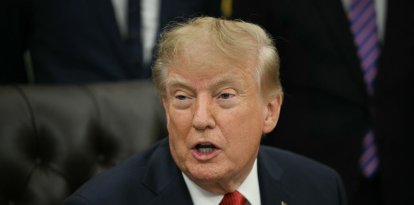
President Donald Trump and first lady Melania Trump.

The federal judiciary in Ohio handed down the country's first conviction under the 'Take It Down' law, a regulation aimed at curbing the proliferation of artificially generated sexual images with artificial intelligence without consent. The case has been highlighted by first lady Melania Trump as a decisive step in protecting victims of cybercrime.
The defendant, James Strahler, 37, pleaded guilty to cyberbullying, production of obscene material linked to child sexual abuse and dissemination of digital forgeries, the relevant district court heard.
A ruling celebrated from the White House
Through the social network X, Melania Trump called the conviction a milestone. "Today marks the first conviction under the 'Take It Down' Act, which protects victims of non-consensual AI-generated sexually explicit images, cyberbullying and threats of violence," she said.
The first lady also thanked U.S. Attorney Dominick S. Gerace II for his work in investigating and prosecuting these types of crimes in what she described as "a new digital age."
">TAKE IT DOWN ACT: FIRST CONVICTION
— First Lady Melania Trump (@FLOTUS) April 7, 2026
Today marks the first conviction under the Take It Down Act - protecting victims from non-consensual AI-generated sexually explicit images, cyberstalking, and threats of violence.
Thank you U.S. Attorney Dominick S. Gerace II for protecting…
A law with broad political support
The 'Take It Down' law was passed last year with near-unanimous support in the U.S. Congress. The regulation criminalizes the distribution of non-consensual sexual images, including so-called "revenge porn" and content generated using artificial intelligence that depicts child sexual abuse.
The text establishes penalties of up to two years' imprisonment if the images involve adults, and up to three years when they involve minors. In addition, it obliges digital platforms to remove illegal content within 48 hours of being notified, under supervision of the Federal Trade Commission.

Politics
Senate unanimously approves bill to toughen penalties against pornographic deepfakes
Sabrina Martin
"Harassment campaign" using advanced technology
According to the U.S. Attorney's Office for the Southern District of Ohio, Strahler conducted a "harassment campaign" between December 2024 and June 2025 using more than 24 artificial intelligence platforms and more than 100 different models installed on his cell phone.
Authorities allege that he attacked at least six adult victims, sending manipulated images that combined real and AI-generated footage. The most serious content included fake videos in which a victim appeared in sexual situations with family members, which were disseminated in her work environment.
Extortion, threats and massive illegal material
Prosecutors reported that Strahler created more than 700 manipulated images and stored another 2,400 pieces of illegal content, including digitally altered child sexual abuse material. Some of this material was published on websites dedicated to this type of exploitation.
He also allegedly used artificial intelligence to superimpose faces of minors from his community on adult bodies, generating sexually explicit videos.

Politics
Trump and Melania sign Take It Down Act against deepfakes and digital abuse
Agustina Blanco
A judicial precedent in the age of AI
In an official statement, prosecutor Gerace said Strahler could be the first person convicted in the United States under this law. "We will not tolerate the abhorrent practice of publishing and disseminating AI-generated intimate images of real people without their consent," he said.
The ruling will be handed down at a later date, but the case is already shaping up to be a key precedent in regulating the criminal use of artificial intelligence and protecting victims in digital environments.
LATEST