What the late great Bernard Lewis knew about Khomeini
For going on 47 years, the mullahs have been brutally subjugating the Iranian people and terrorizing the globe, while “enlightened” apologists beg to bargain their way to La La Land.
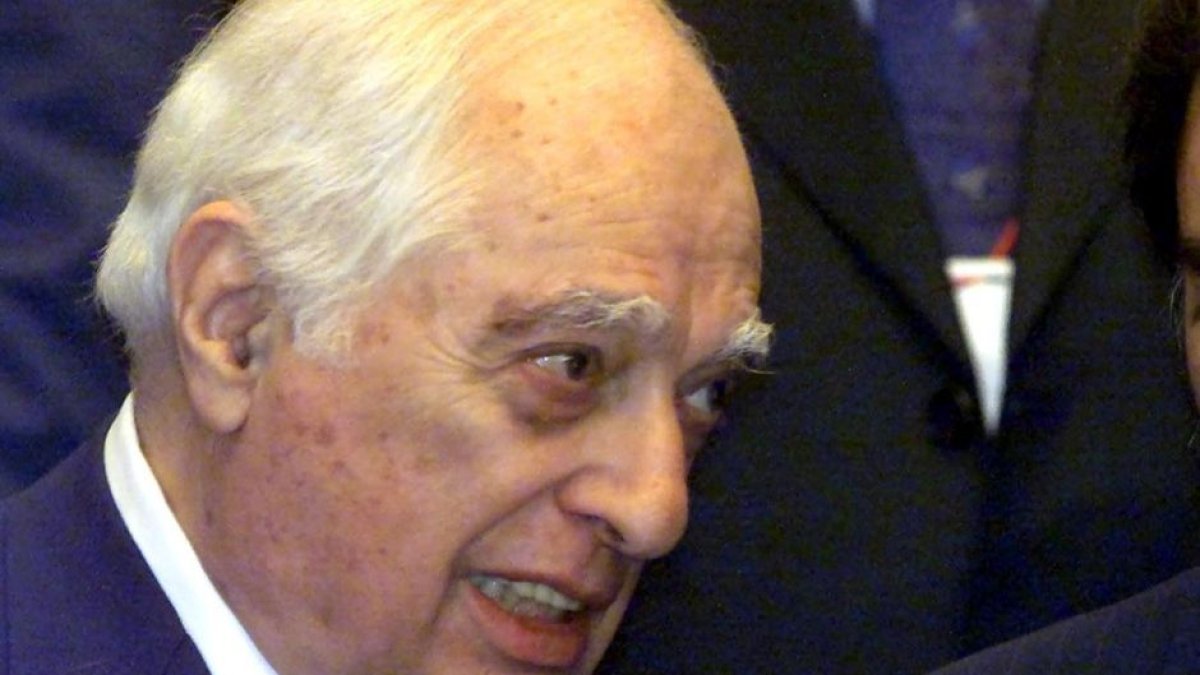
Professor Bernard Lewis
In the lead-up to the 1979 Islamic Revolution in Iran, there was a concerted effort on the part of Western elites to portray Ayatollah Ruhollah Khomeini as a paragon of virtue. Such was the atmosphere in which then-President Jimmy Carter was steeped when Khomeini returned home after 15 years in exile in France.
In the days following his arrival on Feb. 1 that year, there was a rush to laud him as the perfect replacement for the ousted Shah of Iran, Mohammad Reza Pahlavi. For instance, while meeting with reporters from the New York Forum on Feb. 8, Carter’s U.N. ambassador, Andrew Young, called Islam “a vibrant cultural force in today’s world.”
Attributing the Shah’s fall not to an excess of modernization but of repression, he asserted that “Khomeini will be somewhat of a saint when we get over the panic. In two years, our relations with Iran will be on a pretty even keel.”
Then there was James Bill, an Iran specialist at the University of Texas and adviser to Carter, who told Newsweek on Feb. 12 that Khomeini was a man of “impeccable integrity and honesty.”

And international law professor Richard Falk, who a month earlier had traveled with former U.S. Attorney General Ramsey Clark on a “fact-finding mission” to Iran and then to France—where they met with the soon-to-become head of the Islamic Republic—published an op-ed in The New York Times on Feb. 16 called “Trusting Khomeini.”
In the article, Falk tried to disabuse skeptics of the notion that the “mystery man” was someone to be feared by Iranians or the West.
“The depiction of him as fanatical, reactionary and the bearer of crude prejudices seems certainly and happily false,” Falk wrote, concluding, “Despite the turbulence, many non-religious Iranians talk of this period as 'Islam's'finest house.’ Having created a new model of popular revolution, based, for the most part, on non-violent tactics, Iran may provide us with a desperately needed model of humane governance for a third-world country.”
Less than nine months later, with Khomeini’s blessing, 52 American diplomats were taken hostages at the U.S. embassy in Tehran and held for 444 days. In hindsight, then, one might forgive Carter for having been hoodwinked.
The late Bernard Lewis—renowned multilingual Orientalist—didn’t agree that Carter or anybody else had an excuse for ignoring Khomeini’s true identity and agenda. In a 2010 interview that I conducted with Lewis while researching my book, To Hell in a Handbasket: Carter, Obama and the “Arab Spring,” the professor emeritus of Near Eastern studies at Princeton University described his rebuffed attempt to set the record straight.

“In 1978, there was this figure being discussed, Khomeini, whom I knew nothing about,” he recounted. “So, I did what one normally does in my profession: I went to the university library and looked him up. I discovered that he was the author of Islamic Government [a collection of speeches he delivered in Najaf, Iraq in 1970]. And I thought, ‘Well, this is interesting. It could give me some idea of what the man is about.’”
Lewis took the volume home and read it in one sitting. What it revealed was a philosophy of Islamic statehood, using the harshest possible rhetoric to denounce non-Muslims and calling for the spread of Sharia law across the world.
Deciding that something had to be done to expose the ayatollah and his intentions, Lewis contacted then-New York Times op-ed editor Charlotte Curtis and offered to pen a piece on what subsequently came to be known as “The Little Green Book.”
“No thanks,” she answered. “I don’t think our readers would be interested in the work of some Persian writer.”
Whether her response was due to ignorance of the significance of Khomeini’s waiting in the wings to take over Iran from the Shah, or to a lack of desire on the part of the Times to acknowledge that however authoritarian a ruler the shah might be, he was the epitome of benevolence compared to his proposed successor, wasn’t clear.

Nor did Curtis’s attitude surprise Lewis, whose view of the press was already—justifiably—dim. But it did cause him to recall an exchange he’d had in Pahlavi’s office not long before the revolution.
“Why do they keep attacking me?” the shah burst out, as soon as Lewis entered the room.
“Whom do you mean, Your Majesty?” Lewis asked.
"The New York Times, The Washington Post, The Times of London and Le Monde—the four weird sisters dancing around the doom of the West,” Pahlavi said. “Don’t they understand that I am the best friend you have in this part of the world?"
“Your Majesty,” Lewis replied, “you must understand that the editorial policies of these papers are based on Marxist principles.”
“What do you mean?” Pahlavi shot back incredulously, since Communism wasn’t on his list of the West’s faults.
“I’m not referring to Karl, but to Groucho,” Lewis quipped.
When the Shah looked puzzled, Lewis asked him whether he was familiar with Groucho Marx.
“Yes, of course,” he responded, almost insulted by the suggestion that he, a buff of American movies, might not be up on Hollywood.

World
Trump warns Iran is crossing 'red lines' by killing protesters while threatening attacks
Emmanuel Alejandro Rondón
Lewis explained, “Remember when Groucho Marx said he wouldn’t want to become a member of a club that would have him? Well, our media’s posture—like our foreign policy—is to shun any government that wants our friendship, and to placate and pursue our enemies.”
Let that depiction sink in. For going on 47 years, the mullah-led regime has been brutally subjugating the Iranian people and terrorizing the globe via bloodthirsty Islamist proxies—while “enlightened” apologists in the West keep begging to bargain their way to La La Land.
This makes sense, since the woke chattering classes actually agree with the Iranian regime that America is the “great Satan,” and that Israel is the small one.
This is why the fact that Supreme Leader Ayatollah Ali Khamenei,is just as abusive of women, gays and all other “infidels” as his predecessor has barely made headlines over the decades in the periodicals bemoaned by the late Shah.
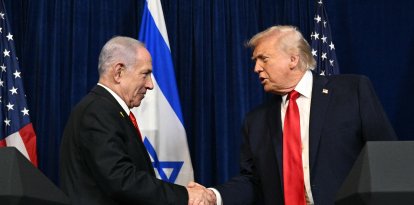
Even today, as brave protesters throughout the Islamic Republic are being ruthlessly slaughtered by the goons of the Islamic Revolutionary Guard Corps, the Basij, police and army, President Donald Trumpand Israeli Prime Minister Benjamin Netanyahu receive the most negative coverage.
Hopefully, both leaders are, to borrow Trump’s phrase, “locked and loaded” for another confrontation with the tyrants in Tehran, and not only to take out their ballistic missiles.
LATEST