ANALYSIS
‘Never before in history’ have US, Israel integrated ops at this scale
Senior defense experts from JISS analyze the unprecedented Israeli-American military cooperation and examine continuing war scenarios.
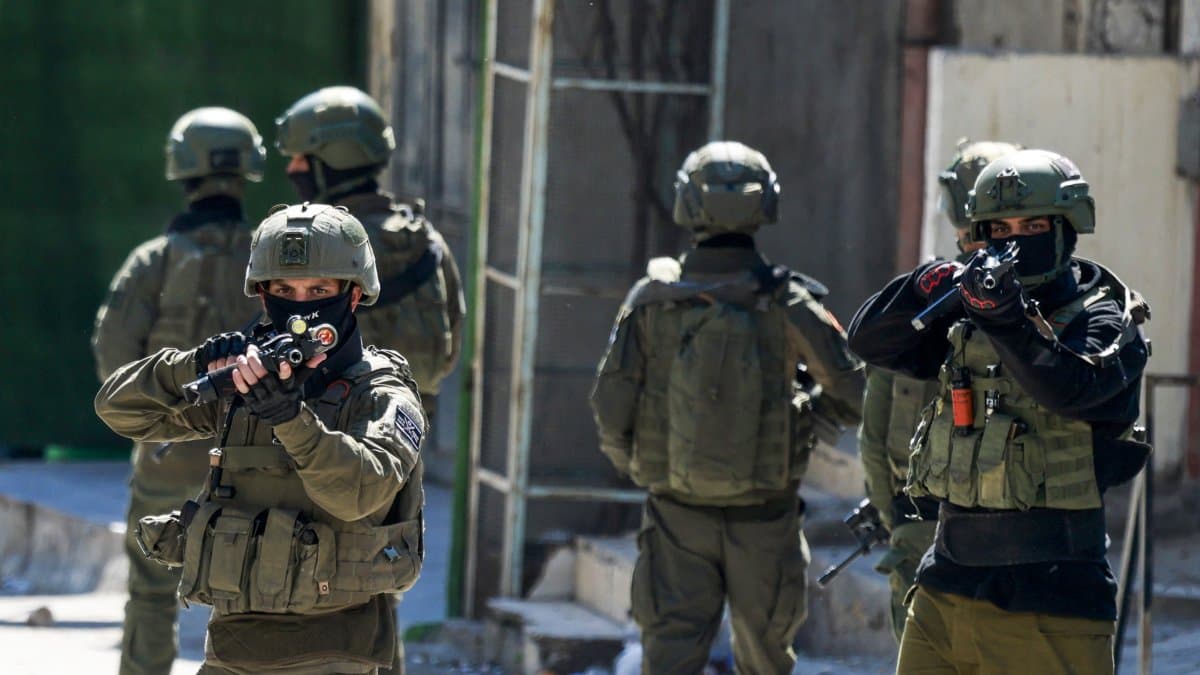

The joint American-Israeli campaign against Iran represents an unprecedented level of military integration. It is aimed at fundamentally transforming the strategic reality of the Middle East while neutralizing the Iranian nuclear and ballistic missile threats, several former Israeli defense officials and analysts said Thursday.
Speaking during a webinar hosted by the Jerusalem Institute for Strategy and Security (JISS), Col. (res.) Dr. Eran Lerman, vice president of JISS and former deputy director for foreign policy and international affairs at Israel’s National Security Council, emphasized the historic nature of the allied offensive.
“Never before in our history—and we’ve been working in alignment with the United States—did we actually work in combined operations mode, something that the last reminiscent [case] is of the British and the Americans in Normandy [in 1944],” Lerman said.
“This is an ongoing effort, shoulder to shoulder with full intelligence sharing, with full operational transparency with each other, with highly coordinated division of labor. Totally unprecedented,” he added.
Lerman said the American motivation at the highest level for the war is driven fundamentally by the nuclear issue. He argued that after the previous conflict in June 2025, the U.S. defense establishment realized that Iran had not been dissuaded from pursuing its course of action.
Additional American goals, he said, are to keep the Strait of Hormuz open to maritime traffic and to counter the Iranian attempt to take Gulf Arab states “hostage” by targeting them with missile and drone attacks.
Regarding regime change, Lerman noted the Trump administration’s aversion to prolonged nation-building projects.
“The very words regime change are highly problematic for the Trump administration,” Lerman explained, citing the shadow of Vietnam and Iraq. Instead, the strategy focuses on “creating the conditions for the Iranian people to take their fate into their hands,” primarily through the destruction of the regime’s repressive mechanisms.
Senior JISS fellow Maj. Gen. (res.) Yaakov Amidror, a former Israeli national security adviser, echoed the sentiment that regime change cannot be guaranteed by external military force.
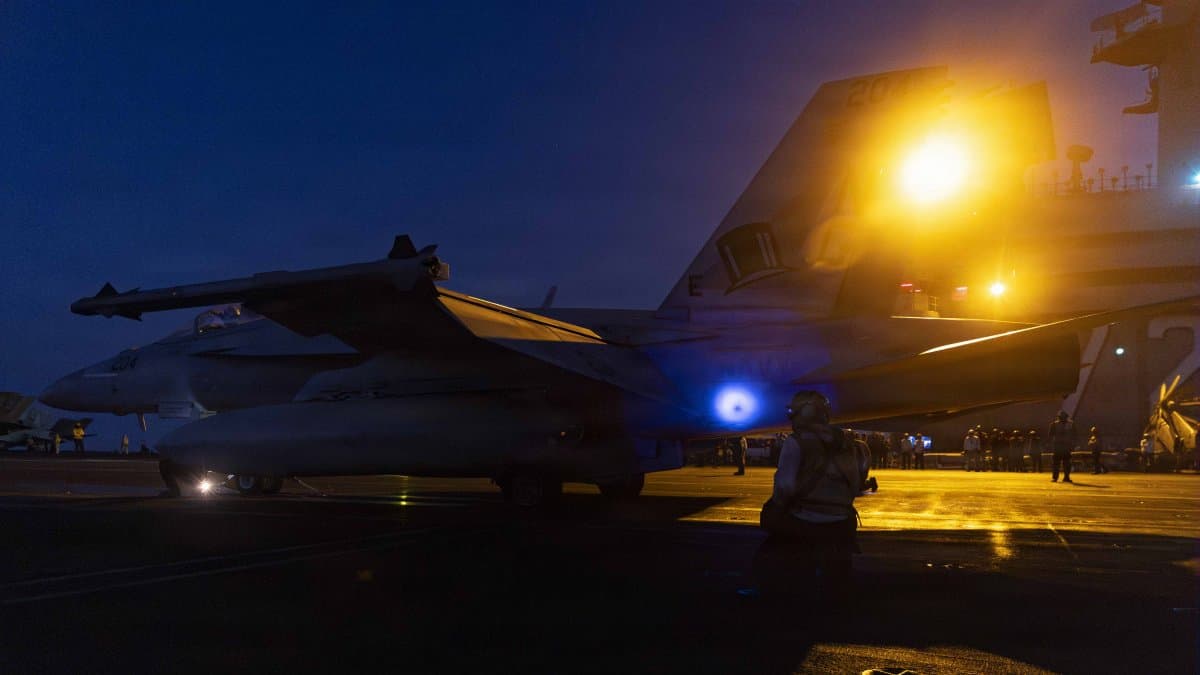
“What should be ensured by the operation, by the war, [is] that any regime, this one or another one, will be very, very weak,” said Amidror.
He estimated the conflict could last “two to six weeks,” noting that the allied forces must reach a point where they agree the regime is sufficiently degraded.
Professor Col. (res.) Gabi Siboni, CEO of JISS, placed the current operations within the broader context of Israel’s grand strategy since the Hamas-led massacre on Oct. 7, 2023.
“I think that if you look at it carefully, you see a very clear strategy of Israel, developed by our prime minister and the Cabinet, which was to eliminate the proxies of Iran, isolate Iran, and then deal with Iran,” Siboni explained.
He praised the shift in posture, noting that the United States military operates without the restrictive layers of self-imposed legal constraints that Israel had typically adopted for itself.
“We are learning from the Americans now,” Siboni said. “We are learning a very important lesson regarding the way military operations should be conducted to make sure that we are doing it to kill the enemy and to win the war.”
Maj. (res.) Alex Grinberg, an expert at JISS on Iran and the Shi’ite world, provided insight into the internal dynamics of the Iranian regime under fire. He said that the goal must be to “break the back of the enemy.”
“It’s a regime that is sadistic and that blackmails money from families to get [back] the bodies of their dear ones [protesters] who were massacred. So, this regime must be destroyed,” Grinberg argued.
He analyzed Iran’s strikes against Gulf nations, suggesting they are a desperate attempt to saturate American air defense systems.
“Its geopolitical behavior proves that there is no way to compromise with this regime,” Grinberg said, describing the Islamic Republic as “incurably aggressive.”
He also called for the elimination of former senior IRGC commanders and military advisers, saying, “These are very powerful people, and they must be done in as soon as possible because they’re very dangerous.”
Any scenario of the regime surrendering as Nazi Germany did in 1945 is baseless, said Grinberg, adding that this is based on decentralized power networks, and that the war goal should be to “break separately all of the vertebrae of this spine. And this way it will stop functioning.”
Dr. Pnina Shuker, a JISS national security expert, focused on the profound impact of these Iranian strikes on the Gulf Arab states.
“It appears that the Iranian logic behind attacking Gulf states is to create internal instability, aiming to exert indirect pressure on the United States to end the war,” Shuker assessed. “There is a logic behind this modus operandi. However, it seems these attacks are achieving the exact opposite result.”
Instead of driving a wedge between regional allies, the attacks are accelerating defense integration and deepening strategic reliance on international partnerships, Shuker observed.
She noted that Saudi Arabia and the United Arab Emirates have set aside their recent political disputes to unite against the shared Iranian threat.
She explained that Qatar faces an even more complex situation, having previously maintained a delicate balancing act with Tehran. However, the Iranian attempt to strike Doha International Airport crossed a red line.
“The Qatari prime minister flatly rejected these claims [that the missiles were aimed at American interests],” Shuker noted. “He accused Iran of dragging its neighbors into war.”
While the Gulf states have exercised notable restraint, Shuker warned of uncertainty as Iran continues to escalate.
“The Gulf states now face a dual-front challenge: sustaining effective interception against unpredictable missile swarms, while safeguarding domestic stability in the face of pro-Iranian mobilization,” she concluded.
When asked about the potential for the Trump administration to seek an end to the conflict before Israel’s desired timetable, Shuker cautioned that internal American politics could play a role.
🛠 Do you think there is an error in this article?
Recommendations





LATEST