






‘Very grave’ threat of Iranian sleeper cells in US, experts warn
“The Iranians are going to strike us where we are least defended,” Michael Rubin, of the American Enterprise Institute, told JNS.

Iranian sleeper cells in the United States are a concern that should be taken seriously in the aftermath of U.S. and Israeli strikes that killed Ali Khamenei and other Iranian regime leaders over the weekend, experts told JNS.
“They pose a very grave threat,” Michael Rubin, a senior fellow at the American Enterprise Institute and director of policy analysis at the Middle East Forum, told JNS. “The Iranians are going to strike us where we are least defended.”
Past incidents show that sleeper cells exist, including a thwarted 2011 Iranian plot to assassinate the Saudi ambassador to the United States, according to Rubin. In that plot, the Iranians were working with cartels “to whom they were outsourcing some of the operation,” he said.
“That’s what we need to be most worried about. An Iranian sleeper cell might not be comprised of Iranians. It might be an Iranian-hired cell tapping into other existing criminal networks,” Rubin told JNS.
That shouldn’t be a surprise, since the Islamic Revolutionary Guard Corps has interacted with Venezuelan and Bolivian drug dealers, according to Rubin. And when it came to the 1994 bombing of the AMIA Jewish Community Center in Buenos Aires, “the Iranians were relying on Lebanese emigres,” Rubin told JNS.
The bombing killed 85 people and injured more than 300. In April 2024, an Argentine court found that Iran and Hezbollah were responsible for the attack.
Rubin told JNS that when Iranian Americans visit Iran for benign reasons, “they are interrogated at the border, and any phone or computer that they have is basically going to be sucked dry.”
If the Iranian regime found anything on their phones or computers that it can use as blackmail, it will do so now, according to Rubin.
Jason Brodsky, policy director at United Against Nuclear Iran, told JNS that the Iranian regime “has for many years attempted to establish capabilities and networks in the United States that are able to carry out such operations on demand at the decision of the Iranian leadership.”
“I think U.S. law enforcement, thankfully, has been quite effective in thwarting these plots in conjunction with our allies and partners around the world, but this is a threat,” he said.
“There is a capability that the Iranian regime has. It maintains relationships with transnational criminal syndicates, and those transnational criminal syndicates have the ability to carry out operations in the United States,” Brodsky told JNS. “It should be taken seriously.”
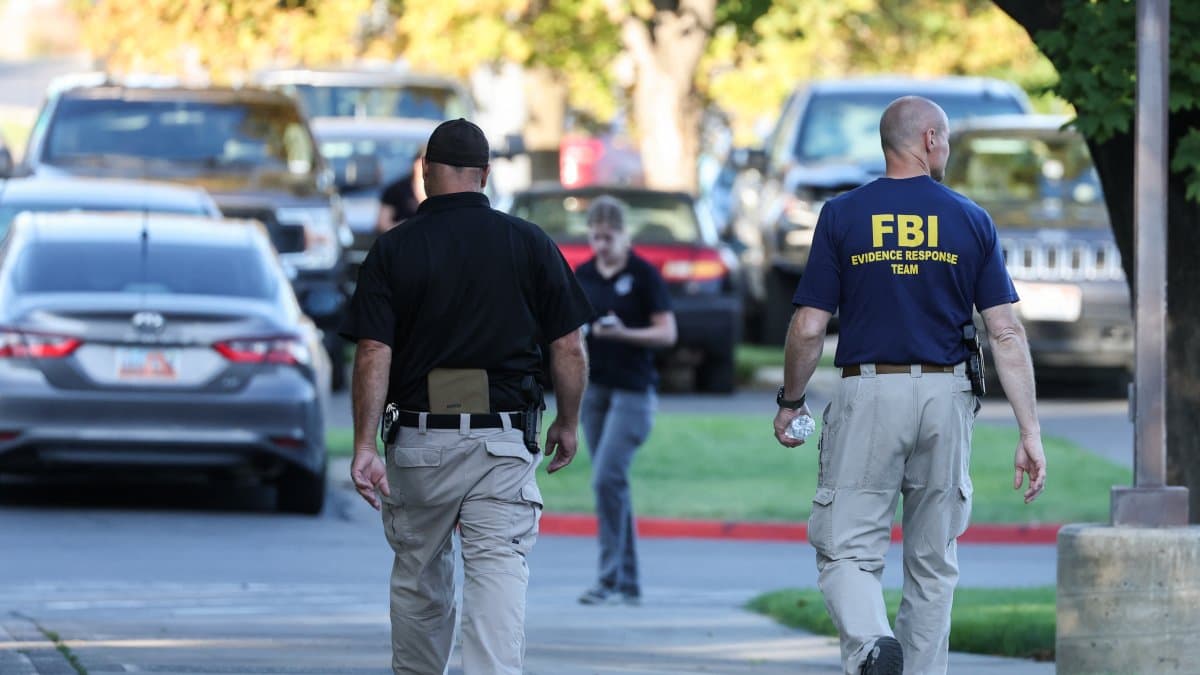
Law-enforcement officials have addressed the matter. Kash Patel, director of the FBI, stated on Saturday that he “instructed our counterterrorism and intelligence teams to be on high alert and mobilize all assisting security assets needed” and that the FBI “remains at the forefront of deterring attacks here at home.”
Kristi Noem, U.S. homeland security secretary, also stated that she is “in direct coordination with our federal intelligence and law enforcement partners as we continue to closely monitor and thwart any potential threats to the homeland.”
Rubin told JNS that law enforcement may be on top of the issue, but “if the Iranians try hard enough and have enough strategic patience, we do eventually let down our guard.”
He cited the attempt to assassinate Salman Rushdie in 2022, which left the writer partially blind.
“Terrorists think outside the box, and unfortunately, the American security establishment is not very good at thinking outside the box,” Rubin said.
Based on past plots that the United States has thwarted, the Iranian regime targets current and former U.S. government officials, Iranian dissidents, Jewish community members and critics of the regime, according to Brodsky.
The Iranian regime has sanctioned Brodsky, his boss, and United Against Nuclear Iran, he told JNS.
“It’s not just that they’re freezing the nonexistent assets that we have in Iran, or denying us our ability to travel to Iran when we would never do so,” he said. “Along with the designation comes cyberhacking attempts and all kinds of threats to the people involved.”
Brodsky sees the designation as a “badge of honor.”
“This is a regime that is one of the worst in the world,” he said. “It’s abused the Iranian people and has engaged in a massacre last month which killed, just in the span of a couple of days, around 32,000 people, with totals not seen since Nazi Germany.”
Brodsky and Rubin told JNS that it’s unknown how many sleeper cells there are in the United States. Rubin said that the “nature” of sleeper cells is that there’s no way to know how many there are.
Rubin suspects that “there will be assassinations of prominent Jewish community leaders, of rabbis and so forth, because the Islamic Republic and its agents don’t differentiate between Judaism and Israel.”
“In this case, their goal is simply to show strength by reach,” he told JNS. “Everyone needs to be vigilant and recognize that we’ve never faced a danger like we face today as the Jewish community in the United States.”
🛠 Do you think there is an error in this article?
Recommendations

LATEST