Depression soars in the last decade and reaches 19.1% of adults
Growth has not been linear, but steady. Rates began to rise sharply between 2019 and 2023, in parallel with the social impact of the COVID-19 pandemic. In that period, it reached 19.2 %, coinciding with the formal closure of the health emergency by the Centers for Disease Control and Prevention.
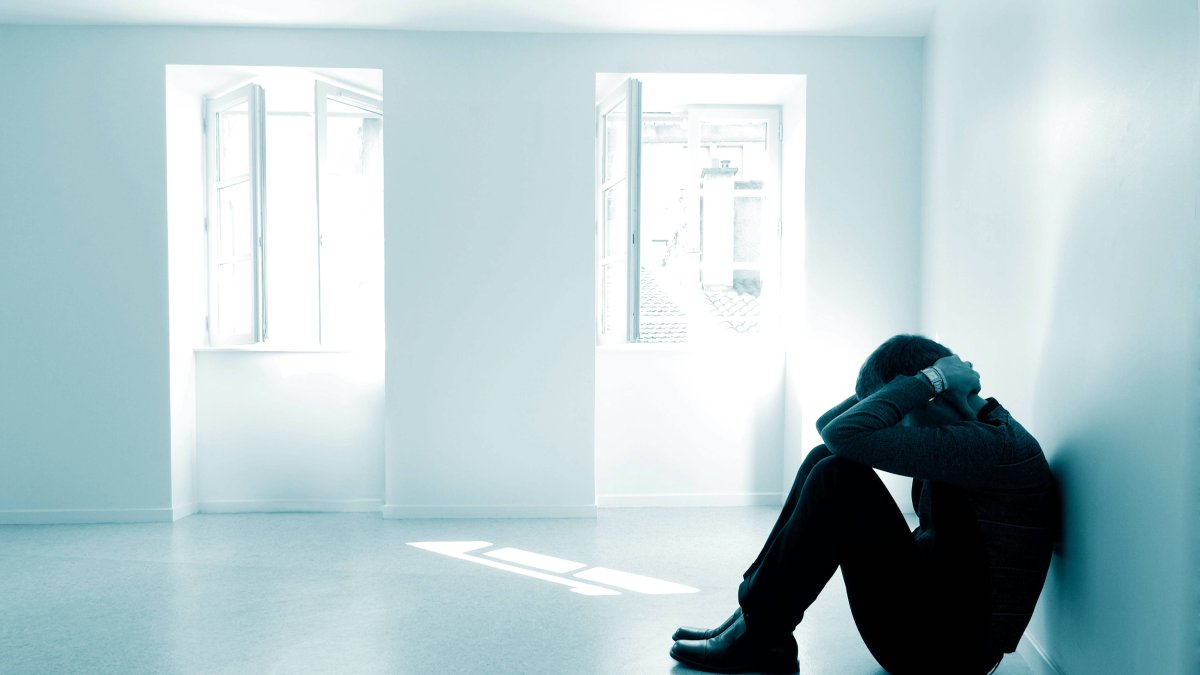
Imagen referencial depresión

The rate of depression in the country is not decreasing. The most recent data from Gallup's Health and Well-Being Index revealed that the percentage of U.S. adults who reported suffering from or being treated for depression was 19.1% in the first quarter of 2026.
This is similar to the peak of 20.0% recorded in the previous quarter and nearly nine percentage points higher than the initial 2015 measurement. The percentage equates to about 51 million people.
A decade of sustained increase
Growth has not been linear, but it has been steady. Rates began to rise sharply between 2019 and 2023, in parallel with the social impact of the COVID-19 pandemic. They reached 19.2% in that period, coinciding with the formal closure of the health emergency by the Centers for Disease Control and Prevention.
After a slight improvement in 2024, when the rate dropped to 17.4%, the data have rebounded again. The phenomenon suggests that, beyond the pandemic shock, there are structural factors that continue to fuel psychological distress.
Moreover, the percentage of adults claiming to have received a diagnosis of depression at some point in their lives has reached 29.5 %, almost ten points higher than in 2015.
Young people and precariousness: the epicenter of the problem
This increase responds to two simultaneous dynamics. On the one hand, new generations are reaching adulthood with higher levels of distress than their predecessors. On the other, those who were already young adults a few years ago also have higher rates of depression today than then.
The economic variable intensifies this gap. Among those living in households with incomes below $24,000 per year, depression has risen to 37.4%, fifteen points higher than in 2017. Precarity not only limits opportunities: it also impairs emotional well-being.

Loneliness as a key factor
In parallel to the rise in depression, another closely linked phenomenon emerges: loneliness. Approximately one in five Americans claims to have experienced significant loneliness for much of the day prior to the survey.
The relationship between the two factors is compelling. Among those who report recent loneliness, the rate of depression reaches 33%, compared to 13% among those who do not. These are not independent variables, but mutually reinforcing dimensions.
The peak of loneliness was recorded during the hardest moments of the pandemic, but, far from disappearing, it has stabilized at levels higher than those prior to 2020. The recent upturn coincides, moreover, with the new increase in depression.
When life seems to be getting worse
Psychological distress is also reflected in the subjective perception of life. Among those who feel that their situation has worsened in the past year, more than a third report feeling lonely recently, and 30% say they suffer from depression.
These figures contrast with those who perceive an improvement in their life, where levels of loneliness and depression are significantly lower. Mental health, in this sense, is not only a clinical issue, but also a way of interpreting one's own life trajectory.
LATEST