Trump secures permanent US military control over Greenland, after more than 100 years of failed attempts
Secretary of State Marco Rubio and White House adviser Stephen Miller played a decisive role behind the scenes in finalizing the agreement.
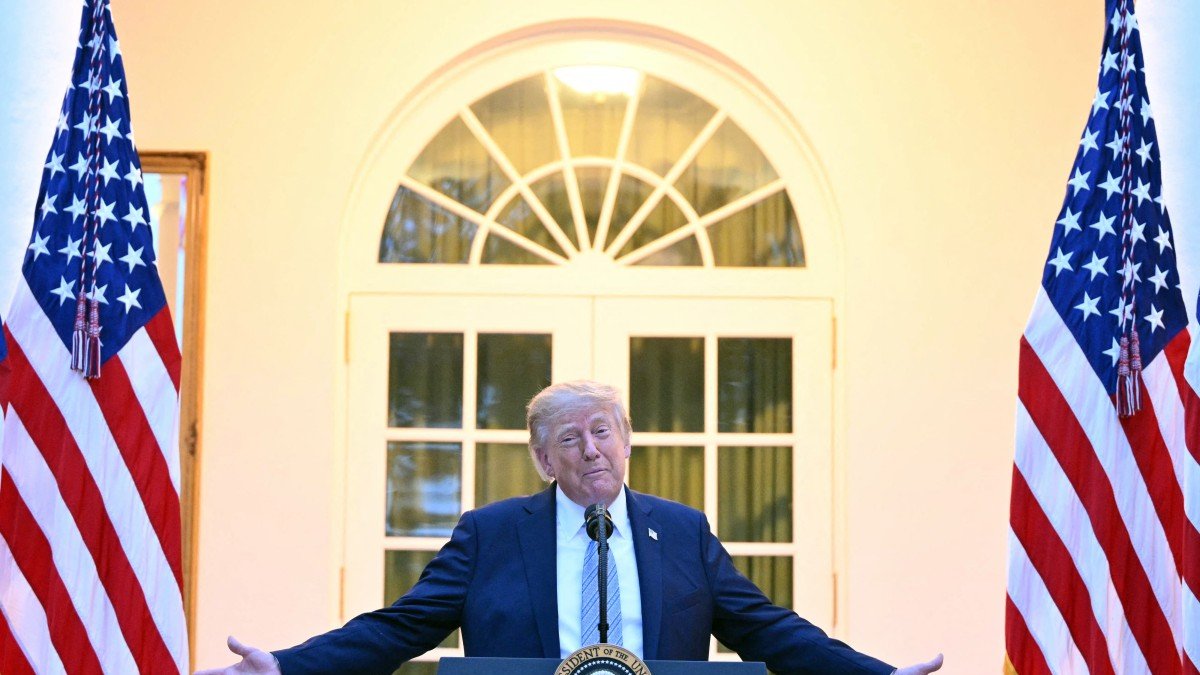
Donald Trump speaks during a dinner in the Rose Garden at the White House in Washington, D.C.

The president Donald Trump announced on Friday an agreement that, in his own words, guarantees the United States a permanent military presence in Greenland, the strategic Arctic island that had been the focus of his geopolitical interest for nearly a decade and which he had threatened to buy after returning to the White House.
"At my direction, we worked with representatives of Denmark and Greenland to guarantee that the United States will FOREVER have the complete ability to do what is necessary in Greenland in order to secure and defend the security of Greenland, and the United States of America," the president wrote on Truth Social.
Trump described the agreement as an unprecedented achievement in recent U.S. history. "For over 100 years, Presidents have known the strategic importance of Greenland, but NONE of them were able to do anything about it. I am proud to be the President that permanently and conclusively addressed this very important situation. This is an 'Infinite Life' Agreement, there is no end!" he said, and emphasized that the initiative will cost U.S. taxpayers "NO COST."
According to a report by Fox News Digital, a senior Trump administration official said that the agreement grants Washington permanent access, rights to establish military bases and overflight rights over Greenlandic territory, as well as the ability to build new military facilities when deemed necessary. Furthermore, the pact also closes the door on China, Russia and any country outside of NATO from establishing bases, stationing troops or making investments in sensitive sectors on the island.

Politics
Trump posts map showing Canada, Mexico, Iceland, Greenland and several Caribbean countries as part of US
Williams Perdomo
Secretary of State Marco Rubio welcomed the announcement in remarks to the same media outlet: "This historic deal is a huge win for the United States and the American people. Thanks to President Trump's vision and leadership, this historic agreement permanently guarantees U.S. security interests in the Arctic at zero cost to the U.S. taxpayer." The Secretary of State added that "Greenland will forever be part of the strategic defense area of North America and exclude any adversary from it and the surrounding area."
Rubio, alongside White House adviser Stephen Miller, was a key behind-the-scenes figure in securing the agreement.
According to a second official consulted by Fox News Digital, the two led months of negotiations with the State Department and the National Security Council that began in February, in "various rounds of quiet negotiations that never leaked and never got out there."
Those efforts succeeded in convincing Greenland and Denmark, which initially firmly rejected Trump's insistence that the United States should directly "own" the island. Ultimately, Danish and Greenlandic authorities concluded that the final agreement also served their own security interests.
"They recognize at the end of the day that they have a national security concern here as well," Rubio explained. "Denmark and Greenland understand that they don't have the financial means necessary to defend Greenland if it were to come under attack or be threatened. The United States has the power to do that."
Politics
Trump and NATO reach preliminary framework agreement on the future of Greenland
Joaquín Núñez
The new pact significantly expands the defense relationship that has existed between the two countries since 1951. Washington also views Greenland as a key component of its missile defense project Golden Dome, and aims to prevent the island from ending up replicating what the Trump administration considers a strategic vulnerability similar to the one that developed around the Panama Canal, where Chinese commercial investments raised concerns in Washington due to their potential national security implications.
Trump's announcement contrasts, however, with the much more cautious tone adopted by Copenhagen and Nuuk. In a joint statement dated Sept. 18, the governments of Greenland and Denmark referred to an agreement that was still "planned," not finalized, with the signing scheduled for next week as part of the UN General Assembly, and clarified that the agreement must also go through the relevant parliamentary procedures before entering into force.
Greenlandic Prime Minister Jens-Frederik Nielsen emphasized that the eventual agreement "recognizes Greenland's interests and our place within international cooperation," while Danish Prime Minister Mette Frederiksen, emphasized that it is an agreement that "recognizes the sovereignty and territorial integrity of the Kingdom, as well as the right of the Greenlandic people to self-determination" — two concepts that, although absent from Trump's statement, were acknowledged by U.S. officials cited by Reuters and Fox News, who stated that the deal falls far short of a complete transfer of sovereignty — grandiloquent terms that Trump had previously raised and that drew widespread criticism both within and outside Greenland.
LATEST