Donald Trump considers sending ground troops to Iran to ensure global trade in the Strait of Hormuz
The range of options currently under consideration includes a substantial increase in strategic bombing and the deployment of ground combat troops.
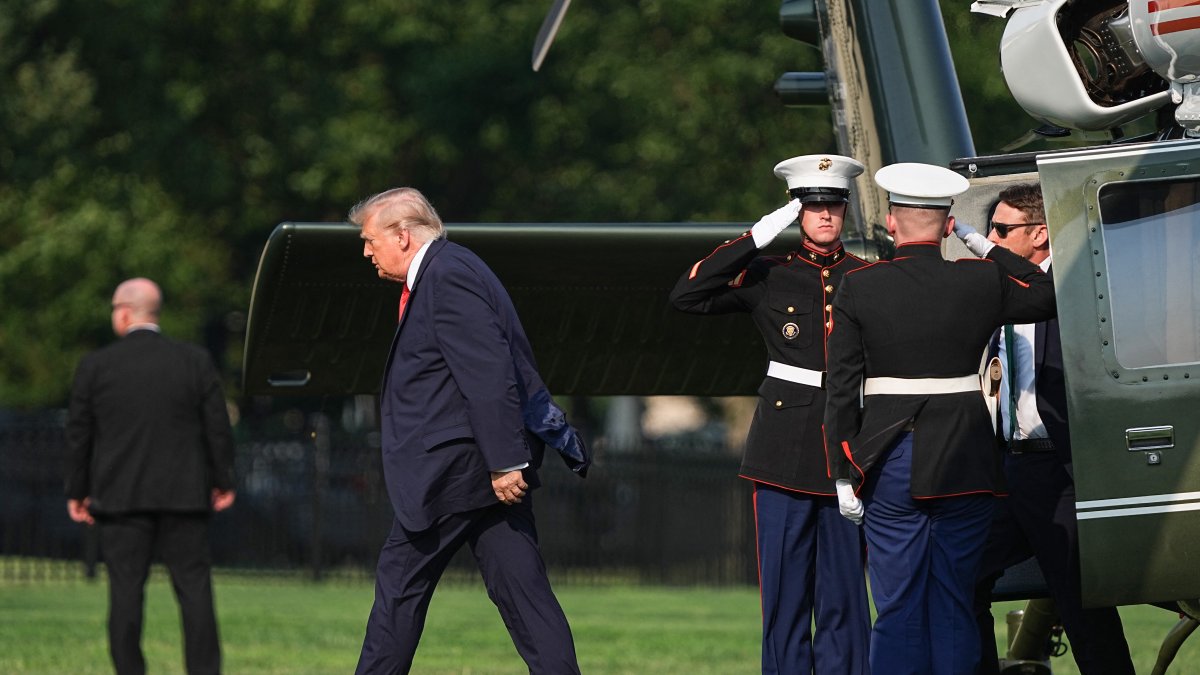
U.S. President Donald Trump steps off Marine One after landing at the Ellipse, near the White House, on July 15, 2026.

President Donald Trump is strongly leaning toward expanding military operations in the Persian Gulf after receiving detailed reports from his closest advisors, according to security officials who spoke to media outlets such as the Wall Street Journal and Axios.
The range of options currently under consideration includes a substantial increase in strategic bombing, the deployment of ground combat troops to seize Iranian-controlled islands in the vicinity of the Strait of Hormuz, and the destruction of infrastructure linked to the development of weapons of mass destruction.
The strategic urgency led to an emergency meeting in the White House Situation Room on Tuesday night, where the president reviewed operational maps alongside Vice President JD Vance, Defense Secretary Pete Hegseth, Secretary of State Marco Rubio, and General Dan Caine, Chairman of the Joint Chiefs of Staff.
In parallel with these deliberations, the U.S. Armed Forces have already carried out two consecutive waves of airstrikes to degrade Iran's ability to disrupt free commercial navigation.
"We'll see if we can work this out with them or if we'll just put an end to the matter," President Trump declared firmly during an industry event, shortly after authorizing the start of the second wave of retaliatory strikes.
Naval blockade and sights set on Pickaxe Mountain
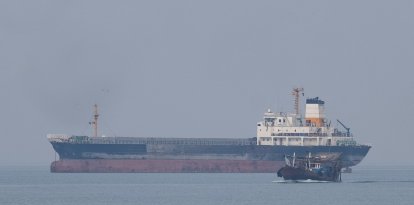
The U.S. deployment includes the rigorous enforcement of a naval blockade on Iranian ports. As a demonstration of this zero-tolerance policy toward provocations, U.S. destroyers intercepted a Curaçao-flagged cargo ship that was attempting to breach the blockade to dock at the strategic island of Kharg.
After ignoring warnings to change course, the vessel was surgically neutralized by Hellfire missiles striking its exhaust stack, rendering it completely inoperable.
However, the most significant target in military planning is the Pickaxe Mountain underground complex, a fortification built beneath layers of granite at depths ranging from 300 to 475 feet below the surface.
The site is substantially deeper than the Natanz and Fordow enrichment facilities, which were dismantled by combined U.S. and Israeli forces last summer.
"We are going to eliminate Pickaxe Mountain," the president stated emphatically during an interview with broadcaster Hugh Hewitt.
Later, in remarks to Fox News, the president clarified that, while intelligence agencies are still assessing activities inside the granite tunnels, the bunker-busters in the U.S. arsenal "can reach very deep."
Kharg Island and the negotiation dilemma
The option of bringing Kharg Island —Iran's main crude oil export terminal— or the islands of Abu Musa, Greater Tunb, and Lesser Tunb under U.S. control to ensure civilian maritime traffic divides opinion within the military establishment.
Although some advisors warn of the risk of exposing ground troops to enemy drones and missiles, retired high-ranking military officials, such as General Frank McKenzie, defend the validity of the maneuver, arguing that occupying Persian soil would constitute an unavoidable bargaining chip to force Tehran's capitulation.
The resumption of hostilities was triggered following the collapse of the interim ceasefire, an agreement that the U.S. government declared null and void after Iranian-backed militias resumed attacks on commercial vessels.
In a public statement, Vice President JD Vance clarified that the use of military force is intended solely to restore stability. "We're not just going to bomb and bomb. We're going to try to use our military force as one of the many tools we have to solve the problem," he said.

Politics
'We'll take care of it': Trump toughens his rhetoric following reports of Iranian drones in Cuba
Diane Hernández
LATEST