Johnson and Republicans revive the Save America Act: House attaches it to approved foreign affairs and national security funding bill
The move also aims to satisfy President Donald Trump, who has conditioned his signature on other bills—including a housing bill already enacted without his endorsement—on the passage of the Save America Act, and who also linked the issue to the renewal of a foreign surveillance law that expired last month.
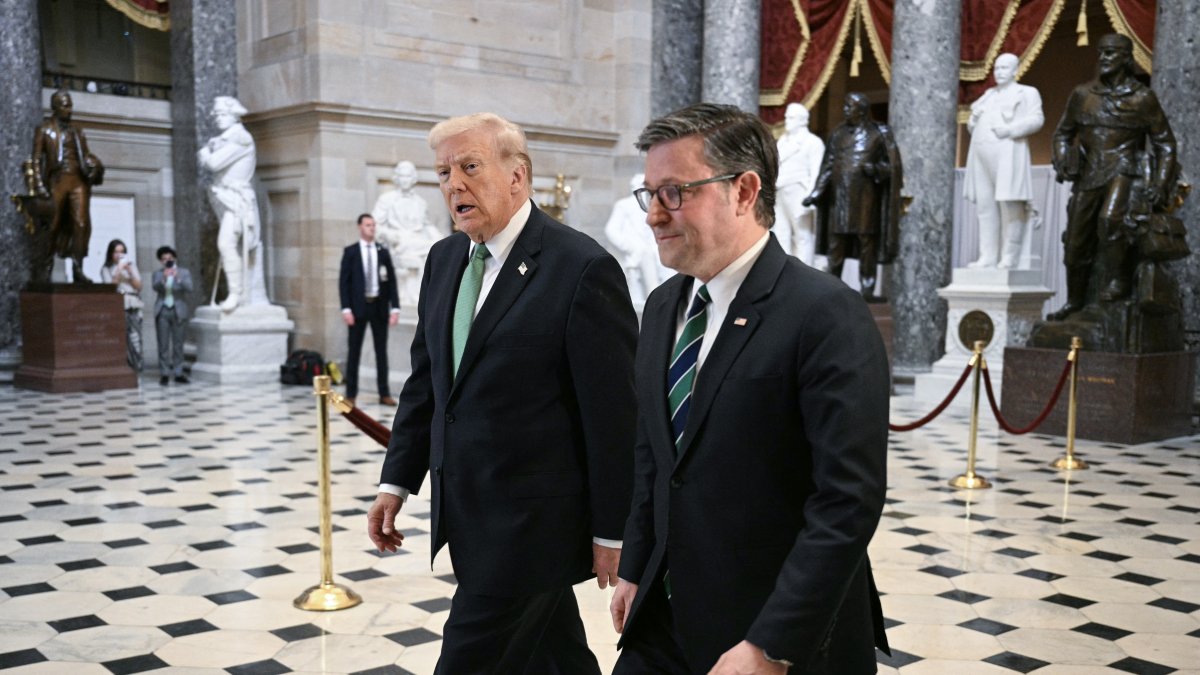
President Donald Trump and Speaker Mike Johnson

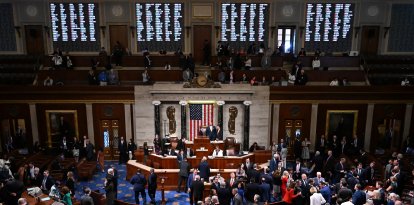
The House of Representatives passed an appropriations bill on Wednesday by a vote of 217 in favor and 209 against, funding the Department of State, national security, and other agencies for fiscal year 2027. One Democrat crossed party lines to support the measure, while one Republican voted against it.
According to various reports, beyond the need to fund the Department of State and the various national security agencies, the real goal behind the vote for many Republicans was something else: to embed the Save America Act, which requires proof of citizenship to register to vote and the presentation of identification to cast a ballot, into a spending package that typically enjoys bipartisan support. The procedure, known in legislative jargon as "MIRVing," allows hard-line Republicans in the House to attach their electoral priority to a bill that does have a real chance of moving forward.
House Speaker Mike Johnson yielded to pressure from the most conservative sectors of his caucus, which had brought the House to a standstill late last month by blocking procedural motions. The maneuver also seeks to satisfy President Donald Trump, who has made his signature on other bills—including a housing bill already enacted without his signature—contingent on the passage of the Save America Act, and who also linked the issue to the renewal of a foreign surveillance law that expired last month.


Politics
Pulso en el Congreso: republicanos de la Cámara paralizan la agenda republicana en un duro enfrentamiento por el SAVE America Act
Andrés Ignacio Henríquez
The problem for Republicans is that the maneuver will likely fall short. Senate Democratic Leader Chuck Schumer had already indicated that he would block the initiative, just as he did when Majority Leader John Thune tried to push it through months ago under pressure from the White House. "I'll say it as many times as it takes: the [Save America] Act is dead on arrival here in the Senate. I don't care how Republicans try to package their plan to resurrect the old ghost of Jim Crow – we will kill it," Schumer warned.
Representative Anna Paulina Luna, who led the filibuster last week, sought to preempt blame and pointed the finger directly at Thune should the bill fail again in the Senate.
Meanwhile, the vote revealed another significant detail: an amendment introduced by Rep. Thomas Massie to cut aid to Israel within the same funding bill failed by a vote of 104 in favor and 314 against, although the result exposed the internal tensions within the Democratic Party on the issue.
With the Save America Act now attached to the spending bill, the ball is now in the Senate's court, where it is expected to be removed before any final agreement is reached. If no consensus is reached, the Republican maneuver could also increase the risk of a government shutdown later this year, as the House still must pass nine additional appropriations bills before the end of September.
LATEST