Why nearshoring needs better institutions, not more subsidies: The Prospera case
Próspera offers a case study in how institutional competition can create jobs, reduce migration, and strengthen America's strategic position in the Western Hemisphere.
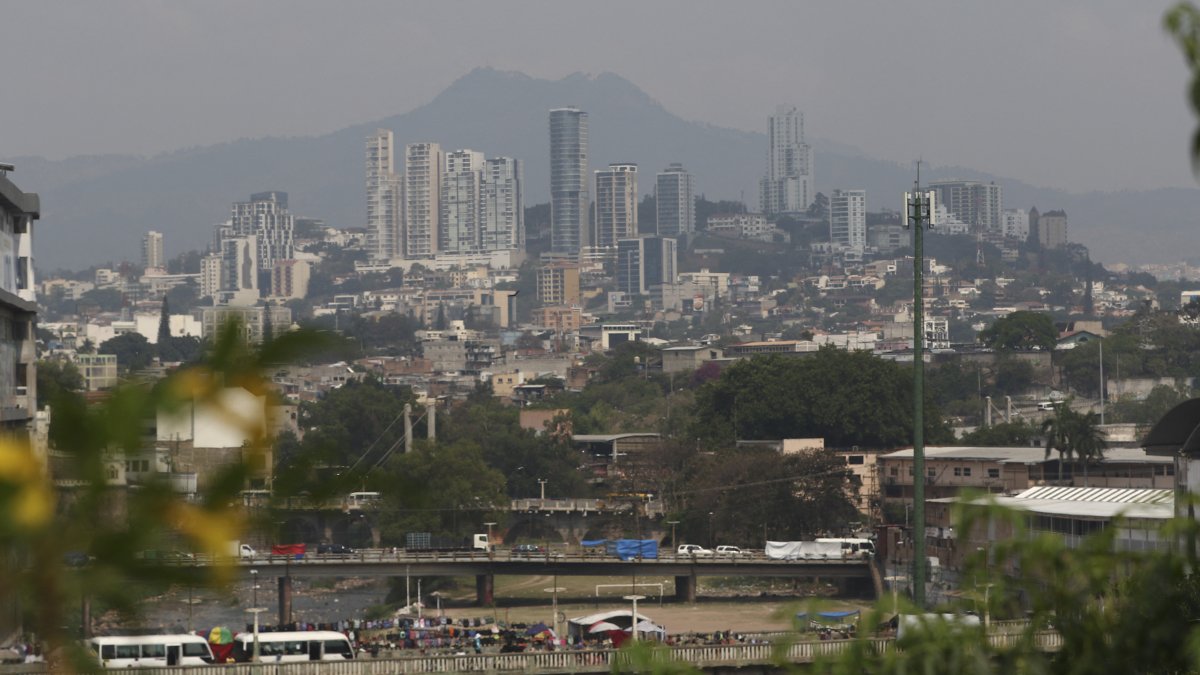
Tegucigalpa, capital de Honduras.
Last year, I visited Honduras for the first time. I came home with a simple question: Why isn't Honduras richer?
The country sits just a short flight from Miami. It enjoys preferential access to the US market, a young labor force, and a strategic location that should make it one of the hemisphere's biggest beneficiaries as global supply chains move closer to North America. Yet more than half of Hondurans continue to live below the national poverty line, making Honduras one of the poorest countries in the Western Hemisphere.
The contrast is difficult to ignore. Honduras does not lack geography. It does not lack people. It does not lack proximity to opportunity.
What it lacks are the institutions capable of turning those advantages into prosperity.
More than eighty years ago, Friedrich Hayek explained why. Prosperity cannot be engineered from above because the knowledge necessary to allocate capital efficiently is dispersed among millions of individuals. Markets succeed not because governments direct them, but because entrepreneurs are free to discover opportunities within a framework of secure property rights, predictable rules, and voluntary exchange.
That insight has become increasingly relevant as businesses rethink global supply chains.
Nearshoring is often discussed as a matter of geography. It isn't. It is a matter of institutional confidence.
Policymakers frequently assume that capital follows incentives. Investors know it follows certainty. They can tolerate higher wages, longer shipping routes, or modest tax differences. What they struggle to tolerate is uncertainty. They want to know that contracts will be enforced, regulations will remain stable, and today's investment will not become tomorrow's political target.
That helps explain Honduras.
On paper, the country should be one of Latin America's great nearshoring success stories. Instead, much of the investment that might transform its economy continues to flow elsewhere.
One possible answer is institutional experimentation.
Próspera, a special economic jurisdiction on the island of Roatán, is perhaps the most ambitious example of that approach in Latin America. Rather than attempting to attract investment primarily through subsidies, it seeks to compete through governance itself. Businesses may voluntarily operate under a legal framework designed around stable regulation, strong property rights, contractual certainty, and internationally recognized arbitration.
The premise is straightforward: if institutional uncertainty discourages investment, stronger institutions should attract it.
Whether Próspera ultimately fulfills that promise remains to be seen. No institutional model should be judged by theory alone. But the broader idea deserves serious consideration. Markets evolve through experimentation. Entrepreneurs discover better ways to organize production through competition. There is no obvious reason why governance should be denied the same evolutionary process.
If jurisdictions can compete by offering better institutions, they can compete for capital, talent, and entrepreneurship as well.
The implications extend far beyond Honduras.
For decades, one of Honduras' largest exports has been its people. Migration is fundamentally an economic decision. People leave because opportunity has already moved elsewhere.
Creating more opportunities at home is therefore one of the most effective long-term migration policies imaginable.
That is where the interests of Honduras and the United States converge.
Every American company that chooses to manufacture, develop software, build logistics infrastructure, or establish regional operations in Honduras creates value on both sides of the border. Honduran workers gain better jobs. American firms build more resilient supply chains. American investors—many of whom are already backing projects such as Próspera—earn returns while helping create a more prosperous and stable regional economy.
The implications extend beyond Honduras. If successful, institutional models built around legal certainty and economic freedom could provide a template for other countries across Latin America seeking to attract investment without relying on permanent subsidies or state-led industrial policy. The region does not suffer from a shortage of talent or geographic advantages. Too often, it suffers from a shortage of institutional confidence.
As China continues expanding its economic influence throughout Latin America, this becomes more than a development question. It becomes a strategic one. The United States' greatest competitive advantage has never been its ability to outspend rivals through industrial policy. It has been its ability to champion institutions where entrepreneurship, private capital, and innovation flourish.
If America wants nearshoring to become more than a slogan, it should spend less time looking at maps and more time thinking about institutions.
Geography determines where countries are located.
Institutions determine whether capital decides to stay.

World
US and Shield of the Americas join De la Espriella to denounce Petro-driven transition crisis as undermining Colombian democracy
Emmanuel Alejandro Rondón


LATEST