Legislative offensive: Donald Trump backs seven key candidates to secure the GOP's majority in the House of Representatives
This strategic move comes amid a scenario of extremely close legislative parity, where the GOP caucus seeks to secure and expand its narrow majority.
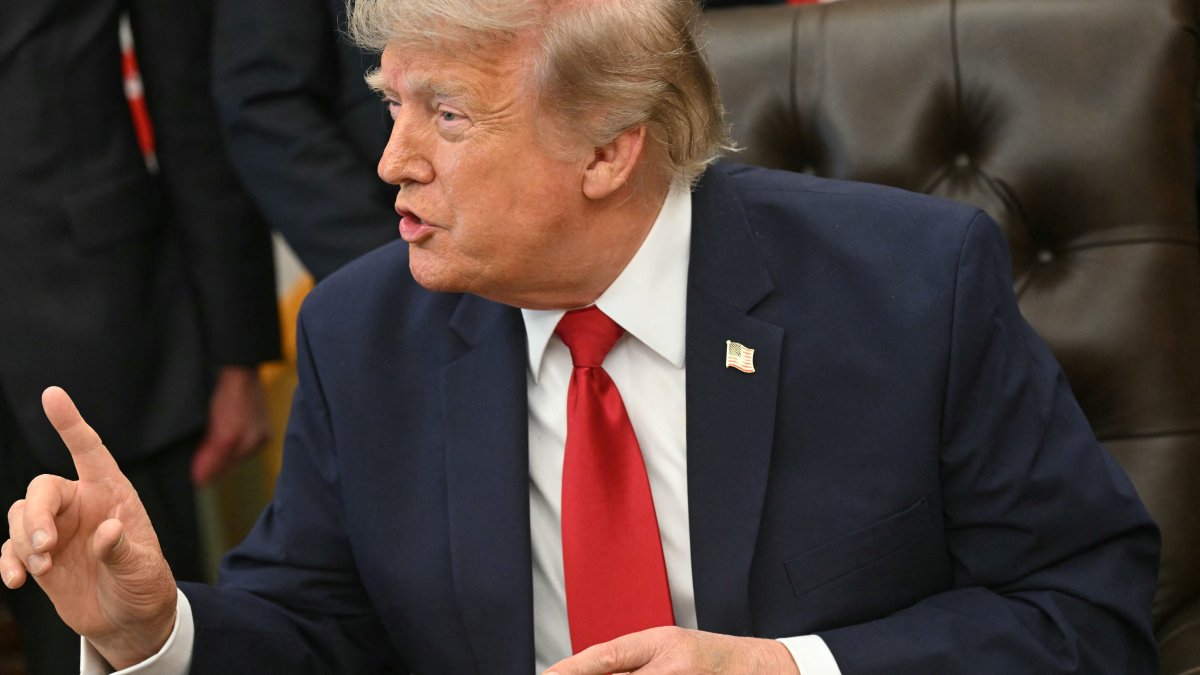
President Trump in the Oval Office on July 13, 2026.

President Donald Trump officially announced on Monday his endorsement of seven Republican candidates who are running for a seat in the House of Representatives for the first time.
This strategic move comes amid a scenario of extreme legislative parity, where the GOP caucus seeks to shore up and expand its slim majority in the face of the Democratic agenda. Through Truth Social, Trump detailed his endorsements for various key districts.
Among those selected are John Cowan in Georgia's 11th District; Anthony DiLorenzo in New Hampshire's 1st District; Jeanine Driscoll in New York's 4th District; Jenny Honeycutt in South Carolina's 1st District; Barb Regnitz in Indiana's 1st District; Brent Taylor in Tennessee's 9th District; and Steve Toth in Texas's 2nd District.
Consolidated primaries and head-to-head races against the 'Establishment'
Of the group of candidates endorsed by the president, five have already mathematically secured the party's official nomination for the general election. The only temporary exceptions are Brent Taylor and Anthony DiLorenzo, who will have to defend their positions in their respective primary elections scheduled for August and September.
The case of Steve Toth stands out strongly in the party's internal dynamics. The current Texas state representative became the only candidate in the group to directly unseat an incumbent legislator during the March primary race, after defeating Congressman Dan Crenshaw by a decisive margin of approximately 15 percentage points.
Meanwhile, according to projections from the prestigious independent Cook Political Report (CPR), three of the districts up for grabs —those contested by Cowan, Taylor, and Toth— are firmly projected as safe Republican seats.
Taylor, in fact, is running in a Tennessee district that was redrawn by the conservative state legislature to open a clear window of opportunity for the GOP, which forced Democrat Steve Cohen to step down after ten consecutive terms.
Likewise, Jenny Honeycutt holds a lead over Democrat Nancy Lacore in the race to succeed Nancy Mace in South Carolina.
The Challenge in Competitive Districts and Control of Capitol Hill
Trump's leadership strategy also extends to areas traditionally challenging for conservatism. Candidates such as DiLorenzo in New Hampshire and Regnitz in Indiana will have to swim against the current in districts preliminarily classified as leaning Democratic.
Meanwhile, Jeanine Driscoll takes on the challenge of competing head-to-head in New York against first-term legislator Laura Gillen, in a district that analysts describe as an extremely close race for the Republican caucus.
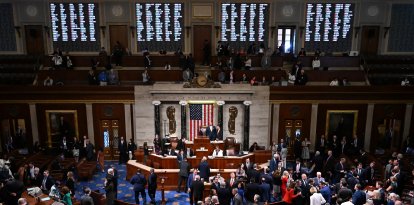
The significance of this support lies in the fragile balance of power in Washington. Currently, Republicans hold a narrow lead of 218 seats to the Democratic caucus's 212, with the additional support of independent lawmaker Kevin Kiley of California.
With the House of Representatives at full capacity, the effective margin stands at 220 to 215. This presents Democrats with the complex task of winning at least six net seats to regain control of the House of Representatives—a highly challenging goal following nationwide redistricting.

Politics
“I want to be reimbursed”: Trump demands several Persian Gulf countries pay the U.S. for protecting the Strait of Hormuz
Luis Francisco Orozco

World
U.S. launches third consecutive night of strikes on Iran as Trump targets Pickaxe Mountain nuclear site
Emmanuel Alejandro Rondón
Politics
"Sovereign states over globalism": Marco Rubio promises a diplomatic offensive to dismantle the ICC
Emmanuel Alejandro Rondón
LATEST