Spain: Investigation links ex-PM Zapatero to money-laundering scheme, Russian mafia and Cuban regime
Spanish police are investigating an alleged money-laundering scheme in which businesspeople sought to build solar farms in Cuba and profit from strategic minerals such as nickel, cobalt and gold.
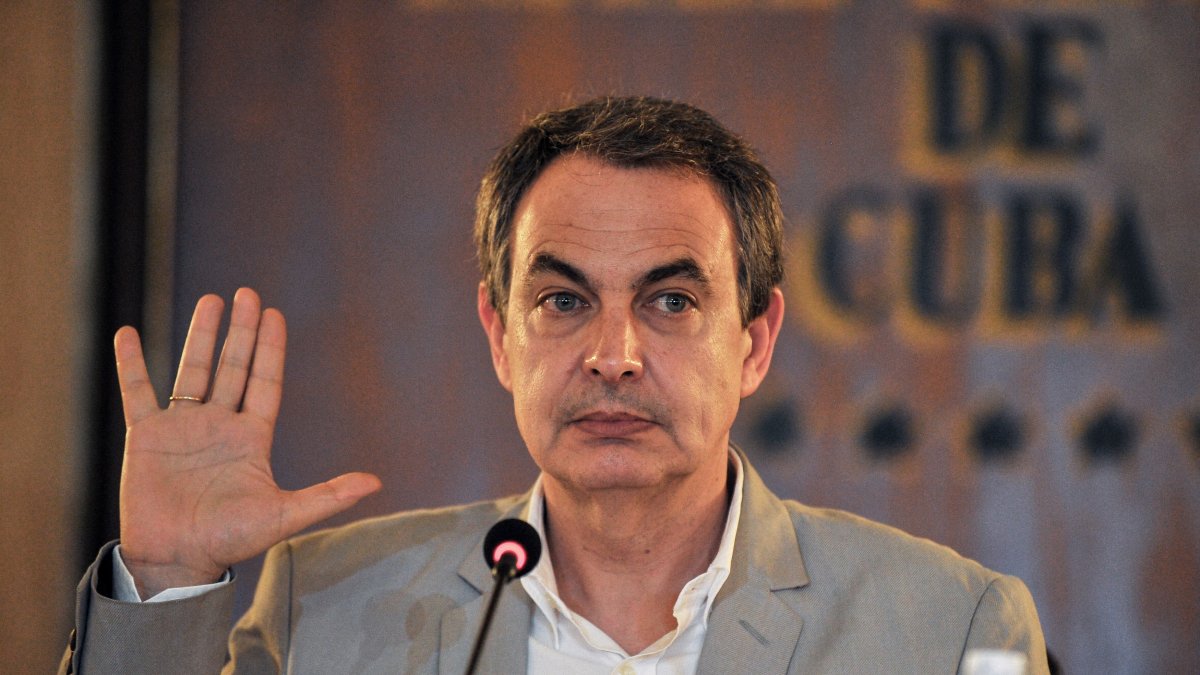
Former Spanish Prime Minister José Luis Rodríguez Zapatero in Havana (File photo)

An investigation by the Drugs and Organized Crime Unit (UDYCO) of the National Police in Spain found that Cuba was the target of an alleged investment operation linked to a network under investigation for money laundering and indicates that Spanish businesspeople turned to the inner circle of former Prime Minister José Luis Rodríguez Zapatero to facilitate negotiations with high-ranking officials of the Cuban regime.
The information, revealed by El Español based on the preliminary investigation into "Operation Strongbox," claims that several businesspeople from Alicante, Spain, with alleged ties to an organization involved in money laundering attempted to develop a large solar photovoltaic park on the island, with a payment scheme based on the delivery of strategic minerals instead of money.
Zapatero’s inner circle
According to police reports cited by that media outlet, intercepted phone conversations show that, when negotiations with Cuban officials stalled, one of the businessmen proposed turning to Zapatero’s inner circle to get the project moving again. In one of the recordings included in the case file, one of the individuals involved states that it was necessary to turn to “ZP’s group” because “those people don’t do things for free.” The former prime minister’s inner circle has denied any connection to these operations and claims to have no knowledge of the facts under investigation.
The investigation identifies Rosell Guerra Campaña, director of renewable energy in the regime’s Ministry of Energy and Mines, as one of the main contacts in Cuba, with whom the businesspeople held discussions to advance the project. When those contacts stalled, the wiretaps reveal the decision to turn to individuals close to the former Spanish prime minister to regain access to Cuban authorities.

The Havana regime’s bargaining chip
Investigators also mention Jerónimo Sarmiento Morato, head of the company Servigestión Lucentum, whom they credit with acting as an intermediary between the Cuban government and companies interested in installing solar farms. According to UDYCO, the company maintained contacts with firms in China, South Africa and Mexico, and was also linked to projects promoted by the Mexican oil company PEMEX to invest in Cuban refineries.
Another aspect of the investigation that stands out is the payment arrangement that Havana allegedly proposed. In a conversation intercepted on March 25, 2024, one of the businessmen states: “They have accepted the one-giga park in exchange for nickel and cobalt.” Police reports add that the investors’ intention was to receive large quantities of nickel, cobalt and even gold in exchange for the energy project.
The investigation also documents contacts with Alfredo López Valdés, then director general of the pro-government Unión Eléctrica (UNE), as well as references to pro-Castro diplomat René Capote, stationed at the Cuban Embassy in Spain. According to UDYCO’s hypothesis, some of these contacts were allegedly facilitated through efforts attributed to Zapatero’s inner circle, although this conclusion has also been denied by the former president and his associates.
Money-laundering services for international criminal networks
The new revelations expand the political dimension of the case by incorporating the alleged use of channels of influence to facilitate commercial operations with Havana. However, for the time being, references to Zapatero are part of the hypotheses gathered in a police investigation and from intercepted conversations, with no court ruling yet determining criminal liability for these acts.
LATEST