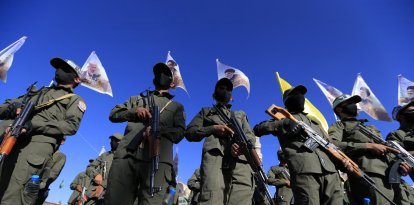
Japan stresses 'critical' cooperation with the US and Seoul in the face of the North Korean threat following Trump's cut to military exercises with South Korea
Japanese Defense Minister Shinjiro Koizumi warned in Australia that Tokyo is facing the "most serious and complex security environment of the postwar era," while his Australian counterpart, Richard Marles, insisted that Canberra is "deeply concerned" about North Korea's nuclear and missile programs.
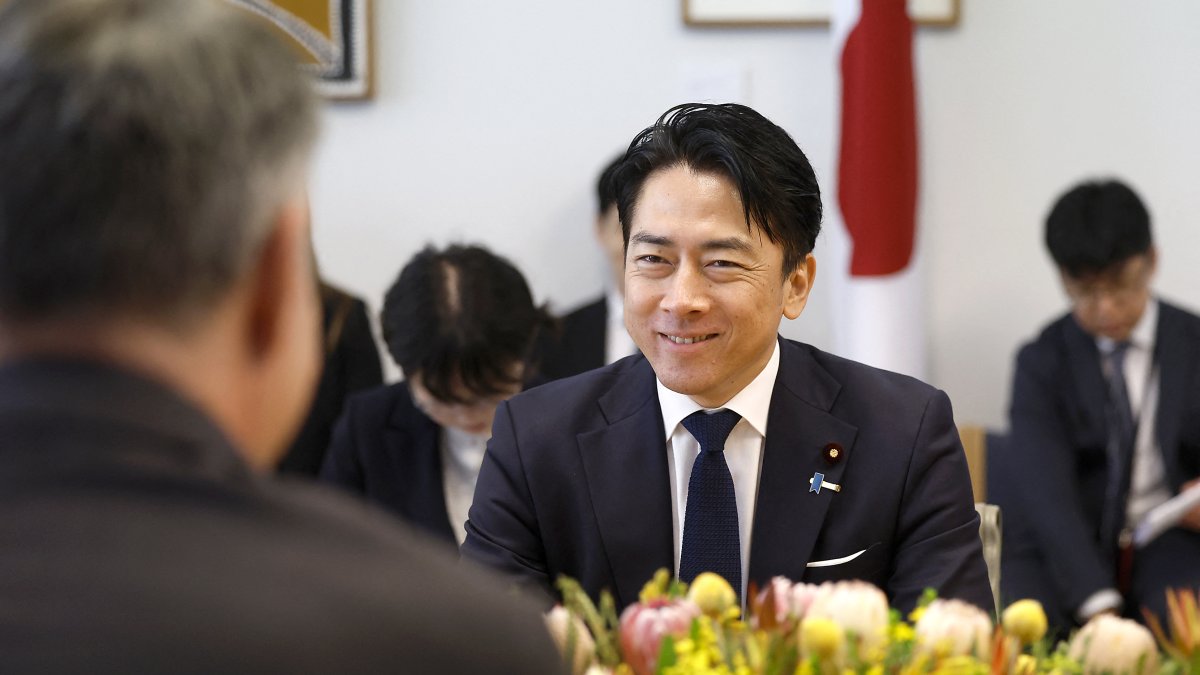
Japanese Defense Minister Shinjiro Koizumi

Japan emphasized on Tuesday that security cooperation with the U.S. and South Korea is "critical" to the region's stability, after President Donald Trump abruptly scaled back military exercises with Seoul.
Trump announced on Sunday that he had ordered the Pentagon to scale back exercises he deemed "inappropriate and hostile." He insisted that he is making the situation "much safer" thanks to his ties with North Korean leader Kim Jong Un, whom he met three times during his first term, but whom he has not yet met since his return to the White House.
Politics
Trump explains the reason behind his decision to scale back military exercises with South Korea
Luis Francisco Orozco
Tokyo and Canberra stress the North Korean threat
According to AFP, Japanese Defense Minister Shinjiro Koizumi strongly supported the joint cooperation. "As Japan faces the most severe and complicated security environment in the post-war era, the cooperation among Japan, the United States and South Korea is critical to the peace and stability of the region," he stated during a visit to Australia.
His Australian counterpart, Richard Marles, stated that Canberra is "very concerned about North Korea's nuclear programme as well as its missile programme."
The 11-day Ulchi Freedom Shield exercises are designed to prepare for a possible war with North Korea, which denounces them as invasion drills.
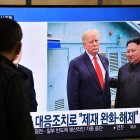
Seoul insists the exercises are not a threat
South Korean authorities noted that the exercises had begun as scheduled and that they hope the good relationship between Trump and Kim will reignite dialogue. The South Korean presidency stated on Tuesday that the exercises do not reflect "any intention to attack North Korea or escalate tensions on the Korean peninsula."
The Ministry of Unification, which handles relations with North Korea, could not confirm that there had been any communications between Kim and Trump. "While communication channels between the two sides exist, we cannot verify the specific content of the exchanges," a spokesperson said.
Gatestone Institute
Iranian Regime's Dangerous Strategy: Outlast Trump, Return Stronger
Majid Rafizadeh
Pressure on allies and doubts about U.S. commitment
"Wait a minute. We have 39,000 soldiers over there, guarding you from Kim Jong Un, your next-door neighbour, and you're not going to help us on a very easy military operation in Iran. That's strange," he said. "We can't go around and protect all of these countries, especially when they're not there to help us."
The reduction in military exercises coincides with the deployment of the aircraft carrier USS George Washington, the only U.S. carrier operational in the Pacific, to the Middle East to relieve the USS Lincoln.
North Korea has not responded publicly. In the region, Washington continues to pressure its allies to increase defense spending. Taiwan's president, Lai Ching-te, promised record spending for 2027 on Monday and has committed to reaching 5% of GDP by 2030.
LATEST