Last-Minute Deal Temporarily Halts Trump’s New Tariffs on Canada
Trump did not explain the terms of the agreement or specify whether the tariffs will be eliminated or reduced once the moratorium ends. He also mentioned that the Keystone XL pipeline project "may be awoken from the grave!" though he did not clarify whether its revival is part of the negotiations.
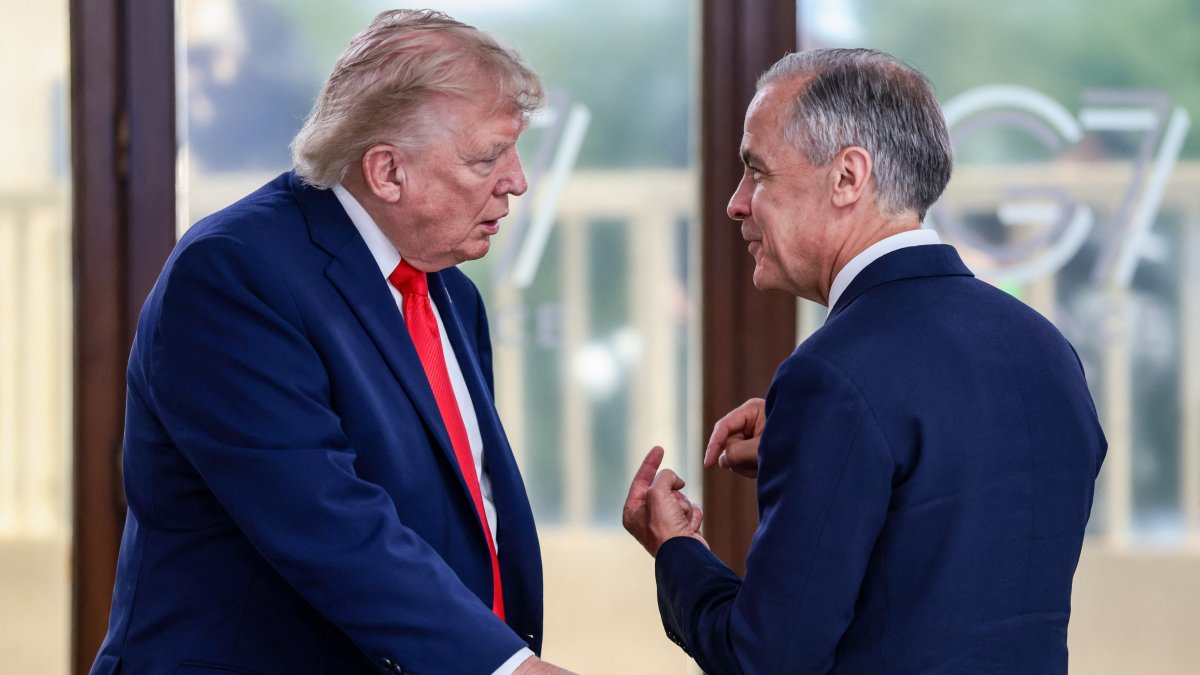
Donald Trump and Mark Carney at the G7 summit in a file photo

President Donald Trump suspended for three days the 50% tariffs that the United States was set to impose on Canadian products starting this Wednesday. The decision, announced just 90 minutes before the measure was set to take effect, gives Washington and Ottawa additional leeway to reach a new trade agreement beneficial to both nations.
Trump announced the suspension on Tuesday night via a post on his social media platform Truth.
"I have paused the 50% Tariffs against Canada, that were scheduled to kick in tomorrow morning for a three day period, based on the fact that Canada and the U.S.A., subject to the finalization of documents, have a DEAL!” he wrote.
The measure would have affected Canadian imports valued at about $20 billion, according to the Office of the U.S. Trade Representative. Among the products affected were construction materials, alcoholic beverages, clothing, and sporting goods such as hockey sticks.
Trump did not explain the terms of the agreement nor specify whether the tariffs will be eliminated or reduced once the suspension ends. He also mentioned that the Keystone XL pipeline project "may be awoken from the grave!", though he did not clarify whether its revival is part of the negotiations.
The office of the Canadian prime minister, Mark Carney, also did not provide any immediate details. Carney had described the talks with the Trump administration as "very delicate and intense." The two leaders spoke on Monday and resumed contact late Tuesday, according to a statement from the prime minister's office to NBC News.
Canada sought to prevent the implementation of the new tariffs and secure a reduction in existing tariffs on steel, aluminum, and automobiles. Washington, for its part, demanded the withdrawal of Canadian trade retaliatory measures, changes to market access for U.S. dairy products, and an end to certain provincial boycotts of U.S. wines and spirits.
One of the biggest points of disagreement was the automotive sector. U.S. officials reportedly resisted reducing the current 25% tariffs to below 15%, according to reports by Bloomberg and Reuters.
The suspended tariffs would have marked the first application of Section 338 of the Tariff Act of 1930, which authorizes the imposition of tariffs of up to 50% on countries deemed responsible for discriminating against U.S. trade.
The pause temporarily averts a further escalation between two closely linked economies. The next three days will be decisive in determining whether the announcement becomes a final agreement or whether Canada once again faces the threat of tariffs, just like other countries and trading partners of the U.S. during President Trump's second term.
LATEST