Trump asked Delcy Rodríguez not to touch Machado, yet the opposition leader's return to Venezuela was thwarted
According to a WSJ report, Trump warned that an arrest or any attack on or harm to the opposition leader would trigger a political crisis in Washington regarding his own strategy toward Venezuela, where Machado has support from both parties in the U.S. Congress.

María Corina Machado and Donald Trump in a file photo

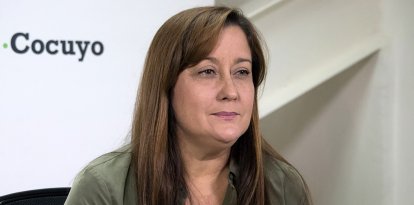
María Corina Machado, a Nobel Peace Prize laureate, had been given the green light to return to Venezuela after several months in exile before her trip was cut short mid-flight, according to a new exclusive report by The Wall Street Journal.
A private jet took off last Friday from Virginia bound for Curaçao, the first step in a plan to re-enter her country for the first time since she fled in December to go to Oslo, Norway. The flight plans and landing rights had already been approved, including special permission for Machado, whose passport had expired, to land on the island, according to people familiar with the operation cited by the newspaper.
About an hour after takeoff, the charter company’s dispatcher ordered the pilots to turn back over North Carolina and return to Washington. Machado and her team were surprised by the decision, as they believed they had received sufficient assurances from senior officials in the Trump administration to proceed with the trip. Even after the trip was canceled, a text message Machado sent to a senior official at the Department of State seeking an explanation received no clear response, the WSJ reported.
In fact, the green light was so clear that President Donald Trump himself had called Venezuela’s interim leader, Delcy Rodríguez, last Friday to explicitly ask her not to take action against Machado or endanger her safety if she returned to the country, according to people familiar with the conversation cited by the WSJ.
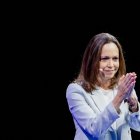
According to the report, Trump warned that an arrest or any attack or harm against the opposition leader would trigger a political crisis in Washington regarding his own strategy toward Venezuela, where Machado has support from both parties in the U.S. Congress.
However, despite the president’s direct support for her return, the flight was ultimately canceled hours later. The WSJ attributes the reversal to a shift in perception among U.S. officials, who came to believe that Machado was planning to complete the journey by sea from Curaçao, retracing a dangerous route she used to escape from Venezuela.
Dutch authorities, who administer Curaçao’s foreign affairs, then decided to revoke the landing permit upon confirming that Washington did not definitively support the operation.
Politics
Machado's Push to Return to Venezuela After Earthquakes Frustrates Trump Administration Officials
Emmanuel Alejandro Rondón
Without giving up on her plan to return to Venezuela, Machado attempted a second route on Sunday, this time from Panama, intending to fly directly to Caracas. But Copa Airlines prevented her from boarding, citing fears of reprisals by the Venezuelan government against one of the few commercial airlines still operating flights to the country.
From Panama City, Machado said in a video posted on social media that the catastrophe made it “impossible to postpone” her return, and blamed the Venezuelan regime for blocking her, without ever mentioning the Trump administration’s role in the cancellation of her first attempt.
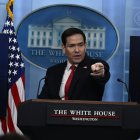
This WSJ account of Machado’s thwarted return is diametrically opposed to an earlier article by Axios, which reported that anonymous senior officials in the Trump administration—five, according to the outlet—described Machado’s insistence as “political opportunism” and called it “grotesque.” One of them even accused her of seeking “a photo op of her passing out our aid” at a time when the country is facing a humanitarian emergency in the wake of the earthquakes. That article makes no mention whatsoever that the trip had been approved in advance by Washington or that Trump had personally interceded with Rodríguez on Machado’s behalf to ensure her safety, a fact that directly contradicts the narrative of the White House that was uniformly hostile toward her.
A third report, from Semafor, offers a more nuanced view of both accounts. According to that article, a person familiar with the situation stated that Trump “is not against” Machado’s return, but “just doesn’t want to blow up the whole thing overnight,” before it’s time. That distinction—between the president personally and the rest of his administration—suggests that the resistance to Machado does not stem from a unified stance by the White House, but rather from internal friction among various officials with conflicting views on the political moment in Venezuela. This has been a common occurrence during Trump’s second term.
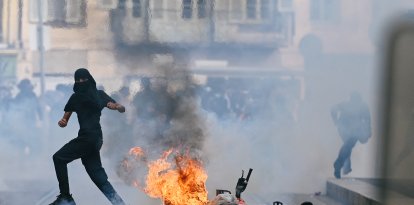
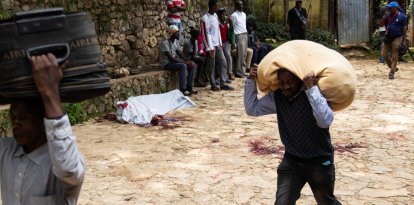
Taken together, these three accounts point to a complex and nuanced explanation just a few months before the midterms. The White House, which has touted the Venezuelan transition as one of Trump’s foreign policy successes, is currently facing a serious problem with the war in Iran, which threatens to become a political liability if a quick solution is not found. Some officials fear that a chaotic return by Machado could spark social tensions in a country already facing the worst humanitarian crisis in its recent history in the wake of the earthquakes, and jeopardize Washington’s fragile arrangement with Rodríguez’s interim regime, which is already facing growing popular discontent over its inefficient response in the early hours of the disaster and the state repression of recent days against those who dare to speak out against the Chavista authorities.
LATEST