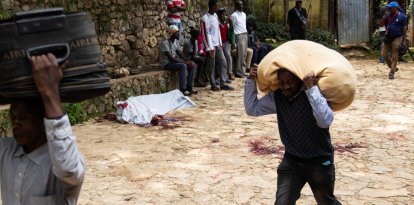
Venezuela: Hugo Chávez’s flagship housing project collapses following earthquakes
The Venezuelan College of Engineers has warned in various reports about the vulnerability of these buildings and the lack of information regarding the quality of soil studies.
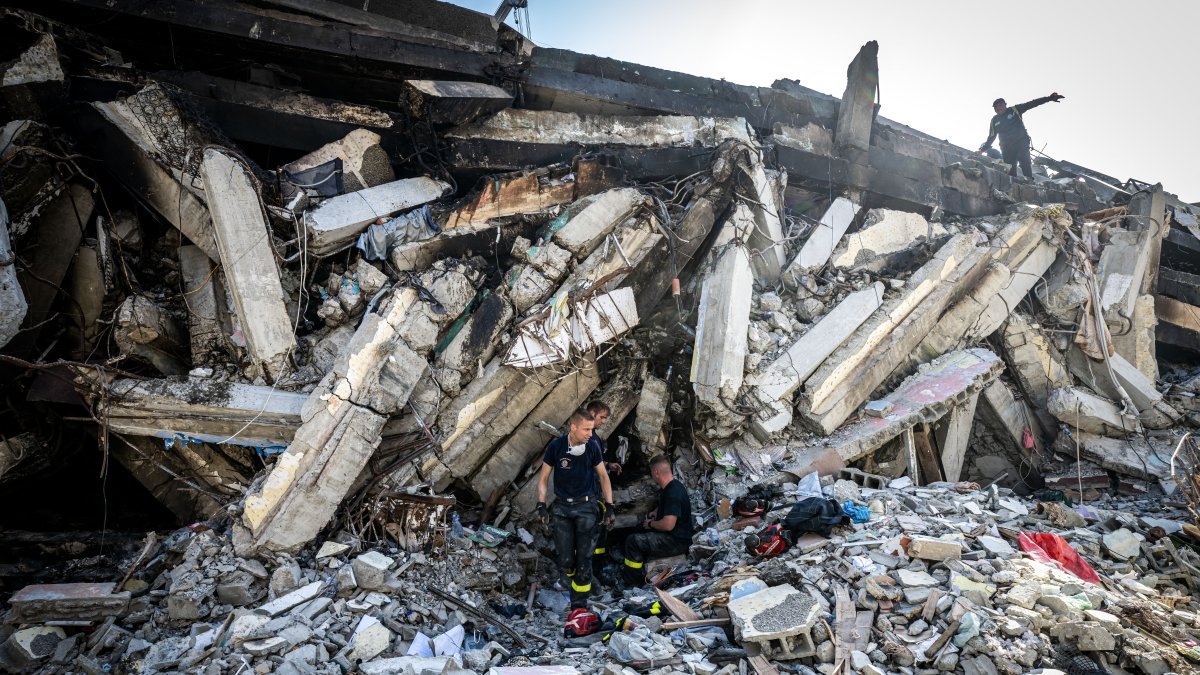
A French civil security response team conducts a survey in La Guaira, Venezuela

The twin earthquakes in Venezuela rendered one of the large housing complexes built under the housing program promoted by the late President Hugo Chávez in La Guaira—the hardest-hit state—uninhabitable, AFP reported.
The two earthquakes that struck on Wednesday within less than a minute of each other have left nearly 1,500 dead and caused widespread devastation across the country, especially in La Guaira, which neighbors Caracas and is considered ground zero of the tragedy.
Jenny Contreras, 28, has been sleeping on a mattress in the street with her husband and four-year-old son ever since the strong earthquakes shook the building where they lived.
Society
Two new tremors shake Venezuela as rescue efforts continue following the double earthquake
Williams Perdomo
She lived in an apartment on one of the lower floors of one of the 192 buildings in the Hugo Chávez Housing Complex in the Catia La Mar neighborhood of La Guaira.
She was only able to retrieve a few belongings before the structure gave way due to the hundreds of aftershocks and she was prevented from returning to her apartment.
The residents of this complex, which has 3,400 apartments spread over four floors, were evacuated and will be moved to a shelter in Caracas.
“Most of the buildings toward the far end of the complex have all collapsed,” said Contreras, 28.
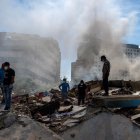
The disaster left hundreds of buildings collapsed, and according to authorities, 189 collapsed completely—mostly in Caracas and La Guaira.
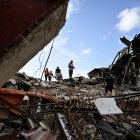
The buildings show large cracks; many have sunk at their foundations and are leaning, almost on the verge of collapsing. Wooden planks, beams, and yellow polyurethane foam were left exposed.
"Off to a shelter"
Other buildings collapsed due to the intensity of the earthquake, but also because of explosions from household gas cylinders, according to some of their residents.
Among the rubble of one of the homes, the swollen hand of a deceased person who had not yet been recovered was visible.
"The entire housing development will definitely be condemned. The entire development will eventually disappear because all the buildings are in very poor condition," said Contreras.
World
The state arrived late: Looting and military abuses expose Delcy Rodríguez's earthquake failure in La Guaira
Emmanuel Alejandro Rondón
Experts have warned of premature deterioration, cracks, and structural damage in several buildings constructed as part of Chávez’s flagship program: the Housing Mission.
The Venezuelan College of Engineers has highlighted in various reports the vulnerability of these buildings and the lack of information regarding the quality of the soil studies.
"The other most affected areas were 1 and 3. Up there. Over on that side, all of that has already collapsed. They sank. And there are many dead," said Dayana Lean, a 51-year-old shopkeeper.
She says she doesn’t want to go to a shelter and is asking the authorities for “the miracle of relocation to apartments, even if it’s in other states.”
“Anywhere, but not a shelter. We’ll stay here as refugees; we’ll take care of ourselves,” she said.
In front of the ruins of their buildings, they have placed mattresses, washing machines, wooden furniture, and a variety of household items they managed to salvage from their homes.

Politics
Machado's Push to Return to Venezuela After Earthquakes Frustrates Trump Administration Officials
Emmanuel Alejandro Rondón
Acting President Delcy Rodríguez announced the creation of “temporary camps” on Sunday for those who lost their homes. She also said that housing construction projects will be planned soon.
“Are we going to a shelter?” asks Sandra Racure, 47, who has lived in this complex for 13 years. She laments that there are still “refugees” from other natural disasters.
LATEST