Pope Leo XIV speaks out from Canary Islands against mafias profiting from migration crisis: 'The Church cannot remain silent in the face of those who are left to fend for themselves at sea'
During his remarks, the pope stated that “the Church cannot turn a blind eye to these waters or to any place where hunger, thirst, violence, fear, or exile continue to wound human dignity” and denounced the actions of criminal networks that exploit migrants.
The Pope in the Canary Islands

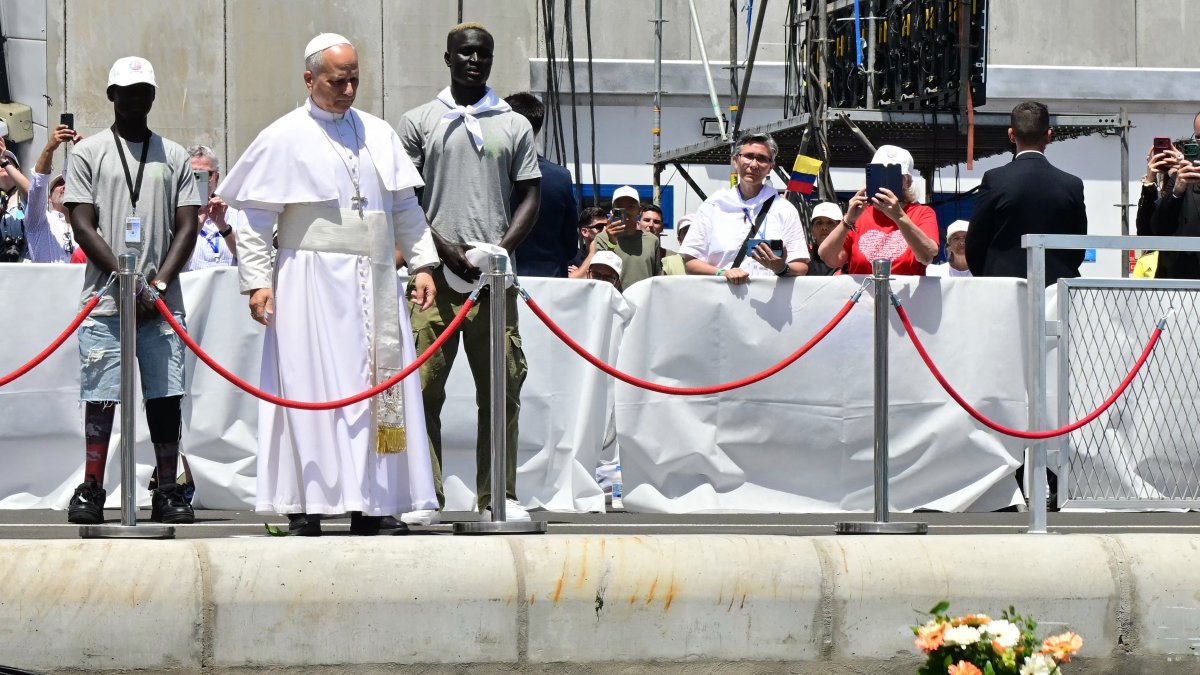
Pope Leo XIV continued his visit to Spain on Thursday with a stop in the Canary Islands, where he focused on the migration crisis. The Pontiff, the first Pope to visit these Spanish islands, toured Gran Canaria and Tenerife on a trip marked by meetings with rescue workers, volunteers, and people dedicated to welcoming immigrants.
From the pier at Arguineguín, one of the main arrival points for immigrants in the Canary Islands after crossing one of the world’s most dangerous sea routes, Leo XIV recalled that “human dignity does not lose its value when crossing a border.” He also urged people not to remain indifferent to the suffering of those who risk their lives to reach Europe.
During his address, the Pope affirmed that “the Church cannot turn a blind eye to these waters or to any place where hunger, thirst, violence, fear, or exile continue to wound human dignity,” and he denounced the actions of criminal networks that exploit migrants.
“Even today, there are monsters lurking in these seas: mafias that traffic in despair, traffickers who enslave women and children, and the indifference of many who allow the poor to be swallowed up by exploitation or oblivion.”
Pope Leo XIV thanked the rescue teams and the organizations that assist immigrants, emphasizing that their actions demonstrate that “concrete mercy can save and change lives.”
The Pontiff also insisted that welcoming cannot be left solely in the hands of volunteers and charitable organizations. In this regard, he called for consistency between faith and action:
“We kneel before the altar to adore Christ present in the Eucharist, from whom we receive the strength and the reason to live out charity; therefore, we cannot then ‘pass by’ the small boats and rafts, for all service springs from prayer.”
He also called for a coordinated international response to the migration crisis:
“This tragedy must become an examination of conscience: for the nations of origin, which must create conditions of peace, justice, and development; for the transit nations, called to protect and not to leave the vulnerable in the hands of criminal networks; and for Europe, which cannot proclaim human dignity and grow accustomed to the Mediterranean and the Atlantic being graveyards without headstones.”
“Do not hand over your lives to those who trade in them”
“Do not surrender your lives to those who trade in them. Do not believe those who promise easy paradises in exchange for your body, your money, your silence, or your freedom. Those false promises are ‘siren songs’; they are industries of death.”
In concluding his speech, the Pope called for a response that goes beyond border management and reiterated that the international community cannot grow accustomed to the migration tragedy nor accept that “human dignity loses value upon crossing a border.”
LATEST