Putin announces May 19-20 visit to China, days after Trump
During the trip, the Russian leader will discuss with his Chinese counterpart, Xi Jinping, how to "further strengthen the comprehensive partnership and strategic cooperation" between Moscow and Beijing, according to a Russian statement quoted by AFP.

Russian President Vladimir Putin

Russian President Vladimir Putin will travel to China on May 19 for a two-day visit, shortly after President Donald Trump's trip to Beijing, the Kremlin announced Saturday.
During the trip, the Russian leader will discuss with his Chinese counterpart, Xi Jinping, how to "further strengthen the comprehensive partnership and strategic cooperation" between Moscow and Beijing, according to a Russian statement quoted by AFP.
Putin and Xi will "exchange viewpoints on key international and regional issues" and sign a joint statement at the conclusion of their talks, the Kremlin added.
As part of the visit, Putin is also scheduled to hold talks with Chinese Premier Li Qiang on economic and trade cooperation.
The announcement of Putin's trip comes just after Trump concluded the first visit by a U.S. president to China in nearly a decade on Friday, leaving a series of trade and geopolitical tensions with no short-term solutions, including the Ukraine-Russia conflict.
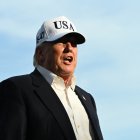
Although Trump and Xi discussed the more than four-year-old conflict, as well as the stalled war with Iran, the Republican president departed China on Friday without appearing to have made significant progress on either front. At least that has been made known.
Negotiations to end the U.S.-mediated fighting in Ukraine have appeared stalled since the start of the U.S.-Israel-Iran war, which broke out on Feb. 28.
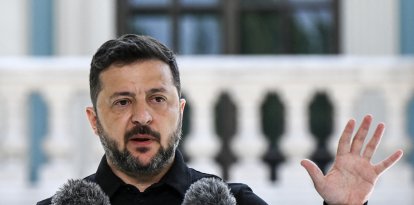
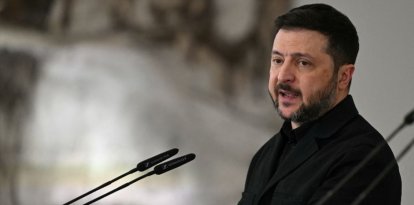
Before Trump's arrival in China, Ukrainian President Volodymyr Zelensky asked the U.S. leader to raise the issue of how to stop the conflict during talks with Xi.
Moscow has ruled out a cease-fire or comprehensive negotiations with Ukraine unless Kiev gives in to the Kremlin's demands.

World
Trump hails ‘fantastic trade deals’ with Xi, says US and China agree Iran must not get nuclear weapon
Emmanuel Alejandro Rondón
China has become Moscow's key economic partner
Although China has repeatedly called for talks to end the fighting, it has never condemned Russia for sending troops to Ukraine in February 2022 and presents itself as a neutral party.
Beijing also denies supplying Moscow with weapons and military components for its defense industry, and blames Western countries for prolonging Europe's deadliest conflict since World War II by arming Ukraine instead.
As the world's top buyer of Russian fossil fuels, China has become Moscow's key economic partner, especially since Western countries imposed economic sanctions on Russian oil and gas in the wake of the conflict.
Trump left China on Friday claiming to have negotiated "fantastic" trade deals, including Beijing's commitment to buy 200 Boeing planes as well as U.S. oil and soybeans.
For its part China made no formal announcements on trade deals.
Unlike Trump, who described Xi as a "great leader" and a "friend," Beijing's response to the summit as a whole was more subdued.
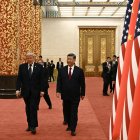
Russia's response to the meeting between Trump and Xi
Russia's top diplomat on Friday welcomed the China-U.S. summit, but said Moscow has more cordial relations with Beijing.
"If the agreements reached or to be reached between Beijing and Washington are in the interests of our Chinese friends, we can only rejoice," Sergey Lavrov told a news conference in New Delhi quoted by AFP.
But Lavrov insisted that Russia was "bound to China by ties... deeper and stronger than traditional political and military alliances."
LATEST