Activist Eliécer Ávila on Voz News: 'It is embarrassing that after 30 years it has to be Trump who accuses Raúl Castro'
According to Avila, the response should have occurred "the same day, the same week" of the shootdown, but he attributed the inaction to figures such as Ana Belen Montes and Manuel Rocha, agents infiltrated by Havana into U.S. intelligence and the Department of State.
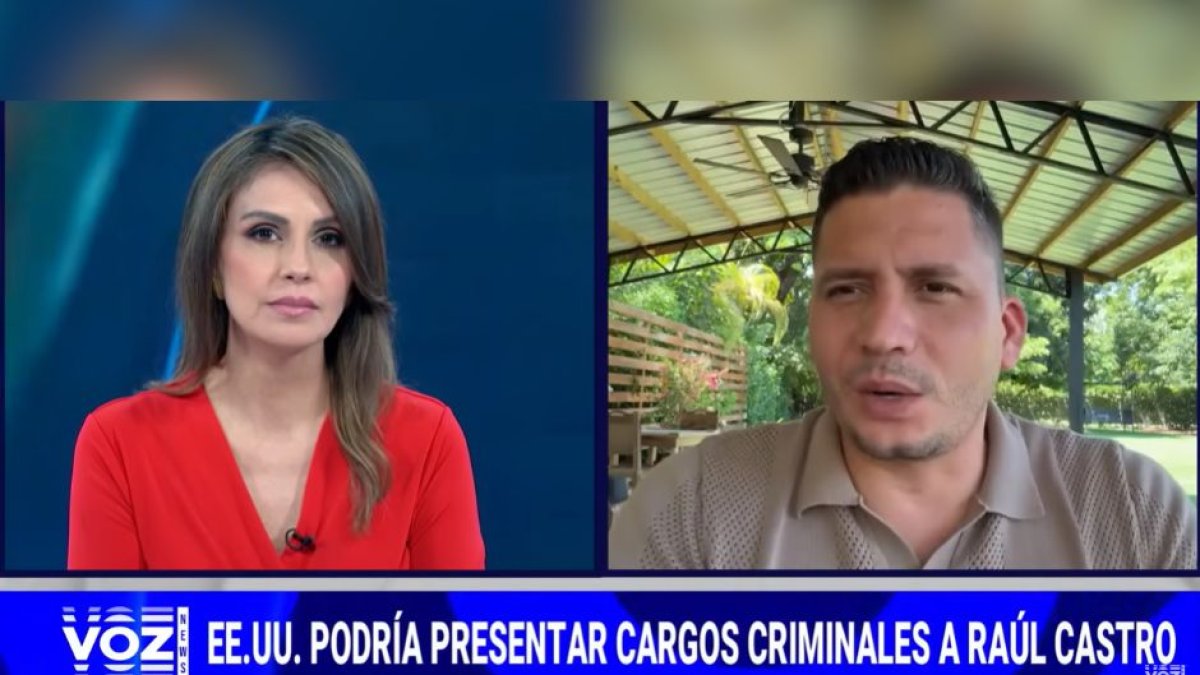
Excerpt from the May 15 Voz News broadcast

In an interview for Voz News, Cuban activist, politician, and dissident Eliécer Ávila analyzed recent moves by the Trump administration vis-à-vis the Havana regime, in particular the possible formal indictment against former dictator Raul Castro for the 1996 shoot-down of Brothers to the Rescue planes, and the visit of CIA Director John Ratcliffe to the island.
While welcoming Washington's turnaround, Ávila questioned the United States' historical delay in acting against the Castro leadership.
When asked about the scope of the possible indictment against Castro, the dissident affirmed that it "marks a real change" in the pressure of the White House against the regime, since, according to his analysis, the United States usually builds a solid legal case before acting militarily, as happened with former dictator Nicolás Maduro in Venezuela. However, he harshly questioned the U.S. delay: "It is embarrassing that 30 years have passed and that it has taken Trump to reach the White House for something like this to happen."
According to Avila, the response should have been given "the same day, the same week" of the shoot down, but he attributed the inaction to figures such as Ana Belen Montes and Manuel Rocha, agents infiltrated by Havana into U.S. intelligence and the Department of State.
Regarding the possibility of a military operation similar to the one carried out in Caracas last January 3, Avila considered it plausible. He assured that drone and Poseidon aircraft flights "have increased their operations by 3,000 percent" in recent weeks over waters near Cuba, with special concentration over Santiago de Cuba, where Raul Castro's retirement home is located. That pattern, he said, suggests an intelligence gathering aimed at "identifying possible bunkers, exit routes, security schemes" for an eventual extraction of the ex-dictator.
World
U.S. prepares indictment against former Cuban dictator Raul Castro for shooting down civilian airliners in 1996
Emmanuel Alejandro Rondón
In analyzing the internal situation on the island, Avila described a dying regime: "The Cuban dictatorship has already fallen, they just haven't realized it". He spoke about the collapse of the national electricity system in recent months, with up to 23 hours of blackouts, daily protests and the closure of Boyeros Avenue in Havana by neighbors who, he said, "can no longer stand more hunger, more misery and more repression."
Regarding the meeting between Ratcliffe and high-ranking Cuban officials, Avila assured that the CIA director conveyed President Donald Trump's conditions: free elections, a multi-party system, release of political prisoners and "no Castro in power."
The regime, he affirmed, asked the White House for time to respond, although he warned that "the ball is on the tyranny's side."
LATEST