ANALYSIS.
Who's in charge in Iran? Concern growing over reports that Revolutionary Guard Corps has seized control and marginalized moderates
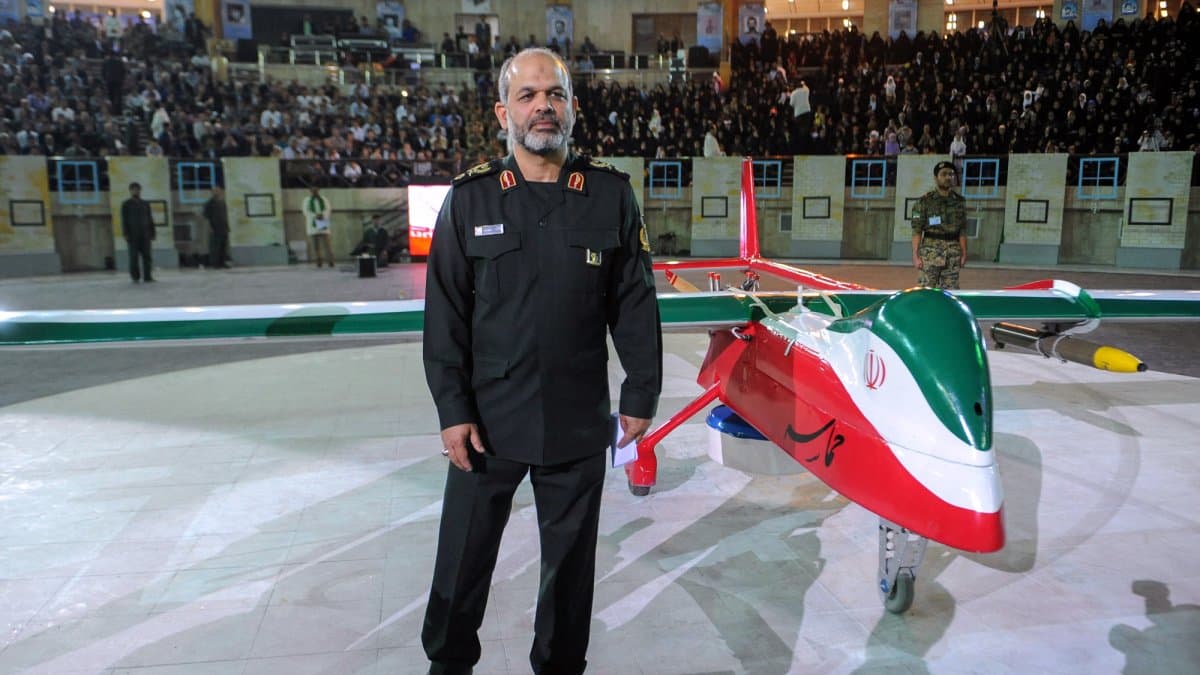
Analysts point to the commander of the Islamic Revolutionary Guard Corps (IRGC), Major General Ahmad Vahidi, and members of his inner circle having taken control of the Islamic Republic after reaching an agreement with Bagher Zolghadr, secretary of Iran's Supreme National Security Council.

Over the weekend, the world went from relief at what seemed like the imminent end of hostilities in the Middle East and the reopening of the Strait of Hormuz to the closure of this fundamental route for world trade and much more aggressive and contradictory messages from Tehran. These words were reflected in the attack by Iranian speedboats on an oil tanker and the capture of a Iranian freighter that tried to evade the blockade by the U.S. Navy.
Trump himself raised the tone again and, as he put J.D. Vance back in charge of a team of negotiators on their way to Pakistan to try to reach a final deal with Iran, said "enough is enough!" in his own way. "No more Mr. Nice Guy!" he wrote in a harsh post in which he threatened to resume attacks starting Wednesday with more force and against much more sensitive targets.
The Iranian response is "we have no plans" to go to negotiations and demanding an end to the blockade. It has also insisted, with threats of retaliation, that Washington renounce several of its own demands and that the seized ship be released.
Going back on their word, or increased power among the extreme wing?
What has changed since Friday for Tehran to show two diametrically opposed faces and launch contradictory messages? Experts have been warning that the hard wing of the regime, headed by the Islamic Revolutionary Guard Corps (IRGC), has been gaining momentum and trying by all means to impose decisions on those in favor of negotiating.
According to analysts from the Institute for the Study of War (ISW), in statements to The New York Post, the IRGC has already taken "full control of Iran," displacing those who could be seen as moderates within the Iranian leadership.
Thus, the resumption of intimidation by Revolutionary Guard Corps, including shooting at an oil tanker on Saturday, and the rejection of negotiations that Tehran had been calling for throughout the week, are proof to the ISW that the commander of the IRGC, Major General Ahmad Vahidi, and members of his inner circle have taken control of the Islamic Republic.
IRGC limits chances for peace
This move is assumed to have been precipitated after Iranian Foreign Minister Abbas Araghchi agreed to reopen the strait over the weekend in the setting of negotiations with the Trump administration.
However, the Islamic Revolutionary Guard Corps enlisted the support of Mohammad Bagher Zolghadr, secretary of Iran's Supreme National Security Council, and demanded that it remain closed in the face of the blockade of Iranian ports, and the IRGC began intimidating ships trying to cross.
According to the ISW, Zolghadr was a member of the delegation that participated in the early negotiations as a representative of the hard wing and to prevent what were considered excessive concessions by the moderates.
Is Ahmad Vahidi the one pulling the strings in Iran right now?
Upon return, "Zolghadr sent a complaint to senior IRGC leaders, almost certainly including Vahidi, that Araghchi had surpassed his mandate during the negotiations by expressing flexibility regarding Iran’s support for the Axis of Resistance," according to ISW.
This caused the delegation to be sent back to Iran and participation in the second round of negotiations with the Americans to be held in limbo. At the moment, both Araghchi and the most visible face of the regime in recent days, Iranian Parliament Speaker Mohammad Bagher Ghalibaf, who is considered a "moderate" despite his anti-American rhetoric, have been marginalized from decision-making.
With the supreme leader missing (despite messages attributed to him on Telegram) Vahidi has become the man calling the shots, especially after his alliance with Zolghadr. This further calls into question the possibility of new negotiations and the validity of future agreements, if there even are any.
🛠 Do you think there is an error in this article?
Recommendations



LATEST