Power struggle in Honduras: Attorney General falls and Supreme Court president resigns
The session was marked by moments of chaos, with pushing, shouting and protests by deputies of the Libertad y Refundación (Libre) party, who tried to interrupt the debate while being restrained by security personnel.
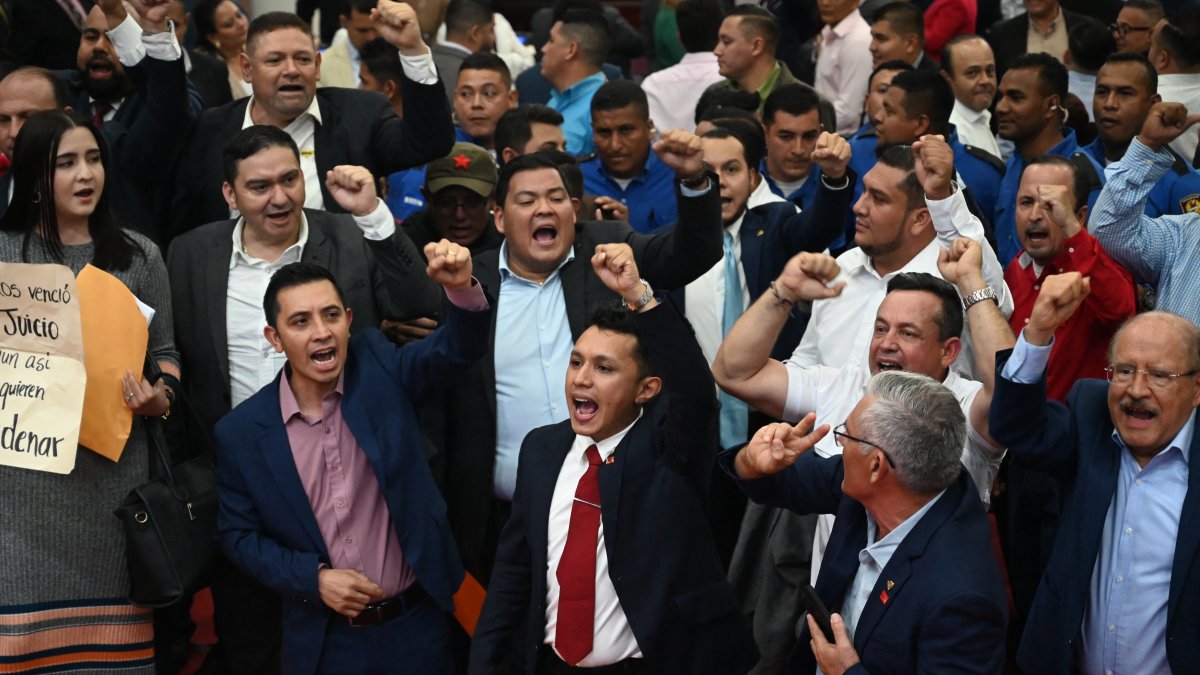
The Honduran Congress in full protest

A day charged with political tension shook Honduras on Wednesday: the Congress removed the attorney general, Johel Zelaya, and, shortly after, the president of the Supreme Court of Justice, Rebeca Ráquel, presented her resignation amid a climate of institutional confrontation.
Zelaya's removal followed an express impeachment trial pushed by the right-wing parliamentary majority, which accused him of having used his office to favor the previous leftist government during the electoral process. The vote, approved with 93 of the 128 deputies, came just two days after the procedure was initiated according to AFP.
The now former prosecutor rejected the accusations and denounced irregularities in the process. "I have been judged and practically condemned in advance," he said on the social network X, while announcing that he would not go to Congress after being questioned by a legislative commission.
The session was marked by moments of chaos, with pushing, shouting and protests by deputies of the Libertad y Refundación (Libre) party, who tried to interrupt the debate while being restrained by security personnel.
Zelaya's departure and the political context
Zelaya's departure is part of a broader political context following the coming to power of the conservative president Nasry Asfura. His removal also strengthens the alliance between the National and Liberal parties, which have intensified their offensive against figures linked to the former ruling party.
In parallel, and before an impeachment attempt against him prospered, Rebeca Ráquel—considered close to Libre—chose to resign from the presidency of the Supreme Court. Her resignation, described as "irrevocable," was read in the plenary session when the process against her was already being prepared.
New majority in the judicial system
In replacement of Zelaya, the Congress appointed Pablo Reyes to complete the mandate until 2029, thus consolidating the control of the new majority over key institutions of the judicial system.
The double move, in the Public Prosecutor's Office and the Supreme Court, marks a turning point in the country's political struggle and opens a new stage of institutional uncertainty.
LATEST