Elon Musk announced the unification of SpaceX and xAI, consolidating his growing tech empire
The acquisition follows Musk's previous decision to merge xAI with social networking platform X in March last year, a transaction that reportedly valued xAI at $80 billion and X at $33 billion.
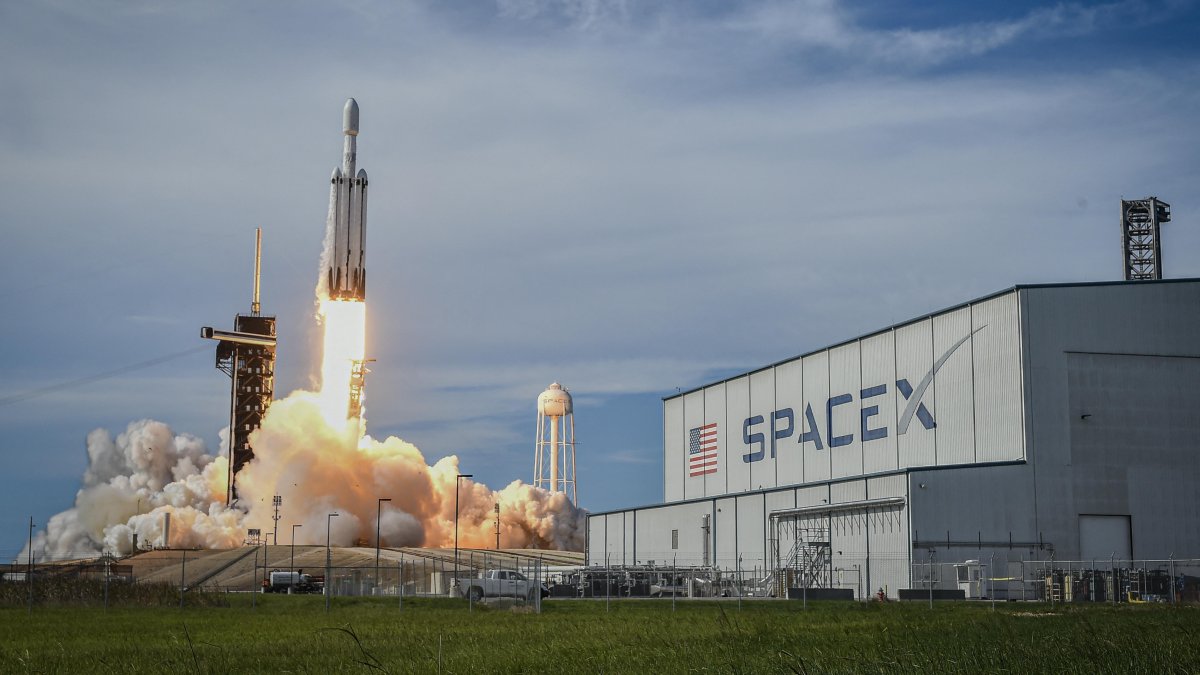
A SpaceX rocket about to take off.
Elon Musk announced Monday that SpaceX, his aerospace and satellite communications company, has acquired his artificial intelligence company xAI, further consolidating his growing technology empire. In a statement posted on SpaceX's website, the also-owner of X described the deal as a key step in unifying several of his companies under a single vision. "SpaceX has acquired xAI to form the most ambitious vertically integrated innovation engine on (and off) Earth, with AI, rockets, space-based Internet, direct communications to mobile devices, and the world's leading platform for real-time information and free speech," he wrote.
The acquisition follows Musk's previous decision to merge xAI with social networking platform X in March last year, a transaction that reportedly valued xAI at $80 billion and X at $33 billion. The latest merger comes amid reports that SpaceX would be preparing for a possible initial public offering later this year. The announcement comes after SpaceX recently filed an application with the Federal Communications Commission for approval to deploy up to 1 million satellites, an initiative that Reuters reports would be aimed at supporting data centers in space.
Politics
Elon Musk backs the Republican Party again and finances campaigns for the midterm elections
Luis Francisco Orozco
Musk, who is also CEO of Tesla, has increasingly emphasized the role he believes space will play in the future of artificial intelligence to meet the huge infrastructure demands of advanced AI systems. "Today's advances in AI rely on large terrestrial data centers, which require huge amounts of power and cooling. The global demand for electricity for AI simply cannot be met with terrestrial solutions, even in the near term, without imposing hardship on communities and the environment," Musk said in his statement.
Looking longer term, he argued that moving AI infrastructure beyond Earth is inevitable. "In the long term,space-based AI is obviously the only way to scale," he added.
Musk vs. Trump
After several disagreements with the Republican leader, Musk left the U.S. government and then staged a controversial impasse with Trump, through a series of tweets in which he made all kinds of accusations. Eventually, both figures began to iron out their differences, to the point where they now seem to have managed to reconduct a relationship that in recent times has been characterized by ideological concordance and cordial treatment.
LATEST