Petro says the U.S. attacked a drug factory run by the ELN narco-terrorist group inside Venezuela
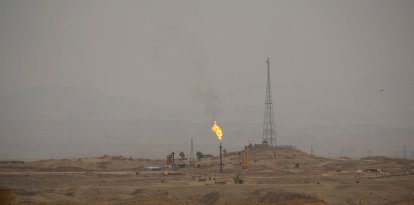
In an extensive message, Petro confirmed that Washington bombed a facility located in the Venezuelan city of Maracaibo, where drugs are processed with direct access to the sea.

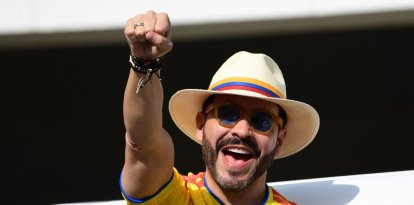
Gustavo Petro, president of Colombia, in a file image

The president of Colombia, Gustavo Petro, confirmed on X (formerly Twitter) that the United States carried out an attack against a drug factory of the National Liberation Army (ELN) in Venezuelan territory, providing a new piece of information on the attack previously confirmed by President Donald Trump in recent days.
In an extensive message, Petro confirmed that Washington bombed a facility located in the city of Maracaibo, where drugs are processed with direct access to the sea. The Colombian president, highly critical of President Trump and the U.S., attributed that infrastructure to ELN, a Colombian narco-terrorist group that he pointed to as a central player in cross-border drug trafficking and instability on the Colombian-Venezuelan border.
"We know that Trump bombed a factory, in Maracaibo, we fear that they mix coca paste there to make it cocaine and take advantage of the location on the sea of Maracaibo," Petro wrote. "It is simply the ELN. The ELN is allowing with its rattling and its mental dogma, to invade Venezuela."
Resulta que muchas lanchas atacadas con misiles, como está pasando en las incautaciones.que hacemos en Colombia o, con ayuda nuestra fuera de Colombia, no llevaban cocaína sino cannabis.
— Gustavo Petro (@petrogustavo) December 30, 2025
Problema paradójico: en EEUU, en muchísimas partes es legal. Y el Congreso de Colombia no… https://t.co/EJb6yxZKat
The Colombian president's statement comes days after Donald Trump confirmed a U.S. attack on a port area in Venezuela used for loading drugs onto boats, which he described as an operation that caused a "big explosion." Trump first made those claims during a radio interview that went largely unnoticed and then confirmed his words in a meeting with Israeli Prime Minister Benjamin Netanyahu at Mar-a-Lago, without offering details on the exact location or scope of the attack.
Subsequently, CNN, citing Trump administration sources, reported that the operation reportedly took place in early December and noted that it was a covert drone action attributed to the CIA, which would mark the first known U.S. attack against a ground target inside Venezuela in the framework of the current anti-drug campaign.
World
El cerco naval de EEUU asfixia al régimen de Maduro y obliga al cierre de pozos petroleros
Emmanuel Alejandro Rondón

Politics
Trump afirma en una entrevista radial que EEUU destruyó una instalación de narcotráfico en Venezuela
Emmanuel Alejandro Rondón
The attack, in turn, adds to a broader strategy of pressure ordered by the White House, which combines naval encirclement, covert operations and economic measures against the regime of Nicolas Maduro. Since September, U.S. forces have destroyed more than 30 vessels linked to regional drug trafficking in the Caribbean and the eastern Pacific, as part of an offensive that Washington presents as anti-drug, but which also seeks to cut off sources of financing for Chavismo.
In parallel, while Trump continues to pressure Maduro, the United States publicly moved forward with the seizure and interdiction of oil tankers linked to Venezuelan crude oil exports, expelling ships from waters near Venezuela and paralyzing part of the country's energy logistics. The Trump administration has presented this combination of naval strikes, covert action, and economic pressure as a direct war against drug trafficking and armed organizations operating from Venezuela, including the Cartel de los Soles, Tren de Aragua, and, according to Petro, the ELN itself.
Petro's confirmation suggests that the U.S. attacks are not only targeting maritime routes, but also criminal infrastructure within Venezuelan territory itself, raising the level of conflict and pressure on armed actors operating under the shadow of the Maduro regime.
LATEST