Trump pulls Grenell away from Venezuela: no more diplomatic efforts to deal with Maduro
Trump's decision was made during a meeting last Thursday with senior military commanders.

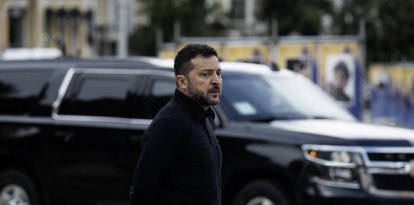
Special envoy Ric Grenell in a file image

After announcing over the weekend the start of 'Phase II' in the war against narcoterrorism, President Donald Trump decided to end diplomatic contacts with the regime of Nicolás Maduro, marking the definitive closure of dialogue efforts between Washington and Caracas.
According to a report by The New York Times, the measure opens the door to a possible military escalation in the Caribbean in the framework of the anti-narcotics offensive that the United States maintains against cartels and criminal groups linked to Chavismo.
"American officials have said that the Trump administration has drawn up multiple military plans for an escalation. Those operations could also include plans designed to force Mr. Maduro from power," the newspaper reads.

World
A classified Justice Department opinion authorizes lethal strikes against a large, secret list of cartels and drug traffickers
Emmanuel Alejandro Rondón

World
Trump anuncia que la guerra contra el narcoterrorismo entra en su “Fase II”: EEUU iniciará ataques “por tierra”
Emmanuel Alejandro Rondón
According to the report, the president personally ordered the special envoy Richard Grenell, who led for months the talks with high-ranking officials of the Chavista regime, to suspend all diplomatic efforts.
Trump's decision was made during a meeting last Thursday with senior military commanders in which the president expressed his frustration with the dictator Maduro, who, despite Washington's demands, has decided not to leave power and to deny any relationship with drug trafficking.
That day, Trump picked up the phone and personally called Grenell to give the order.
The total diplomatic rupture in an already deteriorating relationship comes at a time when Washington has intensified its military offensive in the Caribbean Sea, where U.S. forces have sunk at least four drug-laden vessels, three of them directly linked by U.S. authorities to the Cartel de los Soles and the Tren de Aragua, criminal structures that the United States directly associates with the Venezuelan regime.
In these operations, which have already left at least 21 alleged drug traffickers dead, the US used only part of its arsenal deployed in the Caribbean Sea, where there are currently warships, F-35 fighters, nuclear submarines, and even troops.
During the Navy's 250th anniversary ceremony, Trump confirmed a new operation off the Venezuelan coast and warned that the Army "is no longer searching only at sea" but also land targets, as drug traffickers are no longer using maritime routes.
World
FBI dismantles laundering network linked to Nicolás Maduro's family: ‘Choking off every dollar, every account, every enabler’
Emmanuel Alejandro Rondón
According to The New York Times, the White House had allowed Grenell to negotiate with Maduro for several months, presumably to reduce tensions and achieve the release of U.S. hostages kidnapped in the country, which the latter completed. However, both the Secretary of State and the National Security Advisor, Marco Rubio, and other cabinet members considered Grenell's efforts following the release of hostages as "futile" and generating confusion within the Administration.
Both Rubio and other senior White House officials have repeatedly described Maduro as a "fugitive from U.S. justice," recalling that he faces drug trafficking charges and a $50 million reward for information leading to his capture. The reward figure is the highest in the country's history.
Sources quoted by the NYT also indicated that the Trump Administration has several military plans ready that could include selective attacks on Venezuelan territory. The suspension of the diplomatic channel with the Chavista regime and the recent declaration by the War Department that the United States maintains an "armed conflict" with the cartels reinforce that possibility.
The decision also demonstrates the resounding failure of the Maduro regime's attempts to reach out to Washington. Just weeks earlier, Maduro had sent a disparaging letter to "His Excellency, Donald Trump," denying that his regime trafficked drugs and proposing to continue the dialogue through Grenell, whom the dictator described as a good nexus. The missive was to no avail, and the White House has only hardened its stance since then.
LATEST