ANALYSIS
Reza Pahlavi: Who is the son of Iran's ousted shah calling for free elections?
The opposition leader does not seek to restore the monarchy and is committed to a democratic transition in Iran, backing a process in which Iranians can decide their future through a referendum.
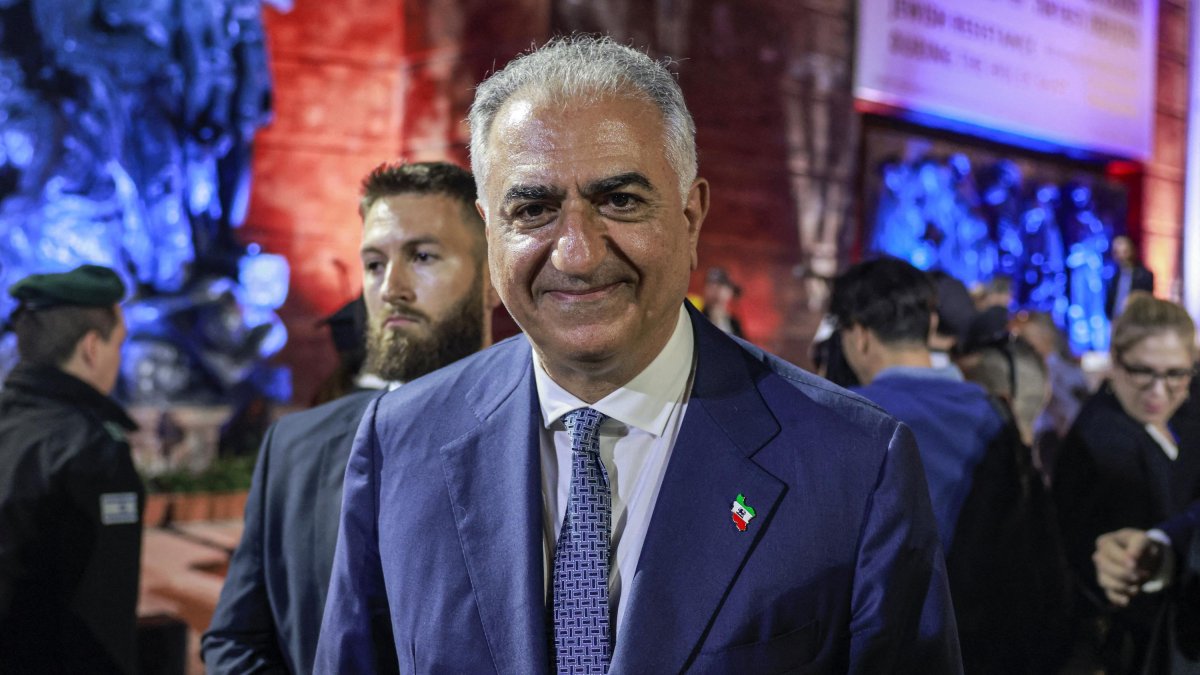
Reza Pahlavi

Reza Pahlavi, son of Mohammad Reza Pahlavi, the last shah of Iran, has recently been using his strong social media presence in his role as an opposition figure to the theocratic regime in Iran and for his continued calls for a democratic transition in his country.
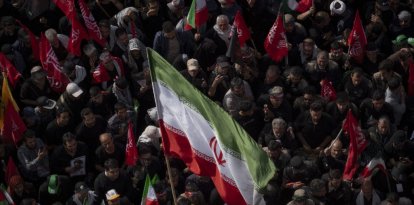
On Wednesday, Pahlavi shared a message on X addressed to Iranians in which he said that the international community "has not just seen and heard your voice and courage," but is now "responding," alluding to a recent pronouncement by President Trump who assured that "help is on its way."
In a specific message to the military, the opposition leader stressed that the army is "the military of Iran," not of the Islamic Republic, and urged them to protect citizens and join them "as soon as possible."
According to a senior U.S. official quoted by Axios, Pahlavi met secretly over the weekend with White House envoy Steve Witkoff to discuss the ongoing protests in Iran. This was the first high-level meeting between the Iranian opposition and the Trump administration.
A life in exile
Pahlavi has spent the past 46 years in exile after the Islamic Revolution, led by Ayatollah Ruhollah Khomeini, overthrew his father in 1979, ending 2,500 years of Persian monarchy.
The shah and his family fled Iran amid a political and social crisis that allowed the establishment of a theocratic republic based on Islamic law and the consecration of Ruhollah Khomeini as the country's supreme leader.
After leaving Iran aboard a plane that he piloted himself, the shah suffered diplomatic isolation, which represented a complicated exile for the imperial family that took them through several countries: Egypt first; then Morocco, Mexico, the Bahamas, Panama and the United States. Finally, the shah died in Cairo in 1980, where he was buried with military honors.
Marked by exile, Reza Pahlavi has been committed all his life to a democratic transition in Iran, backing a process in which Iranians can decide their future through a referendum.
But who really is the son of the ousted shah of Iran?
Formative years and exile
Reza Pahlavi was born in Tehran in 1960 and grew up in the luxurious surroundings of the imperial family. His childhood was spent within the walls of the Niavaran Palace.
In 1978, when he was 17, Reza left Iran for military training at Reese Air Force Base in Lubbock, Texas. Only a few months after his departure, in January 1979, the Islamic Revolution forced his family to flee the country.
Pahlavi completed his military training and joined his family, who moved from Morocco to the Bahamas and from there to Mexico. At the time, the imperial family was under heavy security measures. In 1989, Reza confessed to The Washington Post that it was "really like being in a fortress."
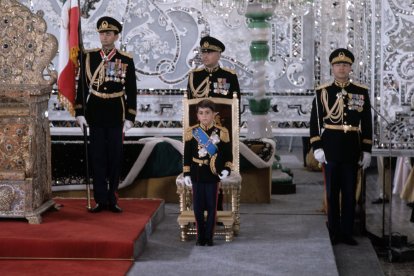
Prince Reza Pahlavi
After his father's death in 1980, Pahlavi proclaimed himself shah, in a ceremony at a palace in Cairo. "In a way, I’m king-elect," stated Pahlavi to The Washington Post years later, alluding to the fact that the shah, being a constitutional monarch, must be approved by the Iranian parliament, the Majlis, before he can reign.
In 1985, Reza received a degree in political science from the University of Southern California. That same year, during a visit to Washington, D.C., he met Yasmine Etemad-Amini; they married the following year and moved to suburban Virginia so that he could continue his political work in Washington.
With Etemad-Amini, an Iranian-American lawyer, he has three daughters, Noor, Iman and Farah. His personal life has also been marked by tragic episodes: his siblings Leila and Ali Reza committed suicide, affected by exile and the fall of their dynasty.
Reza Pahlavi, a man who claims to be committed to democracy in Iran
Although Reza Pahlavi retains the symbolic title of "crown prince," he has repeatedly said he does not seek to restore the monarchy and has proposed a democratic and secular transition in Iran, inspired by models such as the Spanish Transition.
Following the conflict in Middle East, Reza Pahlavi has resurfaced in the media to say that if the regime falls, he would be "ready to return" to Iran.
During an exclusive interview for the French channel BFMTV, Pahlavi assured in June that his role is important, as he could "federate the unity of the opposition," which would allow to "lay the groundwork for a democratic transition."
According to Pahlavi, it is necessary to "lay the groundwork for there to be a constituent assembly that will say what are the alternatives that can be offered to the people, and through a national referendum, the final choice will be the people's."
"I am not here for personal campaigning, I am not here chasing power. I am here to facilitate that transition," Reza Pahlavi reiterated.
On the other hand, during a press conference held in June in Paris, Pahlavi assured that "the end of the regime is near" in Iran, where a moment similar to that of the fall of the Berlin Wall is being experienced.
The opposition leader called on Europe and the United States to avoid "throwing this regime another lifeline" in the form of negotiations.
"This regime is collapsing ... You can facilitate it by supporting [the Iranian people] this time, not by throwing this regime another lifeline," he added.
Reza Pahlavi: "The future is bright"
This message was part of a video addressed to Iranians, in which he urged a national uprising to put an end to the theocratic regime. He also assured that the state's repressive apparatus is collapsing and that it is time to act collectively to regain democracy in Iran.
LATEST