Federal judge rules Trump administration's blacklisting of Anthropic was illegal
The dispute dates back to earlier this year, when Anthropic and the Pentagon failed to reach an agreement on a $200 million contract to provide AI technology for classified systems.
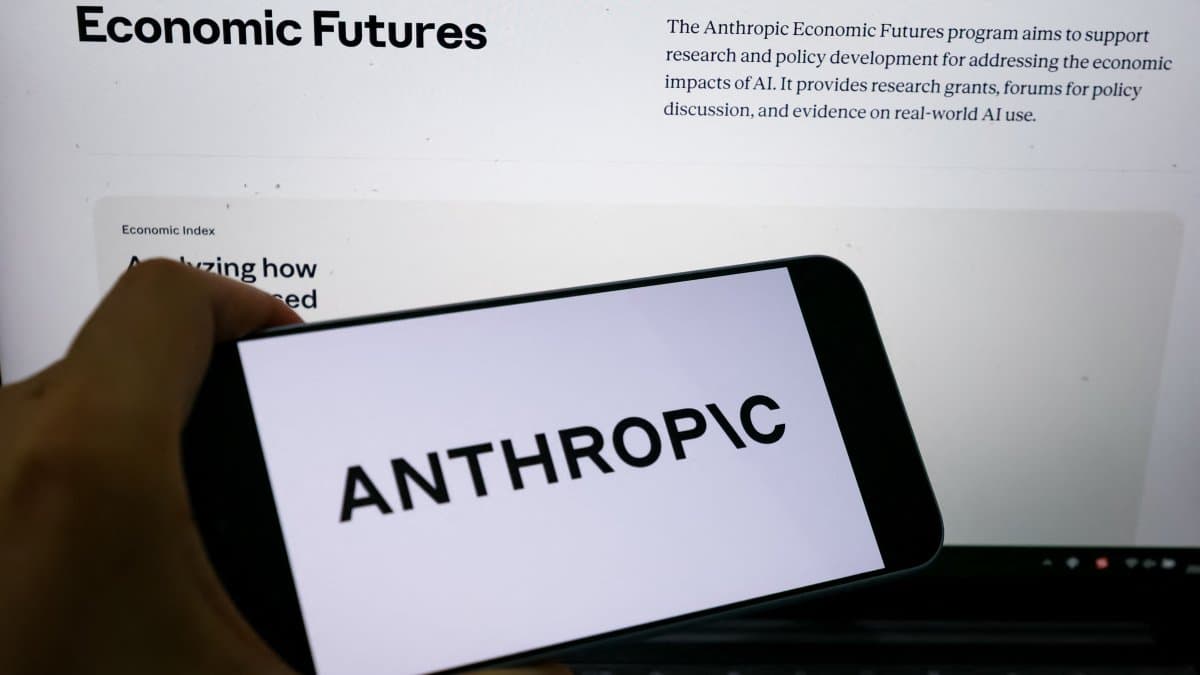

A federal judge in California ruled Thursday that the Trump administration acted unlawfully in designating the artificial intelligence company Anthropic as a security risk, a move that prevented the company from working with the federal government amid serious national security concerns.
The decision marks a legal setback for the White House in its dispute with one of the leading AI developers in the U.S. and worldwide, amid serious warnings about potential waves of AI-powered cyberattacks.
Judge Rita Lin of the U.S. District Court for the Northern District of California held in a 59-page ruling that the government retaliated against Anthropic for engaging in constitutionally protected activities after the company publicly spoke out about the limits that should be placed on the use of its technology.
"The empty invocation of national security is not a blank check to punish and retaliate against government critics," the judge wrote in her ruling.
The dispute dates back to earlier this year, when Anthropic and the Pentagon failed to reach an agreement on a $200 million contract to provide AI technology for classified systems. The San Francisco-based company demanded that its technology not be used for mass surveillance of U.S. citizens or for the development of lethal autonomous weapons, a condition that the Department of War rejected, arguing that a private company could not impose policies on the federal government.
Tech & Science
OpenAI, Anthropic, Google, Microsoft and 130 other companies warn: A wave of AI-powered cyberattacks is coming
Emmanuel Alejandro Rondón
Tech & Science
Can 'chatbots' manipulate public debate? ChatGPT, Gemini, and Claude stumble over left-wing disinformation while citing nonexistent sources
Andrés Ignacio Henríquez
In the absence of an agreement, Secretary of War Pete Hegseth formally designated Anthropic a "supply chain risk," a category previously reserved for foreign companies considered a threat to national security. The designation dealt a severe blow to Anthropic, as no contractor or supplier affiliated with the armed forces could, from that point on, do business with the company.
In response, Anthropic filed two lawsuits on March 9. The first, resolved this week in California, has ended; the second, filed with the U.S. Court of Appeals for the District of Columbia Circuit, is still pending. According to The New York Times, the Trump administration could appeal Judge Lin's ruling or wait for the outcome of the second lawsuit before deciding on its next steps.
During the proceedings, the judge sharply questioned the government's arguments. She described the Pentagon's stance, which maintained that Anthropic's public criticisms were sufficient to justify its exclusion from federal contracts, as "truly concerning," and noted that she found no evidence to support allegations regarding a supposed mechanism that would allow the company to deactivate or alter its own AI models in the midst of an armed conflict.
Anthropic welcomed the ruling in a statement, saying it was "pleased the court has ruled that this supply chain risk designation was unlawful," and added that it remains "focused on working productively with the government to harness A.I. for our national security so all Americans benefit from this technology." The Trump administration did not immediately respond to a request for comment.
The litigation comes at a particularly sensitive time for Anthropic, which is heading toward what could become the largest initial public offering in history, amid a market that is closely watching every regulatory and judicial move involving major artificial intelligence companies.
🛠 Do you think there is an error in this article?
Recommendations


LATEST