The malfunctions that nearly led to a tragedy: Report reveals the issues that caused Marine One and a commercial airplane to come dangerously close
The system that tells pilots whether to descend or climb to avoid collisions did not issue any kind of emergency alert.
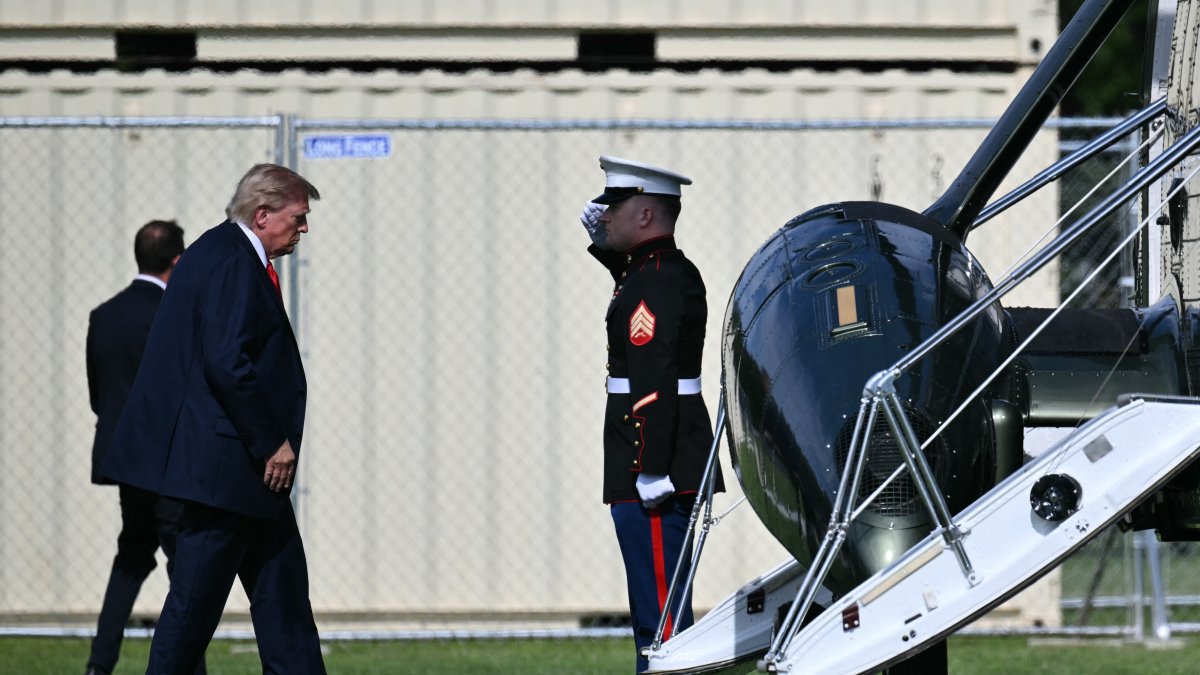
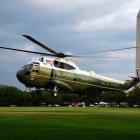
Donald Trump boarding Marine One / Mandel Ngan
The preliminary report from the National Transportation Safety Board (NTSB) revealed Thursday that the Marine One crew made several unsuccessful attempts to notify Ronald Reagan National Airport that President Donald Trump's helicopter was about to take off on August 4, before the aircraft flew close to a commercial passenger plane. The report detailed that the first call was not received before Marine One took off and that the second call was garbled.
The report noted that the crew also failed in subsequent attempts to transmit the mandatory three-minute advance warning through the helicopter control facilities at Joint Base Anacostia-Bolling, resulting in takeoffs continuing as Trump left the White House to travel to Los Angeles.
Society
Washington airspace scare: Trump's helicopter flies within a mile of Passenger Jet
Emmanuel Alejandro Rondón
One of the aircraft that received permission to take off under these circumstances was an Embraer E-170 flying to Florida. According to the NTSB report, both this aircraft and Marine One, on which the president was traveling, were at one point separated by approximately 0.82 nautical miles laterally and about 700 feet vertically, making it nothing short of a miracle that the situation did not escalate.
Other details revealed by the report included that the system that tells pilots whether to descend or climb to avoid collisions did not issue any type of emergency alert, that the Embraer's collision avoidance system managed to issue an alert while it was climbing and accelerating after takeoff, and that Marine One was able to communicate with the control tower after climbing, at which point it received a traffic alert.
Prior warning and a dangerous precedent
The report also detailed that communication problems between Marine One and the airport had already been flagged days before the incident. Since July 30, Squadron HMX-1 had informed air traffic controllers that communications were "intermittent," while the controllers noted that crews did not always provide the mandatory three-minute warning before takeoff. Although both parties agreed to use alternative methods in the event of any failure, the warnings did not work on August 4, leading to the conclusion that radio coverage was insufficient between the communications teams and the Ellipse.
The incident caused no small amount of alarm, given the precedent set by what happened in January 2025, when an Army Black Hawk helicopter collided with an American Airlines flight in that same airspace, killing all 67 people on board both aircraft.
The National Transportation Safety Board (NTSB) later attributed the tragedy to poor radio reception that deprived the military crew of key information about the aircraft it ultimately collided with, compounded by a controller overload as a controller handled two roles simultaneously during a high-demand shift. Since then, the FAA has modified and closed some helicopter routes over the city, but many of the NTSB's safety recommendations remain unimplemented, a gap that Tuesday's incident brings back into the spotlight.
LATEST