Legal setback for Newsom: Federal court blocks California law requiring ICE agents to identify themselves
The Ninth Circuit ruled in favor of the Trump administration, determining that the state cannot impose its own conditions on federal authorities' operations. The judges concluded that the so-called "anti-vigilante law" violates the Supremacy Clause of the U.S. Constitution.
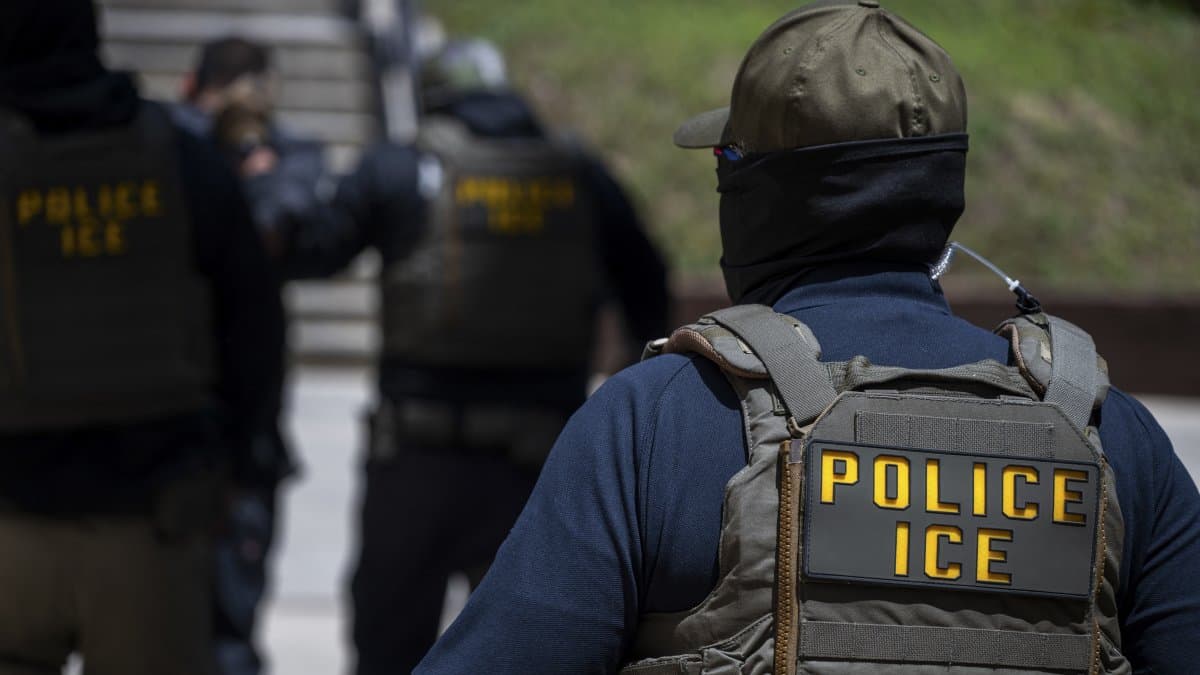

The administration of President Donald Trump secured a major legal victory against California Gov. Gavin Newsom, a Democrat, after a federal appeals court blocked enforcement of a state law, the No Vigilantes Act, that required federal agents, including those from U.S. Immigration and Customs Enforcement (ICE), to display visible identification during certain operations.
In a 21-page ruling issued on Oct. 14, 2026, the U.S. Court of Appeals for the Ninth Circuit ruled that the identification requirement established in No Vigilantes Act is unconstitutional, as it attempts to directly regulate the performance of federal functions without authorization from Congress.
The decision, handed down by a three-judge panel, marks a new chapter in the dispute between Washington and Sacramento over immigration policies and the limits of state authority over agencies responsible for enforcing federal laws.
The ruling overturns an earlier decision by a district court that had refused to grant the federal government a preliminary injunction against that provision. Now, the judges have ordered that California, its governor and its attorney general, Rob Bonta, be prevented from applying the requirement to federal agents and agencies.
What did the California-sponsored law establish?
The controversy began on Sept. 20, 2025, when Newsom signed a package of laws aimed at establishing new restrictions and oversight measures on the actions of federal immigration agents in California.
Among them was SB 805, sponsored by Democratic State Senator Sasha Renée Pérez and known as the No Vigilantes Act.
The legislation required plainclothes officers to display visible identification bearing the name of the agency to which they belonged and their name, badge number, or both during operations involving arrests, detentions, or crowd control.
The legislation provided for exceptions for certain undercover activities, tactical units and emergency situations. However, it stipulated that willful noncompliance with the provision could constitute a misdemeanor under California law, unless certain conditions regarding agency identification policies were met.
The law also required law enforcement agencies operating in the state, including federal agencies, to adopt and publish policies regarding the visible identification of their officers.
At the time of its enactment, Newsom defended the new provisions as necessary measures to protect California residents and increase the transparency of immigration operations.
According to an official statement from his office, the governor argued that public safety depended on trust between authorities and communities, and accused the Trump administration of undermining that relationship.
The legislation was part of a package of initiatives that included restrictions on immigration enforcement operations in schools and hospitals, as well as another bill known as the No Secret Police Act (SB 627), aimed at limiting the use of masks by certain police officers.
The Trump administration took the case to court
On Nov. 17, 2025, the Department of Justice filed a lawsuit against California, Newsom and State Attorney General Rob Bonta, arguing that the new restrictions unlawfully interfered with the operations of federal agencies.
Washington challenged both the identification requirements in SB 805 and the restrictions on the use of face masks set forth in SB 627.
In its official statement on the lawsuit, the DOJ argued that both laws constituted unconstitutional attempts to regulate federal officials and could jeopardize their safety.
The Trump administration argued that requiring agents to publicly identify themselves under certain circumstances could expose them to threats, harassment and the disclosure of personal information, in addition to compromising sensitive law enforcement operations.
The federal government also warned that California sought to subject its agents to potential state criminal penalties for actions taken in the performance of their federal duties.
The lawsuit, filed in the U.S. District Court for the Central District of California, sought measures to prevent state authorities from applying the challenged provisions to federal officials.
In an initial ruling, Judge Christina A. Snyder declined to provisionally block the identification requirement, although she granted partial relief from the mask ban contained in the other legislation.
Washington appealed the decision regarding the ID requirement to the Ninth Circuit.

Politics
DOJ sues Newsom for granting tuition benefits to illegal immigrants in California
Emmanuel Alejandro Rondón
The ruling: California cannot directly regulate federal operations
The appeals court upheld the Justice Department's central argument: states cannot unilaterally impose conditions on how the federal government carries out its constitutional functions.
The opinion, written by Judge Mark J. Bennett and joined by Jacqueline H. Nguyen and Daniel P. Collins, is based on the Supremacy Clause of the Constitution, which establishes the supremacy of federal law over conflicting state provisions.
The justices applied the doctrine of intergovernmental immunity, under which states cannot directly regulate the sovereign operations of the federal government without authorization from Congress.
In particular, they found that Section 10 of the California law sought to supplant the federal government's authority to determine when and how its agents must identify themselves publicly.
The ruling concluded that the government was assured of success in its constitutional challenge to that provision, as it constituted a direct regulation of federal functions that Congress had not authorized.
The justices also found that the other requirements necessary to grant a preliminary injunction favored the federal government, including the public interest in preventing constitutional violations.
Therefore, they ordered the lower court to issue a preliminary injunction prohibiting California from applying Section 10 of the No Vigilantes Act against the United States, its agencies, and its officials.
The ruling from a few days ago is reinforced by a provisional decision adopted in April 2026, when the same court had already suspended the provision's enforcement pending the resolution of the appeal.
A new chapter in the standoff between Trump and Newsom
While the Democratic governor has defended the restrictions as tools to ensure transparency and accountability, the Trump administration maintains that state authorities cannot interfere with the enforcement of federal laws or impose additional conditions on federal agents.
The court's decision does not mean that federal officials are exempt from any obligation to identify themselves, but rather that California cannot unilaterally impose on them the specific requirement set forth in the challenged provision.
🛠 Do you think there is an error in this article?
Recommendations

LATEST