ANALYSIS
Wedgewood's fake polls: A warning to Republicans ahead of the election
The firm claimed that it was all part of an "experimental project" to demonstrate the sector's weaknesses. But the explanation came only after FiftyPlusOne detected irregularities in its data and asked for comment before publishing an investigation.

Wedgewood Polls’ admission that nearly all of its polls were fabricated is not just a transparency scandal. It is evidence of how vulnerable the election information ecosystem is to unscrupulous operators who fabricate data, feed it into respected aggregators and wait for media and campaigns to repeat it. The firm’s polls reached The New York Times, FiftyPlusOne, VoteHub and Decision Desk HQ and were cited by outlets including MS NOW.
A firm without checks and balances
Wedgewood Polls presented itself as a legitimate polling firm and even published dozens of polls during the 2026 election cycle. On Oct. 20, it acknowledged on X that only one of them, conducted in Nebraska, was real; the rest were "synthetic data" created to look like authentic results.
The firm claimed that it was all part of an "experimental project" to demonstrate the industry's weaknesses. But the explanation came only after FiftyPlusOne detected irregularities in its data and asked for comment before publishing an investigation.
Politics
Ramaswamy defends the legitimacy of his ad about Acton: 'Voters deserve the truth'
Carlos Dominguez
"Wedgewood operated as if it were a legitimate polling firm: it raised money from donors to conduct crowdfunded polls and shared with FiftyPlusOne, on Oct. 15, 2026, the raw data from its polls (which has now been confirmed to be fraudulent)," stated the press release from the election analysis and poll aggregation site led by G. Elliott Morris.
Morris stated on X: "We were investigating Wedgewood for falsifying its data and sent them an email this morning asking for comment, before publishing our findings tomorrow. They are trying to cover up their fraud with the excuse that 'we were conducting a social experiment.'"
For his part, data analyst and survey specialist Cooper Burton stated on social media that "this is nothing more than an attempt to save face after they realized we had exposed them."
Politics
Ramaswamy defends the legitimacy of his ad about Acton: 'Voters deserve the truth'
Carlos Dominguez
Aggregators that failed
What's most concerning isn't just that they fabricated data, but how easily it was incorporated into the most influential aggregators.
According to Wedgewood's own statement, its polls were included in The New York Times, FiftyPlusOne and VoteHub, and treated as a legitimate source. According to the website Drop Site News, the NYT confirmed that it incorporated at least 15 polls from the firm, published between June and October, on state and congressional races in states such as Michigan, Georgia, Mississippi, Maine and Kansas. The newspaper stated that it had asked the firm about its staff, methodology, weighting and funding before including the polls.
Decision Desk HQ announced on X that it had removed 17 Wedgewood polls from its averages and prediction models following the firm's admission. They were also included on Nate Silver's site and on StateNavigate.
FiftyPlusOne explained that they initially accepted them because one of the people in charge had prior experience in the sector and the methodology seemed reasonable, a common practice with new firms. It was only later, upon analyzing the raw data, that they detected irregularities that led to the investigation.
The case shows that even aggregators with verification processes may include polls from new firms if they appear professional and have at least some track record, which makes it easier for fabricated data to influence averages and media coverage before being discovered.
Politics
DOJ accuses 28 foreign nationals of allegedly voting illegally in California; 11 arrested
Williams Perdomo
Median Strategies also published fabricated data
The Los Angeles Times reported that in August 2026 a firm called Median Strategies published several fabricated polls. One of them, regarding the Los Angeles mayoral race, showed Democratic Mayor Karen Bass with a lead of nearly 12 percentage points over Democratic City Council member Nithya Raman heading into the Nov. 3 mayoral runoff. The poll claimed to be based on 560 Los Angeles voters surveyed between July 30 and Aug. 5, with a margin of error of 4.1%.
Another of the fabricated polls concerned the Democratic primary for governor of Wisconsin. In that poll, Democrat Francesca Hong appeared to have a lead of more than 20 percentage points. The firm also published polls on other races, including the one in Nevada.
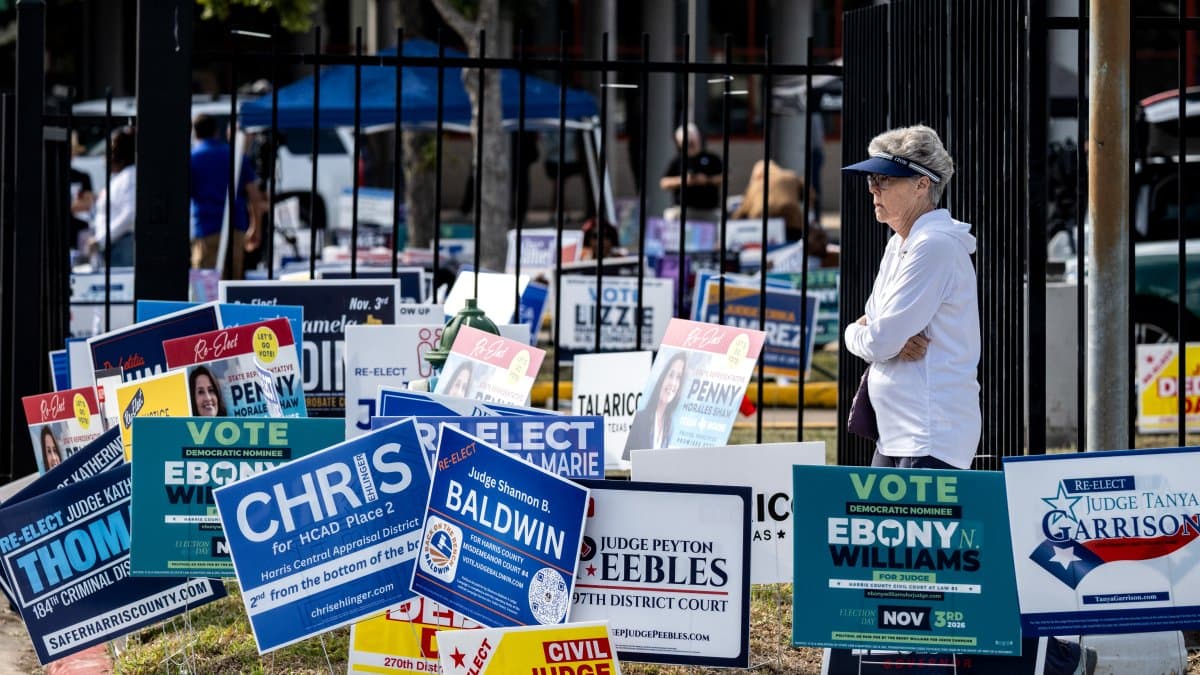
Days later, after being repeatedly questioned by the Los Angeles Times, Median Strategies withdrew the data and described it as a "short-term social experiment."
Subsequently, The Guardian identified the person responsible as Rahil Prakash, a 21-year-old student, who acknowledged having created the website using artificial intelligence and admitted that his goal was to test whether fake polls could infiltrate the media ecosystem.
🛠 Do you think there is an error in this article?
Recommendations




LATEST