






ANALYSIS
US drug overdose deaths drop 20% thanks to Trump's crackdown on narcoterrorism
The states of Louisiana, Florida, Virginia, New York, Vermont and Wyoming, as well as the District of Columbia, recorded significant reductions of more than 30%.
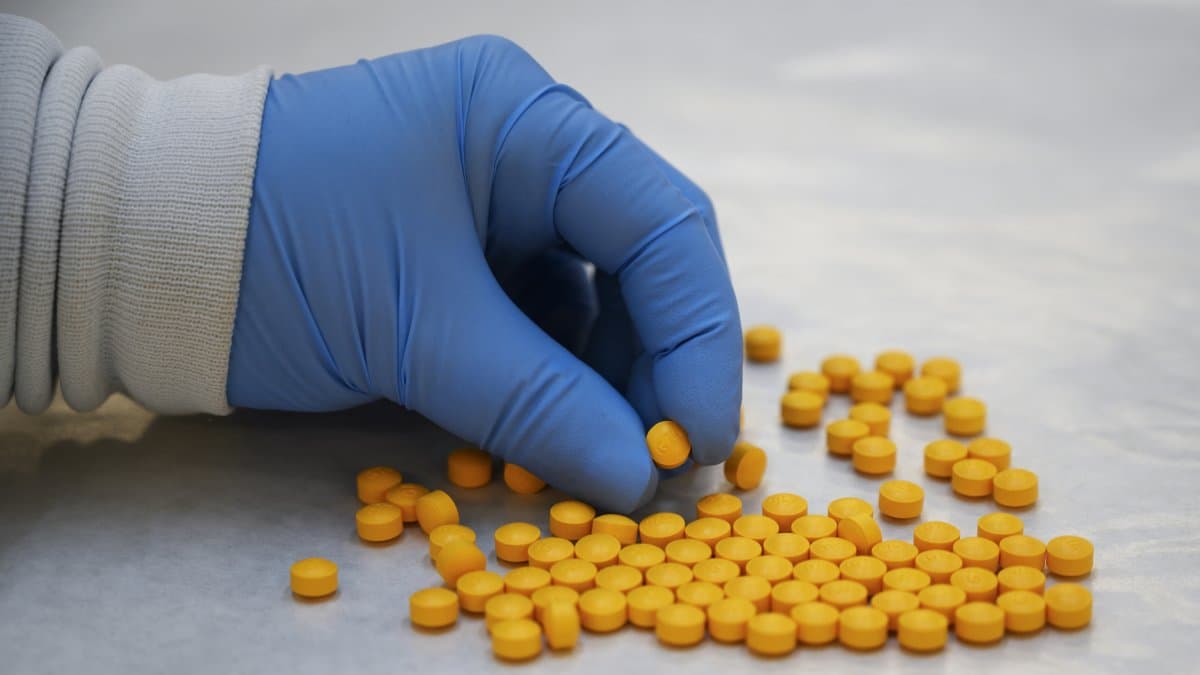

A report published by the Centers for Disease Control and Prevention (CDC) revealed that drug overdose deaths fell by more than 20% last year, marking one of the largest declines in recent years.The study captures deaths recorded through August 2025 and suggests a significant turnaround in a health crisis that has claimed hundreds of thousands of lives over the past decade.
Also, according to the federal agency's report, the states of Louisiana, Florida,Virginia, New York, Vermont and Wyoming, as well as the District of Columbia, recorded significant reductions of more than 30%.
However, the CDC noted that the data are provisional because some causes of death are still under investigation. The report's numbers speak of 69,172 reported overdose victims, compared to 72,836 expected for the cited period.
A president tough on drug trafficking
Joseph Giacalone, a retired New York State Police (NYPD) sergeant and associate professor of criminal justice at Penn State Lehigh Valley, told Fox News, "The fall begins at the end of the Biden administration, but the question is, was it in anticipation of a tough-on-crime president coming in?", referring to the impending inauguration of Donald Trump in the White House.
Biden Administration acted late
The provisional data show about 90,199 drug overdose deaths in the 12 months to September 2024, compared with about 111,451 in the same period between 2022 and 2023. Precisely the August 2023 figures were the peak of overdose deaths, and from there their numbers began to decline gradually until the big drops at the end of the Biden era and the beginning of Trump's second term.
*Figures updated according to the most recent report.
According to data from the federal agency cited by Fox, overdose deaths were on the rise at the start of the first Trump administration but then remained virtually flat; they later rebounded and stabilized when the president Joe Biden took office.
Border security as a key factor
While the CDC has given no reason to explain this significant decline in overdose deaths nationally, it also coincides with the tightening of border control measures imposed by the Trump Administration. "Securing the borders has a lot to do with the drop," Giacalone added. "Less chance for drug dealers and their mules to bring drugs into the country."
The United States has also stepped up its "war on drugs" through "Operation Southern Spear," a military campaign against suspected drug trafficking boats in the Caribbean Sea and eastern Pacific Ocean.
President Donald Trump recently highlighted the effectiveness of U.S. operations against vessels used to traffic drugs from Venezuela, claiming that each boat intercepted "saves 25,000 American lives." Naval actions, he said, have reduced the amount of drugs entering the country by sea by 92%.
These attacks are part of the counternarcotics campaign launched by Washington in September, during which the United States has carried out more than 25 similar operations, which have left more than a 100 dead, according to official figures.
Critical states
According to the CDC report, there are only four states that recorded an increase in overdose deaths, with North Dakota the only one that remained unchanged. Kansas and Hawaii showed increases of less than 2%, while in New Mexico the increase was around 3.5 %.
The most notable case was Arizona, which recorded a significant increase of 17.75 % in fatal overdoses between August 2024 and August 2025. The number of deaths reported in the state in August 2025 rose to 2,873, a considerable increase compared with the 2,479 recorded in the same month of the previous year.
Legislation to save Arizona
According to the AZ Mirror, Quang Nguyen, who chairs the House Judiciary Committee, said last week that the 100-gram limit set out in his Bill 2132 was the result of discussions and negotiations with Mayes' team, although both he and law enforcement representatives appearing before the committee admitted they wanted a lower threshold.
"This is a drug of mass destruction," Jeff Newnum, chief deputy of the Yavapai County Sheriff's Office, told the committee, adding that 100 grams equals about 1000 pills. According to him, sales cases in his county usually hover around 30 grams on average.
Newnum said lowering the threshold will allow them to seek stiffer prison sentences for "mid-to-low-level dealers," who make up the bulk of his cases.
🛠 Do you think there is an error in this article?
Recommendations







LATEST