ANALYSIS
Latino vote could decide whether New York goes the way of socialism or bets on order and stability
Mamdani leads in the polls among Latinos but faces internal divisions and distrust of socialism.

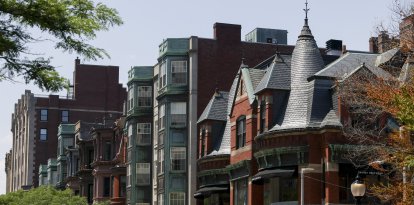
New York City photo.

The Latino electorate is emerging as a determining force in the politics of New York. Their record turnout in the 2025 primaries made it clear that this community no longer occupies a secondary role at the polls and that its weight could be decisive in the election of the next mayor, who will take office in January 2026.
More than 165,000 Latinos turned out to vote, an unprecedented number that confirms their influence in districts such as the Bronx, Washington Heights, East Harlem, Bushwick, Sunset Park, Corona, and Jackson Heights. Of the 3.2 million Latino residents, an estimated 1.7 million are eligible to vote, a force capable of tipping the balance in a historically Democratic city.
Mamdani leads among Latinos, despite internal divisions
Democratic socialist Zohran Mamdani leads the polls among Latino voters following Eric Adams' exit from the race. According to available data, 48% of registered Hispanic voters back his candidacy, compared with 24% for Andrew Cuomo and 14% for Republican Curtis Sliwa.
However, that backing is not uniform. In the Bronx, Cuomo managed to prevail in most Latino-majority neighborhoods, with 51% of the vote in the southern parts of the borough. In contrast, Mamdani did better in Brooklyn, Queens, and Upper Manhattan, where the Dominican and Puerto Rican communities represent a progressive constituency more sympathetic to his proposals.

Politics
Cuomo and Sliwa lash out at Mamdani's extremist, anti-Semitic positions in latest New York mayoral debate
Luis Francisco Orozco
Clear priorities: safety, cost of living and housing
The growing Latino prominence comes with very concrete demands. Sixty-two percent of Hispanic voters believe the city is "on the wrong track" and cite the cost of living, insecurity, and housing as their main concerns.
In fact, 70% support increasing funding for the New York Police Department and hiring more officers, a measure Mamdani has not endorsed, even though most Latinos are calling for greater safety in their neighborhoods.
On economic issues, Latinos face the highest costs and highest poverty rates in the city—one in four adults lives in poverty—so 90 percent support building more affordable housing. Mamdani proposes to address this problem through increased public spending and rent control, although his proposals to increase taxes and regulation raise doubts about their feasibility.

The weight of the past and perceptions of socialism
While Latino support for Mamdani is broad, it is not without ideological tensions. In communities with roots in Cuba, Venezuela, or Nicaragua, the word "socialism" continues to generate rejection, which could limit its growth outside progressive sectors.
For their part, Cuomo and Sliwa face their own challenges. Cuomo registers a 46% unfavorable opinion among Latinos, while Sliwa could split the conservative vote and hinder a common front against the left.
A potentially swing electorate
With more than 1.7 million potential voters, Latinos now hold the power to determine whether New York continues on its progressive course or turns toward leadership that emphasizes order, economic growth, and a return to the stability many feel has been lost.
LATEST